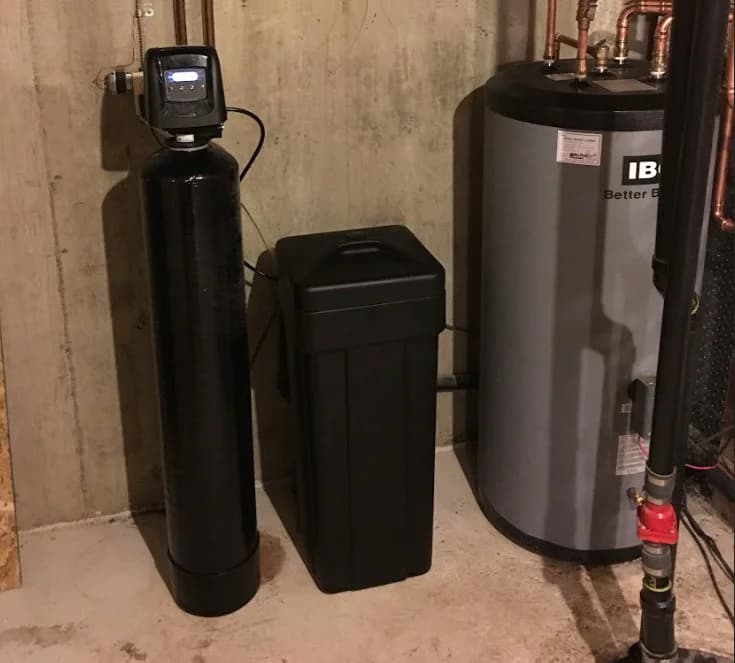
Learning how to drain a water heater is mostly about doing things in the right order. Draining means emptying the tank: cool it, shut off the gas or power, let it run out, and fill it completely before the heat goes back on. This guide covers standard gas and electric tanks only, and your model's manual comes first. Smell gas? Leave the tank alone and read if you smell gas.
Draining, flushing and drawing off a little are different jobs
- Draining empties the tank. A.O. Smith says to "always drain your water heater before removing it."
- Flushing clears sediment. A.O. Smith says it "involves many of the same steps as draining," but cold water keeps running through the tank "until you no longer see sediment."
- Drawing off a little is routine upkeep. Bradford White's manuals for an electric tank and a direct-vent gas tank both say to "drain off a gallon of water ... to remove silt and sediment."
A full drain is mostly for a tank that's coming out, or a building left empty through the cold months. The Bradford White electric manual says to drain completely in that case "to prevent freezing." Sediment on the tank bottom is also the usual cause of popping or rumbling.
How often?
Manufacturers don't agree. A.O. Smith's maintenance page says: "Most types of tank water heaters require flushing at least once per year. If you live in a hard water area, you may need to flush your water heater more often." The Bradford White electric manual lists a monthly gallon drain-off, in a maintenance list it says should be done by a "qualified service technician."
Calgary counts as hard water. The City of Calgary says: "Calgary's water is considered hard because of the amount of calcium and magnesium in the water from the Bow and Elbow Rivers." Even so, there's no single schedule. Your model's manual and your water decide it.
Before you start
Get the manual for your model
The model number is printed on the tank's rating plate. Find the manual that matches that number. Bradford White's gas manual gives different draining steps for different gas controls, so a general guide like this one can't stand in for it.
Make sure it's a tank you should drain yourself
- Tankless. A.O. Smith says "You won't need to flush a tankless water heater." They get descaled instead. See our tankless maintenance guide.
- Boilers and combi units. Not storage tanks, and not covered here. See boiler service.
- Power-vent and electronic-control tanks. Follow the manual exactly, or call.
- No drain valve. Bradford White notes "Some models are not equipped with a drain valve." Emptying one means disconnecting pipe, which is a plumber's job.
Know where the water goes
Run a garden hose from the drain valve, downhill all the way, to a floor drain, or outdoors somewhere the water can't cause damage. A.O. Smith says draining takes "20 to 40 minutes," and heavy sediment slows it down.
Let the water cool first
A.O. Smith says: "Turning the unit off beforehand allows the water to cool and reduces the risk of scalds." It suggests leaving the heater off "for a few hours" and wearing "thick gloves and safety goggles."
Tank water is hotter than most people think. The Bradford White electric manual says: "Per CSA C22.2 No. 110, all household electric water heaters in Canada will be preset to 60°C (140°F)." It also warns: "Scalding may occur within five (5) seconds at a temperature setting of 140°F (60°C)."
Shut off the gas or power
- Gas: set the control to "OFF", or to the setting your manual gives for draining.
- Electric: switch off the water heater's breaker.
Don't open panels or touch wiring, and don't do anything to the gas valve beyond what the manual says.
How to drain a water heater, step by step
- Close the cold water supply valve to the tank.
- Run the hose from the drain valve to your drain.
- Open a hot water tap in the house so air can get in. Bradford White: "Open a hot water faucet to allow air to enter the system." A.O. Smith: "Turn on a hot water faucet."
- Open the drain valve.
- Let the tank empty.
Air goes in through a hot tap, never through the lever on the temperature and pressure (T&P) relief valve. That valve is a safety device. Leave it alone.
If you're flushing instead
A.O. Smith's flush runs cold water through the tank with the drain valve open "until you no longer see sediment." Sediment can also clog the drain valve so nothing comes out. Don't force it. As A.O. Smith puts it: "Call a plumber or service technician for assistance if you can't flush the tank."
Refill completely before the gas or power goes back on
Bradford White's fill steps:
- Close the drain valve and take the hose off.
- Open the cold water supply.
- Open hot taps around the house. "When a steady stream of water flows from the faucets, the water heater is filled."
- Close the taps and check the drain valve for drips.
A.O. Smith adds: "Continue running the hot faucet for at least 3 minutes to remove any trapped air." And on its maintenance page: "Make sure water heater is completely full of water before returning to service."
Electric tanks
A.O. Smith: "For an electric water heater, it is critical to make sure the tank is full before turning the power back on. If there is not enough hot water around the heating element, it will burn out." Bradford White puts it in capitals: "NEVER OPERATE THE WATER HEATER WITHOUT FIRST BEING CERTAIN IT IS FILLED WITH WATER." Its manual adds: "Failure of the element(s) due to dry-firing is not covered by warranty."
Gas tanks
Follow the lighting label on the heater and your manual. A.O. Smith says to "follow your manufacturer's instructions for relighting the pilot light." The Bradford White direct-vent gas manual says: "Installation and service must be performed by a qualified installer, service agency, or the gas supplier." Stop and call if the label's steps involve taking a cover off, or if the pilot won't catch. Our guide covers relighting and pilot checks from the outside.
When to stop and call a plumber
- The drain valve is clogged or stuck.
- The drain valve drips once it's closed. See leaking water heater.
- There's no drain valve.
- Anything involving the T&P relief valve: lifting the lever, testing it or replacing it.
- The gas control misbehaves, or the heater won't relight.
- It's a tankless, boiler, combi or power-vent unit and you're unsure of the steps.
- The floor around the tank is wet after refilling.
If you'd rather we did it
A water heater service visit takes care of the flush, so you can hand the whole job over. A tank that's old or already leaking is past the point where flushing helps. Then hot water tank replacement is the honest conversation, and our guide to what a replacement costs lays out the tank prices. Plumbing on our team is handled by Red Seal journeyman plumbers and gas work by Alberta-licensed gas fitters, and we dispatch from both Calgary and Airdrie. Phone 587-834-3668 or send a note through the contact page, and we'll tell you honestly when we can get there.