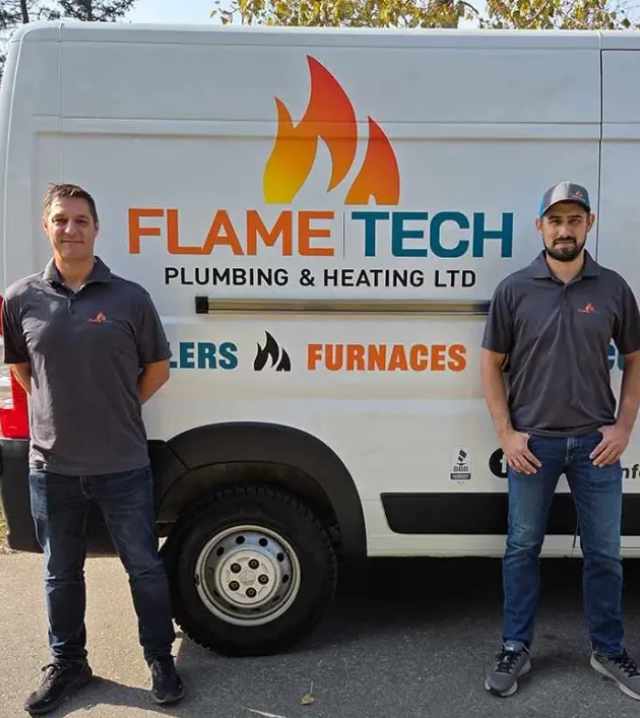

Garage Heaters Calgary — Gas, Radiant Tube + Electric Install
Calgary garages reach −40°C in January cold snaps — wind chill turns a workshop into a place where you can't grip a tool, a hobby garage into a place where epoxy won't cure, and even a simple "get in the car without freezing" garage into a chronic comfort problem. A properly-sized garage heater pays for itself in usable workshop hours, protected vehicles, and the simple fact that you'll actually go out there to do the project you've been putting off. FlameTech installs and services forced-air gas, radiant tube, and electric garage heaters across every Calgary garage configuration — single-car bungalow attached, detached double, high-ceiling shop, basement-suite-over-garage.
Three install scenarios drive most calls: (1) homeowner upgrading a hobby/workshop garage that's never had heat, (2) replacing an aging garage heater that's lost capacity or efficiency, or (3) building out a new garage / addition and speccing the right heater from the start. We work in Aspen Woods garages with 20-foot ceilings and cramped 1960s Altadore single-car attached garages — different garages need different heaters and we recommend honestly. Already settled on a heater and want to know what the job involves? Garage heater installation covers the gas line, venting, electrical, mounting and permit side of it.
Same Alberta-licensed gas fitters that handle our furnace, boiler, and broader heating work. Garage heaters share gas, venting, and control fundamentals with home heating systems — proper install is the difference between a unit that lasts 20 years and one that fails in 5. We pull permits, schedule inspections, and document the install so warranties stay valid.
We repair garage heaters as well as install them — workshops shut down when the heater quits in February. Coverage includes Calgary, Airdrie, Cochrane, and surrounding. Call 587-834-3668 for a free in-home assessment.
Garage heater quit in a cold snap? Call 587-834-3668 and we'll tell you honestly when we can be out.
Call 587-834-3668“Had a new furnace installed today by Shaun and Jason. Shaun was honest and professional with diagnosing the problem with the furnace and discussing the best options going forward. Would definitely recommend them to anyone needing plumbing or heating repairs. Thank you very much for the awesome service you provided.”

Bonnie Offredi
Calgary · 8 months ago
What we install + service on Calgary garage heater calls
Three main heater types serve Calgary garages, each suited to a different use case and budget.
Forced-air gas (Modine, Reznor) — the workhorse
Wall- or ceiling-mounted forced-air gas units that heat air and circulate it through the garage. Modine Hot Dawg HD45/75/100 (45k/75k/100k BTU) and Reznor UDAP series are the most common Calgary installs. Best for attached double garages, regular-use workshops, and any garage where you need warm air quickly. Lower install cost than radiant tube, faster warm-up than electric. Power-vented through the side wall (most modern installs) or B-vented through the roof.
Radiant tube (Re-Verber-Ray, SunStar) — high-ceiling shops
Overhead infrared tube heaters that heat surfaces directly (people, tools, vehicles, floor) rather than the air. Stay warm even with the bay door open briefly. Best for: high-ceiling shops where forced-air loses heat to the volume above, intermittent-use garages where you want to feel warm immediately on entry, and mechanic-style shops where you're working on cold metal. Higher install cost than forced-air, but lower operating cost in many high-ceiling applications.
Electric (Cadet, King, Marley) — small or no-gas garages
240V electric forced-air or radiant ceiling units. Best for: small detached garages without gas service (running a new gas line can be expensive), garages used only occasionally, or homeowners who don't want a gas appliance in the space. Simpler install (no gas, no venting), higher operating cost than gas, slower warm-up. Common sizes: 4,000-7,500 watts for single-car; 10,000-15,000 watts for double-car.
Garage heater repair (every brand)
Pilot won't stay lit (thermocouple), electronic ignition won't fire (igniter, flame sensor), fan running but no heat (gas valve, control board), short-cycling (limit switch, vent blockage), blower motor seized (capacitor, motor). We repair common Modine, Reznor, Sterling, Cadet, and electric units.
Gas line + venting + permits
Most garage heater installs need: gas line run from the house meter (sized to the BTU load — typically 1/2" or 3/4" depending on length + load), sidewall power-vent (standard for modern installs) or rooftop B-vent, combustion air intake to meet code, power to the fan + controls, gas permit + inspection. We handle the full scope — see garage heater installation for how each of those pieces gets decided and what moves the price.
Thermostat + controls
Most garage heaters ship with basic mechanical thermostats. Upgrade options: programmable thermostats (set lower when not in use), wifi-enabled controls for remote startup before you walk out to the garage, two-stage thermostats for variable-output units. Worth the upgrade in workshops you use frequently.
In-floor radiant (hydronic) — luxury option
Hot-water tubing embedded in the garage slab connected to a boiler (often shared with the house's main hydronic heating). Premium install (only viable on new construction or major slab replacement), but unbeatable comfort and the warmest-feeling garage option. Best for luxury rebuilds or new builds where the slab is being poured anyway. See boiler not working Calgary for the broader hydronic context.
Annual pre-season service
Best done in early fall before the first cold snap. Combustion analysis, flame sensor + igniter check, fan motor inspection + capacitor test, vent inspection (rooftop vents often need clearing after summer + chinooks), thermostat calibration, gas pressure check. Catches most failures before peak winter demand.
Sizing your Calgary garage heater — BTU by configuration
Generic BTU calculators assume milder climates and don't account for Calgary's −40°C deep cold or typical garage insulation reality. Here's how we size for what Calgary garages actually need.
Single-car attached garage (~250-300 sqft, 9 ft ceiling)
25,000-30,000 BTU forced-air gas (Modine HD30 or similar), 30-35k for uninsulated. Shares one wall with the house so loses less heat than detached. Attached garages get some heat-leak benefit from the house and typically heat fastest of any garage configuration.
Double-car attached garage (~450-550 sqft, 9 ft ceiling)
45,000-60,000 BTU forced-air gas (Modine HD45-HD75, Reznor UDAP-60). Workhorse Calgary configuration. Insulated double-car garages do well with 45k; uninsulated or partially-insulated bump to 60k. Radiant tube is alternative for shops used intermittently.
Detached double-car garage (~450-550 sqft)
60,000-75,000 BTU — needs more heat than attached because it doesn't benefit from the house's adjacent wall. Often a target for radiant tube heating if used as a workshop, because radiant tube gets you warm fast without heating the whole air volume first.
High-ceiling shop / triple-car (12+ ft ceilings, 700+ sqft)
75,000-125,000+ BTU. Radiant tube becomes increasingly attractive at this scale — heating a 12-foot or 14-foot air volume with forced-air wastes huge energy heating the air column above the working area. Radiant tube heats people, tools, and floor directly. We size + recommend based on use pattern.
Insulation matters as much as BTU
An uninsulated detached double-car needs roughly 50% more BTU than an insulated one to reach the same temperature on cold days. Often more economical to add basic exterior-wall insulation + ceiling insulation than to oversize the heater. We discuss the cost-benefit during the in-home assessment.
Why Calgary garage heaters fail (and how to extend life)
Garage heaters work in harsher conditions than house furnaces — temperature swings, dust, intermittent use, and often poor maintenance. Knowing the failure modes helps explain what extends life.
Sitting unused all summer kills ignition systems
Most garage heater failures show up at the FIRST cold snap of the season — pilot won't relight, electronic igniter cracked from thermal cycling, flame sensor coated with oxidation. The fix isn't using the heater more in summer (counterproductive); it's an annual pre-season service call to catch these failures BEFORE you need the heater.
Dust burns blower motors out fast
Garages are dustier than living spaces — sawdust, road dirt, pollen, drywall debris, brake dust. Air filters clog faster (often monthly during workshop-use seasons), restricting airflow and forcing the blower to run harder. Clogged filters + restricted airflow burn blower motor capacitors first, then motors themselves. Monthly filter changes during heavy use seasons are the single best maintenance move.
Snow + ice block vent terminations
Sidewall power-vent terminations are positioned per code, but drift snow + chinook melt-freeze cycles can block them. Blocked vent = high-limit trip = heater locked out. Worth a visual check after major snowfalls and during chinook freeze cycles. We clear and reposition when needed.
Undersized gas line starves the heater
Common cause of "heater fires but won't keep up" complaints. Original gas line was sized for a smaller heater (or no heater); homeowner upgraded but kept the existing line. Pressure drops at peak demand, burner can't maintain output. We test gas pressure at the unit during diagnosis — common Calgary failure mode on aging DIY installs.
Cracked heat exchanger on older units
After 15-20 years of Calgary freeze-thaw cycles, gas heater heat exchangers can develop cracks — which leak combustion products (including CO) into the air being circulated. Non-repairable, full replacement only. We borescope-inspect heat exchangers on every service call to older units. Working in your garage with a CO leak is a real risk; we catch this before it becomes an emergency.
Calgary's −40°C deep cold stresses everything
Beyond capacity limits, deep cold accelerates wear on capacitors, electrical connections corrode from condensation cycles, plastic components embrittle, and gas valves operate at the edge of their spec. Most garage heaters live their useful life with these effects accumulating. The fix is annual service to catch early-stage degradation before catastrophic failure mid-winter.
Garage Heaters Calgary — FAQs
What size garage heater do I need for my Calgary garage?
Single-car attached (~250-300 sqft): 25,000-30,000 BTU; bump to 30-35k if uninsulated. Double-car attached: 45,000-60,000 BTU. Detached double: 60,000-75,000 BTU. High-ceiling shop or triple-car: 75,000-125,000+ BTU and often radiant tube becomes the better choice over forced-air. We size based on your garage's actual construction (insulation, ceiling height, attached vs detached), not just square footage.
How much does a garage heater cost to install in Calgary?
Most garage heater installs in Calgary run $4,500 to $6,500 as of September 2026. The spread is mostly the gas line — a unit hung on an exterior wall near the meter is a very different job from one at the far end of a detached garage with no gas run out there at all. Heater type and BTU size move it too. Our garage heater cost guide explains what moves the number.
We assess in person at no charge, and the written quote covers the unit, gas line, venting, controls, permit and inspection before any work starts.
Garage heater installation breaks down what sits behind that range — attached against detached, meter capacity, venting route and the electrical side.
Should I get gas, radiant tube, or electric?
Forced-air gas (Modine, Reznor) for typical attached doubles — fast warm-up, lowest install cost, workhorse choice. Radiant tube (Re-Verber-Ray, SunStar) for high-ceiling shops or intermittent-use garages where you want to feel warm immediately. Electric (Cadet, King) for small garages without gas access or occasional-use scenarios. Gas operating cost is meaningfully lower than electric in Calgary; electric makes sense when running a new gas line would be expensive or when the use case is sporadic.
Can I install a garage heater myself?
Gas garage heaters require an Alberta-licensed gas fitter — DIY installs without a permit fail inspection, void manufacturer warranties, and create insurance coverage issues if there's later damage. Small plug-in electric heaters are a different story; anything hardwired should be left to a qualified trade. We pull permits and schedule inspections on every install so the work is documented + legal — what the install involves walks through what the inspector actually checks.
How long do garage heaters last in Calgary?
Forced-air gas: 15-20 years typical, sometimes longer with annual service. Radiant tube: similar 15-20 years. Electric: 20-25 years (fewer moving parts, no combustion). Units that cycle frequently due to undersizing or poor insulation fail sooner. Annual pre-season service catches most failures before they become breakdowns and meaningfully extends lifespan.
Do I need to insulate my garage before installing a heater?
Strongly recommended. An uninsulated detached double-car garage needs ~50% more BTU than an insulated one to reach the same temperature on cold days. Often more economical to add basic exterior-wall + ceiling insulation than to oversize the heater AND pay higher operating costs forever. We discuss the cost-benefit during the in-home assessment — sometimes insulation alone makes the existing heater adequate.
Why does my garage heater run constantly but never reach setpoint?
Most common causes: undersized for the actual heat loss (uninsulated garage with a heater sized for an insulated one is the classic), clogged air filter restricting airflow, gas line undersized for the heater's BTU rating (starves on peak demand), failed limit switch reading wrong temperature, or vent blockage causing intermittent shutdown. We find the cause first, then quote the fix before doing it.
My garage heater won't start at the beginning of winter — what's wrong?
First-cold-snap failures are extremely common — usually one of: thermocouple failed during summer storage (pilot won't stay lit), electronic igniter cracked from thermal cycling, flame sensor oxidized + needs cleaning, gas valve sticking after long inactivity, blower capacitor failed. All common, inexpensive parts. Annual pre-season service catches these before you need the heater in February.
Is annual service really necessary?
For gas units, yes — annual combustion analysis catches CO risk (cracked heat exchanger) before it becomes a safety issue, flame sensor cleaning prevents nuisance shutdowns, capacitor + motor checks prevent mid-winter blower failures. For electric units, annual electrical inspection + element testing is good practice but less critical than gas service. Costs less than one emergency call and extends equipment life meaningfully.
Are you available for emergency garage heater repair?
Yes. Call 587-834-3668 and we'll give you a realistic booking time. Most failures come down to common parts (igniters, flame sensors, thermocouples, gas valves, blower capacitors), and we test before we quote so you only pay for the part that actually failed.
Simple, honest, on your schedule.
Call or request a quote
Tell us what's going on. We listen first and ask the right questions before we schedule anything.
Free written estimate
We assess the job and give you an all-in price in writing. No pressure, no surprise add-ons.
Book the work
We give you a realistic booking date up front and confirm it with you before the day.
Clean, code-compliant service
Licensed technicians complete the work to Alberta code, clean up, and walk you through what we did.
Also under Heating
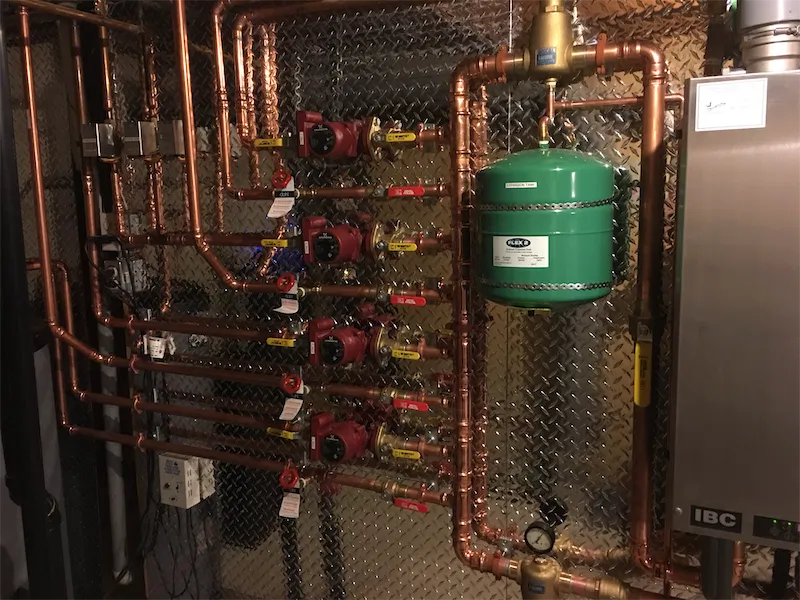
Expert Boiler Installation in Calgary
Most Calgary boilers fail at 18-22 years. When yours is on the way out, FlameTech replaces it without the cold-snap scramble — correctly sized, manufacturer-matched system, full install and commission in a single day for a straight swap.
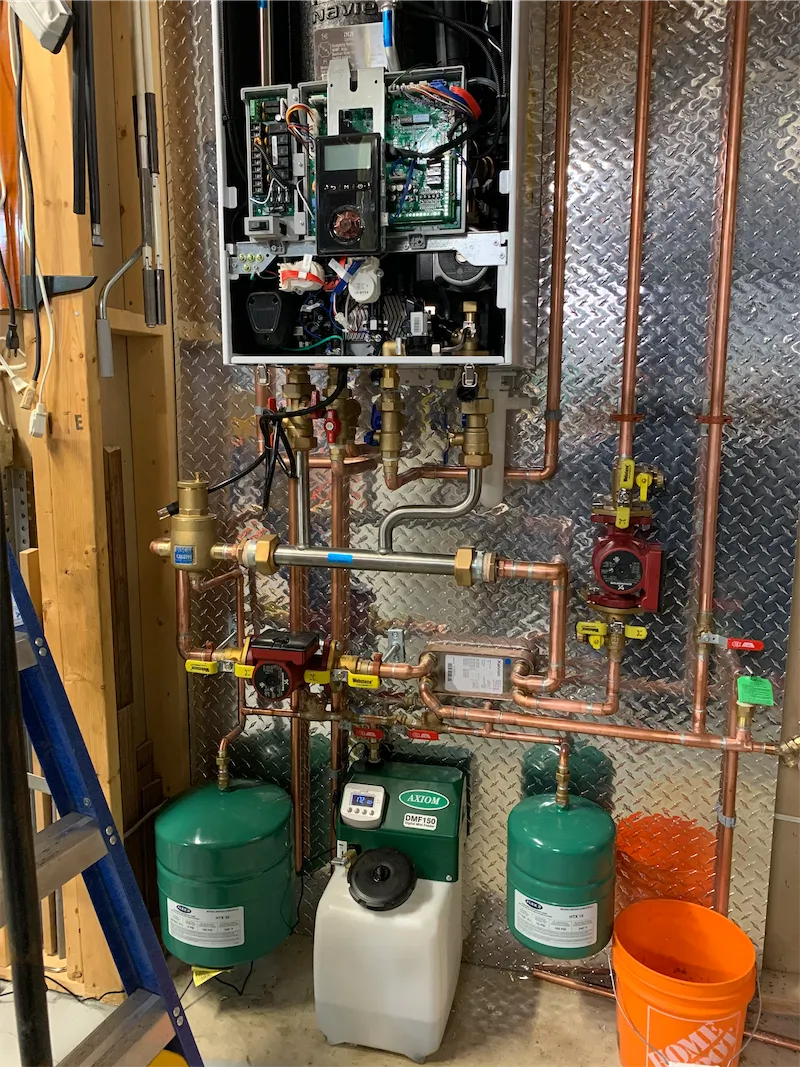
Combi Boiler Installation Calgary
One wall-hung unit for both your heat and your hot water — no storage tank, no second appliance. FlameTech sizes, installs, and commissions combi boilers across Calgary, and we'll tell you straight if your home isn't a good fit for one.
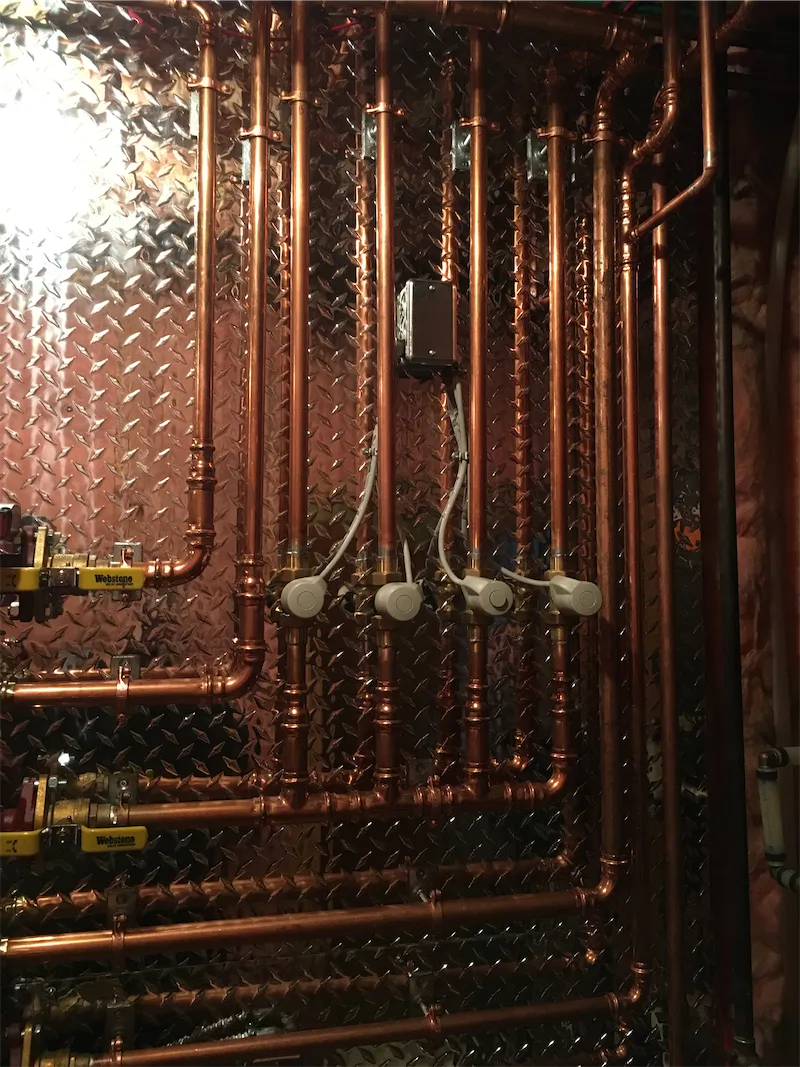
Boiler Replacement Calgary — Honest Repair-or-Replace Advice
Replacing a boiler isn't the same job as installing one. You're inheriting an existing system — old radiators, old pipework, decades of sludge — and getting that part right is what decides whether the new boiler lasts twenty years or five.
Where we cover Calgary.
We dispatch from Calgary and Airdrie. Find your neighbourhood for area-specific notes on common builds, hard-water patterns, and the systems we see most.
Get a free garage heater quote.
Tell us what's going on and our dispatch team will call you back with pricing and availability.
Book a Red Seal plumber in Calgary.
Free estimates and upfront pricing, from local technicians who treat your home like their own.
Free estimate · No service charge for quotes · BBB Accredited