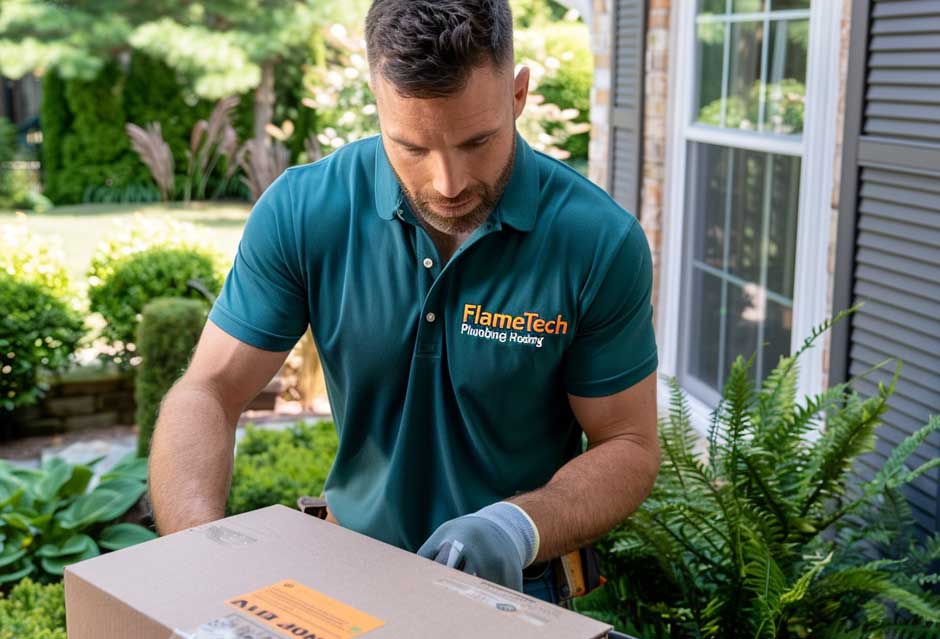

Humidifier Installation Airdrie — Whole-Home Systems, Sized and Set
Airdrie winters produce genuinely brutal indoor air. At −25°C outside there is almost no moisture in the air to begin with, and heating it to 21°C drops the relative humidity into single digits. Static shocks, cracking millwork, dry skin and split hardwood are not bad luck — they are what happens without humidification.
A whole-home humidifier mounts to the furnace and treats every room the system heats, rather than one portable unit chasing one bedroom. It is a modest install on a modern furnace and it changes how a house feels through five months of the year.
The part almost nobody sets up correctly is the control. Indoor humidity has to come DOWN as it gets colder outside, or the moisture condenses on your windows and, worse, inside wall cavities. A humidifier set and forgotten at one number causes problems in January that it never causes in October.
We install and service bypass, fan-powered and steam systems across Airdrie, dispatched locally from Coopers Crossing rather than routed up from Calgary. Call 587-834-3668.
Static shocks, gapping hardwood, or an existing humidifier that never seems to do anything? Call 587-834-3668.
Call 587-834-3668“Shaun is very accommodating and actively proposes better value solutions. He does excellent work and provides clear do it yourself maintenance instructions. He installed our A/C a couple years ago (while working for a different company) and just installed a recirculation line for near instantaneous hot water at our kitchen sink and dishwasher.”

Roy Smith
Calgary · 1 year ago
Why Airdrie winter air gets this dry
It is not the furnace drying the house out, which is the common assumption. It is physics, and understanding it makes the fix obvious.
Cold air holds almost no moisture
At −25°C outdoor air carries a tiny fraction of the water vapour that the same air holds at room temperature. Bring it inside and heat it to 21°C and the relative humidity collapses — often into single digits without ever passing through a furnace. The furnace warms the air; it does not remove the moisture, because there was barely any to start with.
Every air change makes it drier
Any air your house loses to the outside is replaced with that bone-dry outdoor air. The more exchange, the drier you get, which is why wind exposure matters here and why a long cold snap gets progressively worse rather than stabilising.
Chinooks swing it around
A twenty-degree temperature change in an afternoon shifts what your indoor humidity should be set to. A control left at one number all winter is wrong for most of it, in one direction or the other.
What you actually notice
Static shocks off door handles, dry skin and sinuses, hardwood gapping at the seams, millwork and cabinet doors cracking, instruments going out of tune, and more winter colds hanging around. Furniture and flooring damage is the expensive end of it.
The three system types
Which one suits depends on the house, the furnace and how dry it actually gets. We size against the volume being heated rather than the square footage on the listing.
Bypass humidifiers
The common choice and the least expensive to install. A duct loops warm supply air across a wet water panel and back into the return. No moving parts to speak of, so very little to fail — but the panel needs replacing every season, and on hard water it scales faster than the schedule in the manual assumes.
Fan-powered humidifiers
A built-in fan pushes air across the panel rather than relying on duct pressure, so output is meaningfully higher and it works in installations where a bypass duct is awkward to run. More capacity for a larger or leakier house.
Steam humidifiers
The highest output and the most independent — they boil water and inject steam, so they work whether or not the furnace is calling for heat. That matters in a very dry, very cold winter or a large home where a bypass simply cannot keep up. More to buy, more to service, and they use electricity.
Sizing it properly
An undersized unit runs constantly and never gets there. An oversized one on a poorly set control drives moisture into places it should not go. We size on heated volume and the tightness of the house, not a rule of thumb.
The setting that gets skipped
This is the single most common reason an installed humidifier disappoints — and it costs nothing to get right.
- 01Indoor relative humidity must be reduced as the outdoor temperature falls. Warm indoor air holds moisture; a cold window surface does not, and the moisture condenses there.
- 02The symptom of too much is obvious once you know it: condensation running down window glass, frost forming on the inside of the pane, or damp patches at the bottom of the frame.
- 03The symptom you cannot see is worse — moisture pushed into wall cavities and attic spaces, where it does not dry out and does not announce itself.
- 04Many humidistats have an outdoor sensor or a temperature-compensated dial that handles this automatically. Plenty of installed units have that feature and have never had it connected.
- 05If yours is a manual dial, the rule is simple: when it gets colder outside, turn it down. When windows start fogging, you are already too high.
- 06We set the control at commissioning, connect the outdoor sensor where the equipment supports it, and show you what to change and when.
Hard water, wells and service intervals
Airdrie's water situation affects humidifiers more than people expect, and it differs between town and acreage.
- 01On treated municipal supply, hardness is in the same range as Calgary — enough to scale a water panel well before the season ends.
- 02A scaled panel stops evaporating efficiently long before it looks used up. The humidifier runs, the water flows, and the humidity never rises.
- 03On acreage wells, iron and manganese make it considerably worse and stain the panel and drain line as they go. See well water treatment.
- 04A water softener upstream extends panel life noticeably, alongside everything else it protects.
- 05Practical cadence: replace the water panel annually at minimum, and check it mid-season in a hard-water house. Clear the drain line at the same time.
- 06Shut the humidifier's water supply off for the summer. Leaving it live through five months of no use is how solenoid valves and drain lines fail quietly.
How it ties into the rest of the system
A humidifier is furnace-mounted, so it is not really a standalone appliance.
- 01It runs off the furnace blower on bypass and fan-powered types, so furnace airflow problems become humidifier problems. See furnace installation in Airdrie.
- 02Most newer Airdrie homes have an HRV deliberately exchanging indoor air for outdoor air. Humidifier and HRV settings interact and are commonly left fighting each other.
- 03If you are having a furnace replaced, that is the cheapest moment to add or upgrade a humidifier — the equipment is already open and the labour overlaps.
- 04Very dry air and a house that never feels warm enough often travel together, because dry air feels colder at the same temperature. Sometimes the humidity is the comfort problem rather than the heating.
- 05For the Calgary side of this work, see humidifiers in Calgary — same crew, same equipment, same approach.
Airdrie Humidifier Installation FAQs
Why is the air in my Airdrie home so dry in winter?
Because cold air holds almost no moisture, and that is the air your house is constantly bringing in.
At −25°C outdoor air carries a tiny fraction of the water vapour it holds at room temperature. Heat it to 21°C and the relative humidity collapses, often into single digits. The furnace is not drying the house out — it is warming air that was already dry.
Every air change makes it worse, which is why a long cold snap gets progressively drier rather than levelling off, and why an exposed lot with wind driving against it holds humidity less well than a sheltered one.
Which type of humidifier should I get?
It depends on the house rather than the price list.
Bypass is the common choice — inexpensive, almost nothing to fail, and enough for most homes. Fan-powered adds meaningfully more output and suits a larger or leakier house, or an installation where the bypass duct is awkward. Steam is the highest output and works independently of whether the furnace is heating, which matters in a big house or a genuinely severe winter.
We size on the heated volume and how tight the house is, then recommend. An undersized unit runs constantly and never gets there; that is the more common mistake.
My windows fog up. Is the humidifier set too high?
Almost certainly yes, and it is worth acting on rather than living with.
Condensation on the glass means the indoor humidity is higher than the cold surfaces in your house can tolerate. The visible version is annoying. The invisible version is the problem — the same moisture is being pushed into wall cavities and attic spaces where it does not dry out.
The rule is that indoor humidity comes down as the outdoor temperature drops. If your humidistat has an outdoor sensor, it should be doing that automatically — plenty of installed units have the feature and were never wired for it. If it is a manual dial, turn it down when it gets cold and back up when it warms.
How often does the water panel need changing?
At least annually, and mid-season is worth checking in a hard-water house.
Airdrie's town supply is hard enough to scale a panel well before the season ends, and a scaled panel stops evaporating efficiently long before it looks used up. That is the usual reason a humidifier appears to run without raising the humidity at all.
On acreage wells with iron it is faster and messier. A water softener upstream extends panel life noticeably.
One more thing worth doing: shut the humidifier's water supply off over summer. Five months of standing pressure with no use is how solenoids and drain lines fail.
Can you add a humidifier to my existing furnace?
Usually yes, and on a modern furnace it is a straightforward install.
What we check first: whether there is room for the bypass duct routing, whether the furnace blower suits the type you want, where the water supply and drain will run, and whether the existing thermostat or control can handle a humidistat.
Newer Airdrie homes are the easiest case — modern furnace, modern ductwork, current electrical.
If you are already planning a furnace replacement, do them together. The equipment is open, the labour overlaps, and it is the cheapest version of the job you will get. See furnace installation in Airdrie.
Do you dispatch locally in Airdrie?
Yes — out of Coopers Crossing rather than routing a truck up from Calgary.
That matters mostly for scheduling. You get a confirmed window rather than being fitted around a Calgary route, and a mid-winter no-heat call is not waiting on Deerfoot traffic.
We cover the full range in Airdrie beyond humidifiers: furnaces, boilers, air conditioning, hot water tanks and general plumbing.
I already have a humidifier and it does nothing. What's wrong?
Three things account for most of these, in order.
A scaled or unreplaced water panel — the most common by far. The unit runs, water flows past a panel that can no longer evaporate, and nothing happens.
The control set wrong, or an outdoor sensor never connected, so it is not calling when it should.
The water supply shut off and never turned back on after summer, or a failed solenoid valve that is not opening.
All three are inexpensive to sort. It is worth diagnosing before assuming the unit is finished — most humidifiers we are called to are not broken, just neglected.

Monthly Financing Available
Spread the cost into manageable monthly payments.
Spread the cost of a whole-home humidifier into monthly payments via our Financeit partner.
Simple, honest, on your schedule.
Call or request a quote
Tell us what's going on. We listen first and ask the right questions before we schedule anything.
Free written estimate
We assess the job and give you an all-in price in writing. No pressure, no surprise add-ons.
Schedule at your convenience
Pick a day and window that works for your home — we'll confirm dispatch and arrival time.
Clean, code-compliant service
Licensed technicians complete the work to Alberta code, clean up, and walk you through what we did.
Also under Air

AC Repair in Airdrie
When your AC quits during a 30°C+ Airdrie heat wave, the last thing you want is a 45-minute wait for a truck to drive up from Calgary. Jason is based in Coopers Crossing, so Airdrie AC repair is genuinely local — and we diagnose the fault properly instead of reaching for the refrigerant hose.
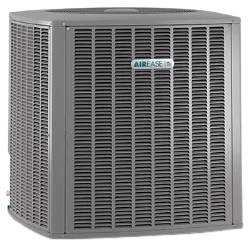
Air Conditioning Airdrie — AC Install, Repair + Heat Pump Comparison
Airdrie summers used to be a couple of warm weeks per year. Not anymore — 30°C+ stretches are now routine through July and August. If you're adding AC for the first time, replacing a unit at end of life, or repairing a system that's not keeping up, FlameTech installs and services every common Airdrie setup. And before you commit to like-for-like AC: ask us whether a heat pump makes more sense. For most Airdrie homeowners adding cooling capability today, it does — same outdoor unit, AC plus efficient supplemental heating in one piece of equipment. Local Airdrie dispatch from Coopers Crossing.
Where we cover Airdrie.
Local dispatch from Coopers Crossing across every Airdrie neighbourhood. Find your area for build-era notes, hard-water patterns, and the systems we see most.
Also covering nearby Chestermere, Cochrane, and Carstairs.
Get a free humidifier install quote.
Tell us what's going on and our dispatch team will call you back with pricing and availability.
Book a Red Seal plumber in Airdrie.
Free estimates, upfront pricing, and a satisfaction guarantee — local technicians who treat your home like their own.
Free estimate · No service charge for quotes · BBB Accredited