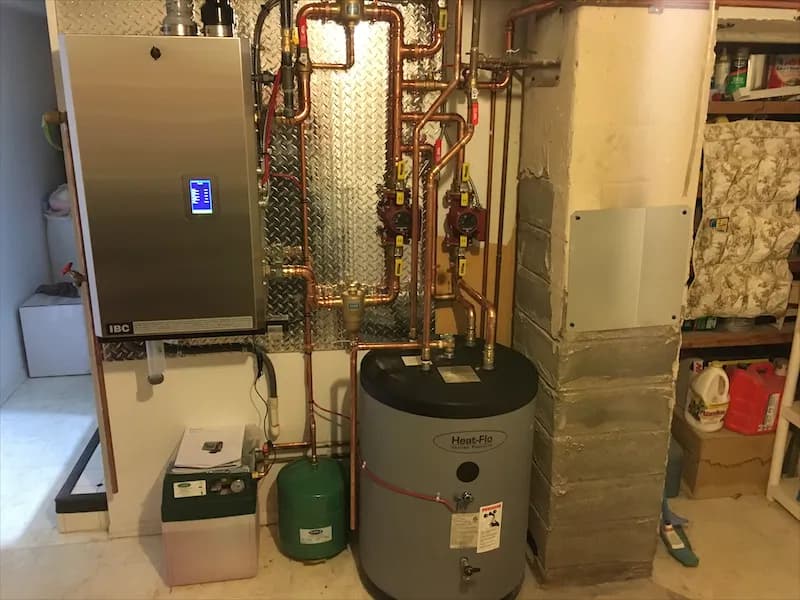

In-Floor Heating Calgary — Hydronic Radiant Design, Install & Service
In-floor radiant is the most comfortable heat you can put in a Calgary home, and the least forgiving to get wrong. It lives under the floor, so a design mistake isn't something you fix later — it's something you live with. Jason has spent twenty years on hydronics specifically: heat-loss design per zone, manifold layout, commissioning, and the service work afterwards.
Most of what we're called to fix on existing radiant systems isn't a broken part. It's a system that was never commissioned properly — loops never balanced, no outdoor reset curve set, or a slab sized against a guess instead of a heat-loss calculation. It heats, more or less, and it underperforms quietly for twenty years.
We design and install new systems — whole-home, basement, garage and shop slabs, and snowmelt — and we service the ones already in the ground. The most common call by far is one cold zone while the rest of the house is fine, which is usually a stuck zone valve actuator or air trapped in a loop, and usually fixable in a single visit.
Radiant runs off a boiler, so the two are one system. See boiler installation for the heat source side, or boiler replacement if you're putting a new boiler onto existing floor loops. Monthly financing is available via Financeit.
Planning in-floor heat, or living with a zone that's never been right? Call 587-834-3668 for a free assessment.
Call 587-834-3668“Very impressed how quickly you came. Look forward to Jason coming tomorrow to fix problems.”

Pat Strong
Calgary · 7 months ago
Where in-floor heating makes sense in Calgary
It isn't the right answer everywhere. These are the applications where it genuinely earns its cost, and the one where it usually doesn't.
Basement developments
The most common retrofit we do. Basement slabs are cold, and radiant fixes that at the source rather than blowing warm air at it. If the basement is being developed anyway, the incremental cost of putting heat in the floor is at its lowest — this is the moment to decide, not afterwards.
Garage and shop slabs
Very popular here, and for good reason: a heated slab dries a vehicle rather than just warming the air around it, and it holds temperature through a door opening in a way forced air can't. Any garage loop needs glycol, because the space will drop below freezing if the heat ever fails. If you want a warm garage without pouring a new slab, an overhead radiant tube or gas garage heater is the cheaper route and we'll say so.
Whole-home radiant in new builds and major renovations
Even heat, no ducts, no drafts, no blown dust, and silence. It pairs naturally with tile and stone, and it lets you be comfortable at a lower air temperature than forced air needs. Best specified at design stage when the floor build-up can accommodate it.
Bathroom floor warming
Worth separating from the rest. For a single bathroom, an electric mat under the tile is usually the sensible choice — simpler, cheaper, and it doesn't need to be tied into a boiler. Hydronic makes sense when the bathroom is part of a larger radiant zone, not on its own.
Driveway and walkway snowmelt
A luxury item and an honest one: it works, it's expensive to install and to run, and it needs glycol plus its own controls. Where it genuinely pays off is a steep driveway or a north-facing walk that ices up repeatedly through freeze-thaw. We'll tell you if the layout doesn't warrant it.
Where we'd talk you out of it
Retrofitting a whole existing house with finished floors throughout. Tearing up flooring to get tubing underneath rarely justifies itself against a well-installed forced-air or boiler-and-radiator system. Staple-up between joists is possible from below, but it needs higher water temperatures and it doesn't perform like a slab.
What actually decides whether a radiant system performs
Radiant systems rarely fail outright. They disappoint, quietly, for years — and it almost always traces back to one of these.
Heat-loss design, room by room
Tube spacing is set by how much heat a room needs, and rooms differ. A wall of north-facing glass needs tighter spacing than an interior hallway. Uniform spacing throughout a house is a shortcut, and it shows up as one room that never quite gets there while another overheats.
Floor covering is part of the design
Everything between the tubing and your feet is thermal resistance. Tile and stone are ideal. Engineered hardwood is workable within limits. Thick carpet with a heavy underlay can require supply temperatures high enough to undermine the whole point of the system. Decide the flooring before the design, not after.
Supply water temperature and the boiler
Radiant runs at far lower water temperatures than radiators, which is exactly why it pairs so well with a condensing boiler — low return temperatures are what let a condensing unit actually condense. A mixing valve or an injection loop protects the floor when the same boiler also serves higher-temperature loads.
Loop length and balancing
Too long a loop and the far end runs cold because the water has given up its heat before it gets there. Loops of roughly similar length balance far more easily. Where they can't be, the manifold balancing valves have to be set deliberately rather than left wherever they arrived from the factory.
Oxygen-barrier PEX
Non-barrier PEX in a sealed loop lets oxygen diffuse through the tubing wall, and that oxygen corrodes cast-iron circulator bodies and steel components from the inside out. It takes a few years to show and it's not repairable once it has. Barrier tubing is the only thing that belongs in a closed hydronic system.
Outdoor reset, and Calgary's chinooks
A slab holds a great deal of heat and responds slowly. Outdoor reset lowers the water temperature as it warms outside, so the system anticipates instead of chasing. Without it, a chinook that lifts the temperature twenty degrees in an afternoon leaves a slab still delivering yesterday's heat, and you end up opening windows.
Service and repair on existing systems
We service radiant systems regardless of who installed them. These are the calls we get most.
- 01One cold zone while the rest of the house is fine — nearly always a stuck zone valve actuator or air trapped in that loop. Usually a single-visit fix.
- 02Air in the system generally: gurgling, uneven heat, a circulator that sounds wrong. Purging plus a proper air separator resolves it.
- 03A failed circulator pump — the loop is dead quiet and the zone never warms.
- 04Balancing that has drifted, or was never set, leaving some zones starved while others run hot.
- 05Sludge and magnetite in older systems that included steel components, particularly where non-barrier tubing was used. A power flush and a magnetic filter protect what's downstream.
- 06Glycol that has never been tested. Inhibitors deplete over time and old glycol turns acidic, which attacks the system it was put there to protect. Garage and snowmelt loops need it checked, not assumed.
- 07Boiler-side faults presenting as a radiant problem — pressure loss, lockouts, or no heat at all. See boiler repair and boiler not working.
Calgary In-Floor Heating FAQs
How much does in-floor heating cost in Calgary?
It depends on the area, the application, and whether there's already a boiler to run it — and we won't quote it over the phone, because a number given sight-unseen is a number that changes.
The things that move it most: total floor area and zone count, whether it's going into a new pour or over an existing slab, whether you need a new heat source or can tie into an existing boiler, whether the loops need glycol, and the controls.
A basement in-floor loop tied into an existing boiler is a very different job from a whole-home system with a new boiler and eight zones. We assess, design, and give you the full scope and the all-in price in writing at no charge. Financeit monthly payments are available.
Can I put in-floor heating into an existing house?
In a basement or garage, usually yes and it's often straightforward — particularly if the slab is being poured or the space is being developed anyway.
Over an existing slab you're looking at a low-profile panel system or an over-pour, both of which raise the finished floor height. That has knock-on effects for door clearances and stair risers, so it needs checking early.
Between floor joists from below — staple-up with heat transfer plates — is possible on upper floors, but it needs higher water temperatures and doesn't deliver the even, steady performance a slab does. We'd rather set that expectation upfront than have you disappointed by it.
Electric or hydronic in-floor heat?
Depends entirely on scale.
For one bathroom floor, electric is usually the sensible answer. A mat under the tile, its own thermostat, no boiler involvement, and a much simpler install.
For anything larger — a basement, a garage, a whole floor, a whole house — hydronic wins on running cost. You're heating with gas rather than electricity, and in Calgary across a seven-month heating season that difference is substantial.
The crossover point is roughly where the electricity bill starts to matter. We'll tell you honestly which side of it you're on rather than selling you the bigger system by default.
One of my radiant zones is always cold. What's wrong?
Almost always one of two things: a stuck zone valve actuator, or air trapped in that loop.
Both are typically diagnosed and fixed in one visit. We isolate at the manifold, confirm whether the valve is actually opening when the thermostat calls, and purge the loop if it's air.
If it's neither, the next candidates are a failed circulator or a balancing valve that has drifted out of adjustment — still usually same-visit work. It's the most common radiant call we get and it's rarely anything serious.
What floor coverings work over in-floor heat?
Tile and stone are ideal — they conduct well and they tolerate the temperature cycling without complaint.
Engineered hardwood works within the manufacturer's temperature limits, which need respecting rather than hoping about. Solid hardwood is riskier because it moves more with moisture and temperature.
Carpet is the one to watch. A thick carpet with a heavy underlay is effectively insulation between the heat and the room, and it can push required supply temperatures high enough to undermine the efficiency you installed the system for. If carpet is going down, tell us at design stage and we'll allow for it.
Does in-floor heating work with a heat pump?
It can, and radiant is actually one of the better matches for one, because it runs at low water temperatures and heat pumps lose efficiency as they push water hotter.
The practical constraint in Calgary is our design temperature. An air-source unit needs a backup heat source for the coldest stretches, so in most cases you're looking at a hybrid arrangement rather than a heat pump alone.
It has to be designed as one system from the start — sizing, buffer, and controls all interact. See heat pump installation, and we'll give you an honest read on whether it pencils out for your house.
Do I need glycol in my system?
In any loop that could drop below freezing, yes. That means garage slabs, shop floors, and snowmelt without exception.
Inside a heated house, plain water is normally fine and is actually the better heat transfer fluid — glycol carries slightly less heat and is harder on pumps.
What matters is that glycol isn't fit-and-forget. The corrosion inhibitors in it deplete, and depleted glycol turns acidic and attacks the metal in the system it was installed to protect. It needs testing periodically and replacing when it's spent. If nobody has tested yours since it went in, that's worth doing.
Is in-floor heating expensive to run?
Run properly, it's efficient — often more so than forced air, because you can be comfortable at a lower air temperature when the floor itself is warm, and because low return water temperatures let a condensing boiler operate where it's most efficient.
Run badly, it's expensive. A system with no outdoor reset, unbalanced loops, or supply temperatures set high to compensate for a design that didn't account for the flooring will cost more than it should for its entire life.
That's the whole argument for commissioning it properly. The difference between the two isn't the equipment — it's whether anyone set it up correctly.

Monthly Financing Available
Spread the cost into manageable monthly payments.
Spread the cost of an in-floor heating install into flexible monthly payments via our Financeit partner.
Simple, honest, on your schedule.
The tubing is the cheap part and the easy part. Everything that decides whether the system is any good happens before and after it goes down.
Heat loss, room by room
We calculate heat loss for each space against Calgary's design temperature, then set tube spacing and supply water temperature from that. Floor covering matters here — tile is ideal, thick carpet or engineered hardwood adds resistance and needs the design adjusted rather than ignored.
Layout, zoning and written quote
Loop lengths kept within sensible head-loss limits, zones grouped by how the rooms are actually used, manifold located where it can be serviced. You get the layout, the components and the all-in price in writing before anything starts.
Tubing, manifold and heat source
Barrier PEX tied down and pressure-tested before the pour or the panel goes over it, and left under pressure through the pour so any damage shows immediately. Manifold, circulators, mixing and the boiler tie-in follow.
Commission — the step that gets skipped
Purge every loop of air, balance flow across the manifold, set the mixing and the outdoor reset curve, and verify each zone actually calls and responds. Then we walk you through the controls so you know what you're adjusting.
Also under Heating
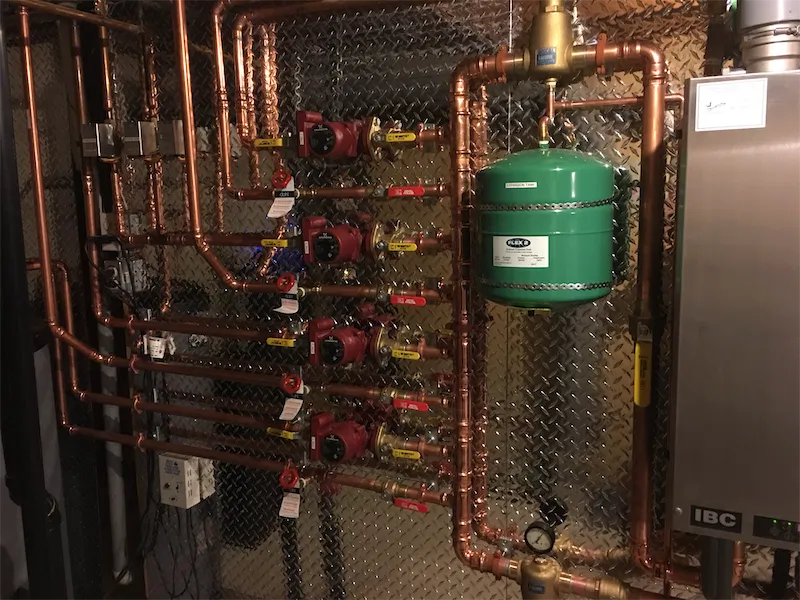
Expert Boiler Installation in Calgary
Most Calgary boilers fail at 18-22 years. When yours is on the way out, FlameTech replaces it without the cold-snap scramble — heat-loss calc, manufacturer-matched system, full install and commission in a single day for a straight swap.
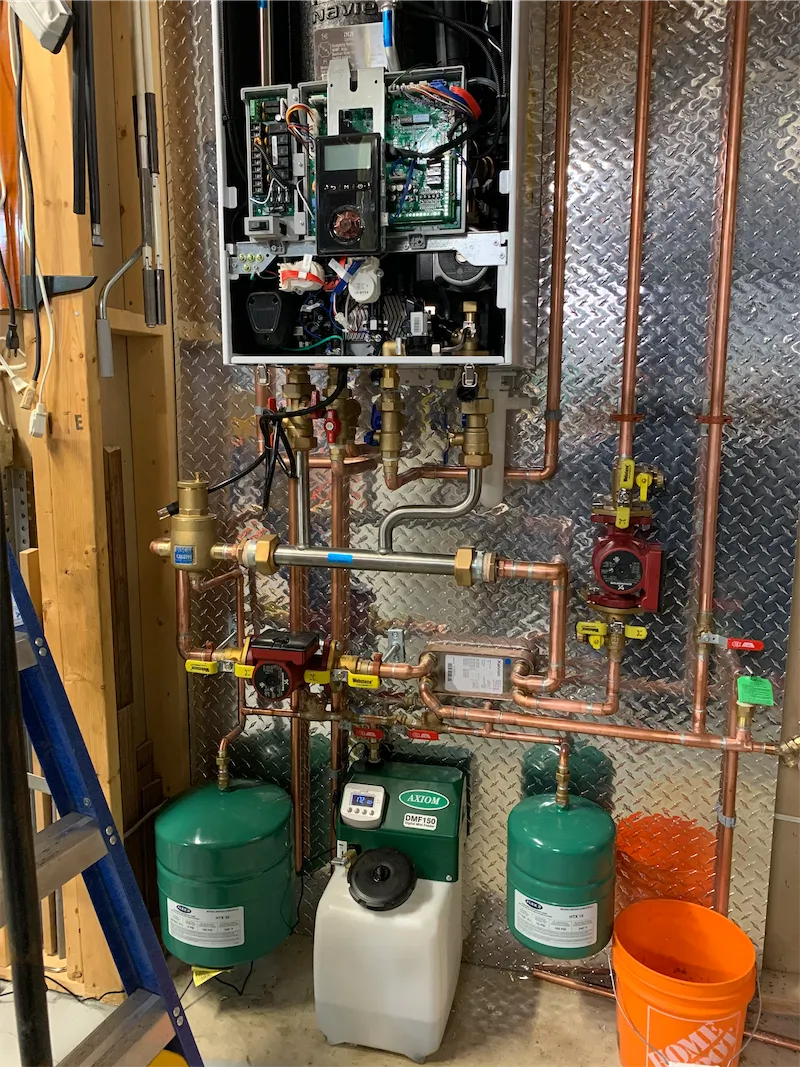
Combi Boiler Installation Calgary
One wall-hung unit for both your heat and your hot water — no storage tank, no second appliance. FlameTech sizes, installs, and commissions combi boilers across Calgary, and we'll tell you straight if your home isn't a good fit for one.
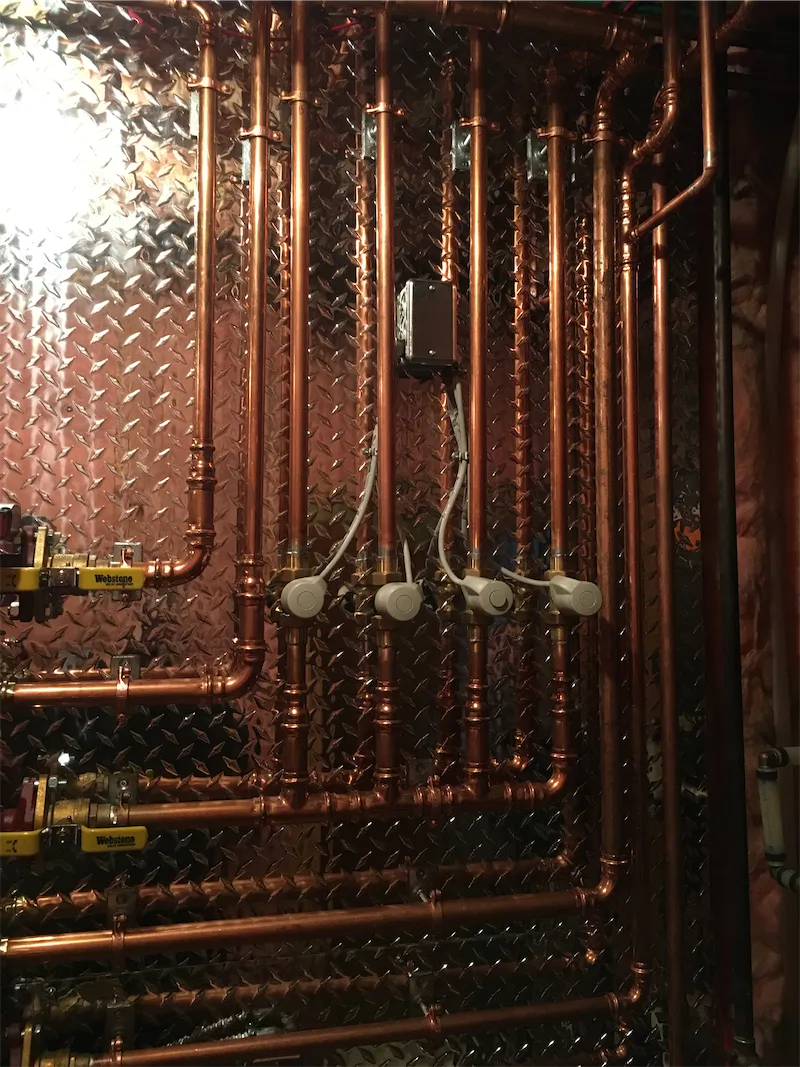
Boiler Replacement Calgary — Honest Repair-or-Replace Advice
Replacing a boiler isn't the same job as installing one. You're inheriting an existing system — old radiators, old pipework, decades of sludge — and getting that part right is what decides whether the new boiler lasts twenty years or five.
Where we cover Calgary.
Same-day dispatch across Calgary and Airdrie. Find your neighbourhood for area-specific notes on common builds, hard-water patterns, and the systems we see most.
Get a free in-floor heating quote.
Tell us what's going on and our dispatch team will call you back with pricing and availability.
Book a Red Seal plumber in Calgary.
Free estimates, upfront pricing, and a satisfaction guarantee — local technicians who treat your home like their own.
Free estimate · No service charge for quotes · BBB Accredited