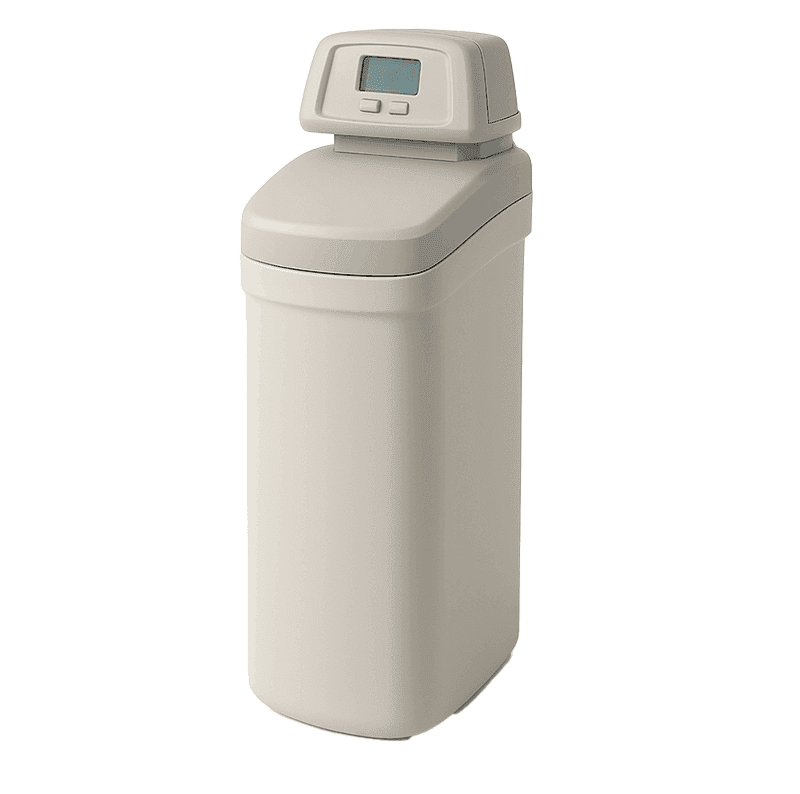

Water Softener Installation Airdrie — Sized, Installed, Explained
Airdrie and Calgary share the same treated supply, and it is hard enough to scale a water heater, shorten fixture life and put a film on everything you wash. A properly sized softener fixes that permanently. A badly sized one runs constantly, eats salt, and wears out years early — which is why sizing is the part of this job worth getting right.
We install whole-home softeners across Airdrie and Calgary, size them against your household's actual demand rather than a box on a shelf, and set the programming to the water you actually have. Local Airdrie dispatch from Coopers Crossing rather than a drive up from the city.
The other thing worth knowing before you buy: in-town Airdrie and the acreages outside it are two different water problems. On municipal supply the job is hardness. On a private well it is usually hardness plus iron — and a softener installed without iron removal ahead of it will foul and fail. Most suppliers do not raise that. We test first.
Already have one that has stopped keeping up? That is water softener repair in Airdrie. Call 587-834-3668 and a real person answers.
Scale on the fixtures, or orange staining on an acreage well? Call 587-834-3668 — we test before we quote anything.
Call 587-834-3668“Great experience working with Jason and Shaun on the installation of my water softener and RO system. Professional, knowledgeable, and took the time to explain the setup and answer all my questions. The installation was completed neatly and efficiently, and the quality of workmanship was excellent. Highly recommend Flame Tech for any plumbing or water treatment needs.”
Aditya Prashar
Calgary · 3 months ago
Signs you have a hard water problem
Most Airdrie and Calgary homes do, because it is the supply rather than the house. These are what it looks like day to day.
- 01White crusty scale on taps, shower heads and kettles that comes back within days of cleaning it off.
- 02Spots and film on glassware straight out of the dishwasher, no matter which detergent you use.
- 03Soap and shampoo that will not lather, and a slippery residue that is hard to rinse off.
- 04Laundry coming out stiff, dull or greying over time, and towels losing their absorbency.
- 05Skin feeling tight and dry after a shower, and hair that feels coated.
- 06A water heater that rumbles or pops when it heats — that is sediment on the tank bottom, and it costs you gas every month. See water heater service.
- 07Fixture cartridges and appliance valves failing sooner than they should.
- 08On an acreage well specifically: orange or reddish staining on fixtures and laundry, which is iron rather than hardness and needs different treatment.
How hard is the water here, actually
Worth knowing the numbers, because they determine what size unit you need and how often it will regenerate.
Airdrie is on the same supply as Calgary
Airdrie draws treated water from the Calgary system, so hardness is in the same range rather than a separate problem. City data puts the north around 126-198 mg/L and the south and southeast around 181-262 mg/L. Anything above roughly 120 mg/L is considered hard, so effectively every home on municipal supply here qualifies.
What that means for sizing
Higher hardness means the resin bed loads faster, so the unit regenerates more often. More regenerations means more salt, more water down the drain, and more wear on the control valve. Size it correctly and it cycles when it should; size it small to save money and it never stops.
Hardness fluctuates seasonally
It tends to run lowest during spring snowmelt and peaks through the winter months, which is also when your water heater and furnace are working hardest. We size for the harder end of the range rather than the average.
Acreage wells are a separate conversation
Properties outside town limits are not on the municipal supply at all. Wells around Airdrie can run considerably harder, and frequently carry iron and manganese too. There is no typical figure — it has to be tested. See well water treatment.
How a softener actually works
Two minutes of chemistry that makes the maintenance and the sizing make sense.
Ion exchange
The tank is full of small resin beads carrying sodium ions. Hard water passes through, and because calcium and magnesium hold a stronger charge they swap places with the sodium and stick to the beads. Softened water carries on into the house. That is the whole mechanism.
Regeneration
Eventually the beads are loaded with calcium and magnesium and cannot take more. The control valve then draws brine from the salt tank, floods the resin with a high concentration of sodium, and reverses the exchange — the hardness minerals wash to drain and the beads are recharged. That is what the salt is for.
Demand-initiated versus timer
A timer unit regenerates on a schedule whether it needs to or not. A demand-initiated unit meters your actual usage and regenerates when the capacity is genuinely spent. The second uses noticeably less salt and water and puts fewer cycles on the valve, and it is what we install. See how often a softener should regenerate for what a healthy interval looks like.
Why softened water is not filtered water
Ion exchange removes hardness minerals. It does not remove chlorine, lead, bacteria, nitrates or fluoride. If those are your concern, that is filtration and it is a different piece of equipment — see below.
Softener or filtration — which do you actually need
These get confused constantly, and buying the wrong one is a common and avoidable mistake.
A softener solves scale
Hardness, limescale, spotting on glassware, soap that will not lather, shortened appliance life. If those are your symptoms, a softener is the answer and filtration will not help.
Filtration solves taste, odour and contaminants
Chlorine taste, sediment, and dissolved solids in drinking water. A reverse osmosis unit at the kitchen tap handles drinking and cooking water specifically, and it works alongside a softener rather than instead of one.
Most homes here want both, in that order
Softener for the whole house to protect the plumbing and appliances, RO at the kitchen sink for what you drink. They do different jobs and neither substitutes for the other.
A carbon pre-filter is the underrated third piece
Chlorine in the municipal supply slowly degrades softener resin, which is why beds here often fall short of their theoretical life. A carbon filter ahead of the softener strips it and protects the most expensive consumable in the system. See how long water softeners last.
Salt-free conditioners
These do not soften water. They alter how minerals crystallise so scale adheres less readily, which is not nothing, but hardness stays in the water and the soap and laundry problems remain. We will explain the difference rather than sell you one as a softener.
Municipal or well — the Airdrie split
The single biggest difference between installing a softener in town and installing one on an acreage, and the thing most quotes ignore.
In town: hardness, and that is mostly it
Treated municipal supply is consistent and predictable. Test the hardness, size the unit against household demand, install it at the main entry, program it and you are done.
On an acreage: test before anything is specified
Wells around Airdrie can carry iron, manganese, sediment and severe hardness in any combination, and every property is its own supply. Two acreages on the same road can need completely different equipment.
Why iron matters so much
Softener resin is designed to exchange calcium and magnesium. Iron binds to it and does not release during regeneration, so the bed gradually fouls and loses capacity — permanently. Adding more salt changes nothing, because salt was never the limiting factor.
The order is not optional
Sediment first, then iron and manganese removal, then softening, then carbon, then UV last if bacteria are present. A softener installed ahead of iron removal is a system with a countdown on it, and that is the most expensive mistake we are called to fix on acreage properties.
What we do and do not take on
Everything from the wellhead inward — filtration, softening, pressure tanks, pressure switches, check valves and the plumbing through the house. We do not drill wells or pull down-hole pumps; that is a licensed well contractor and we will point you to one.
What the install involves
Straightforward on most homes. These are the things we check before quoting so nothing is discovered on the day.
Where it goes
At the main water entry, upstream of the water heater so everything downstream is protected. In most Airdrie homes that is the mechanical room, and space is usually the constraint rather than plumbing.
Drain and power
The unit needs a drain for the regeneration cycle and a standard outlet. Where a floor drain is not conveniently placed, that is worth resolving at quote stage rather than mid-install.
A bypass valve, always
So the softener can be isolated for service without shutting the water off to the house, and so you can bypass it for outdoor watering if you would rather not soften what goes on the garden.
Programming to your water
This is where a lot of installs quietly fail. The unit gets set to a default rather than to your measured hardness and household size, which wastes salt and leaves hard water at the end of a cycle. We set it to reality and show you what the settings mean.
Timeline
A straightforward whole-home install is typically a single visit. A full treatment train on a well — sediment, iron removal, softener — takes longer and we will give you a realistic figure in writing.
New builds
Most new homes in Airdrie are delivered without a softener but with the plumbing loop roughed in for one. If yours has a capped loop in the mechanical room, the install is simpler and cheaper than a retrofit.
What drives the cost
We do not quote softeners over the phone, because the number would be wrong. Here is what actually moves it, so you can read any quote — ours or someone else's — and know what you are comparing.
- 01The size and grade of the unit, which comes from your measured hardness and household demand rather than a shelf category.
- 02Demand-initiated versus timer control. The former costs more upfront and less to run, and we will explain the trade rather than assume.
- 03Whether a plumbing loop is already roughed in, which most newer Airdrie builds have, or whether the supply has to be cut and re-piped.
- 04Drain access and whether one has to be run to reach the unit.
- 05On a well: whether sediment filtration and iron or manganese removal are needed ahead of the softener, which is a treatment train rather than a single appliance.
- 06Optional additions — a carbon pre-filter to protect the resin, or reverse osmosis at the kitchen tap.
- 07We come out, test the water, and give you the model, the capacity, the full scope and the all-in price in writing at no charge. Financeit monthly payments are available.
Keeping it working
Low maintenance rather than no maintenance. Most of it is yours and takes minutes.
- 01Check the salt monthly and top it up before it runs out entirely.
- 02Break up any salt bridge — a hard crust spanning the tank makes it look full while nothing dissolves underneath, and the softener quietly stops working.
- 03Use pellet or solar salt rather than cheap rock salt. Less insoluble residue means less sludge in the brine tank and less wear in the valve.
- 04Have it serviced every two to three years: injector and screen cleaning, valve inspection, brine tank clean, and a check that the programming still matches your household.
- 05Expect roughly 10-15 years from a decent unit here, with the control valve usually failing before the resin. See how long water softeners last.
- 06If it has stopped softening, do not just add salt — see water softener repair in Airdrie for what the symptom actually points at.
Airdrie Water Softener FAQs
The questions Airdrie and Calgary homeowners ask most. If yours is not here, call 587-834-3668 and ask — a real person answers.
How hard is the water in Airdrie?
Hard, and it is the same supply as Calgary rather than a separate problem.
Airdrie draws treated water from the Calgary system. City data puts hardness in the north around 126-198 mg/L and in the south and southeast around 181-262 mg/L. Anything above roughly 120 mg/L is classed as hard, so effectively every home on municipal supply here qualifies.
Hardness also moves with the seasons — lowest during spring snowmelt, highest through winter, which is when your water heater is working hardest anyway. We size for the harder end rather than the average.
Acreage properties on private wells are separate again, and can run considerably harder with iron on top. Those have to be tested.
What size water softener do I need?
It comes from two numbers: your measured hardness, and how much water the household actually uses.
Those give a daily grain load, and the unit is sized so it regenerates on a sensible interval rather than constantly. Bedrooms and occupants are a starting point, not the answer — two people with a soaker tub and a high-flow shower use more than four people who don't.
Undersizing is the common mistake. It regenerates constantly to keep up, burns salt and water doing it, and wears the control valve out years early. Oversizing wastes capacity you paid for and can leave resin sitting unused.
We test and size on site, at no charge.
How long does installation take?
A straightforward whole-home install is usually a single visit.
What lengthens it: no existing plumbing loop, so the main supply has to be cut and re-piped; no convenient drain for the regeneration cycle; or tight mechanical room access.
A full treatment train on an acreage well — sediment filtration, iron and manganese removal, then the softener — is a bigger job and takes longer. We give you a realistic timeline with the written quote rather than an optimistic one.
How much does a water softener cost in Airdrie?
Most water softener installs in Airdrie run $2,250 to $3,050 as of September 2026 for a professional-grade demand-initiated unit, installed, with the brine tank, bypass plumbing and permit included. Where you land depends on the size and grade of unit, whether a plumbing loop is already roughed in, drain access, and — on a well — whether iron removal is needed ahead of it. A full treatment train is a different conversation from a single appliance.
What we can tell you is what moves it: unit capacity, demand-initiated versus timer control, whether the supply has to be re-piped, and whether you are buying one appliance or a treatment train.
We test the water, size the system, and give you the model, the capacity, the full scope and the all-in price in writing at no charge. Financeit monthly payments are available if you would rather spread it.
Do I need a softener if I have a well?
Almost certainly, but a softener alone is often not the whole answer.
Wells around Airdrie frequently carry iron and manganese alongside hardness. Iron binds to softener resin and does not release during regeneration, so the bed fouls permanently. Install a softener without dealing with the iron first and you have bought a system with a countdown on it.
The right sequence is sediment, then iron and manganese removal, then softening. That is why we test before specifying anything rather than after. See well water treatment.
Will a softener remove chlorine or make my water safe to drink?
No to both, and this is the most common misunderstanding about softeners.
Ion exchange removes calcium and magnesium. It does not remove chlorine, lead, bacteria, nitrates or fluoride. Softened water is better for your plumbing and appliances; it is not filtered water.
If taste and drinking water are the concern, a reverse osmosis unit at the kitchen tap is the answer, and it works alongside a softener rather than instead of one.
For anything relating to whether well water is safe to drink, Alberta Health Services publishes current guidance on testing, and that is the right source rather than us.
How much salt will it use?
Less than people expect, if it is sized and programmed properly.
A demand-initiated unit meters actual water use and regenerates only when the capacity is genuinely spent. A timer unit regenerates on a schedule whether it needs to or not, which wastes salt and water.
High salt consumption usually means one of three things: the unit is undersized and cycling constantly, it was programmed to a default rather than your real hardness, or something is faulty. How often it should regenerate covers how to tell which. All three are worth diagnosing rather than just buying more salt.
Which salt should I use?
Pellet or solar salt rather than cheap rock salt.
Rock salt carries more insoluble material, which settles as sludge at the bottom of the brine tank and eventually finds its way into the control valve. The cost difference per bag is small; the difference in wear over ten years is not.
Whichever you use, check it monthly and break up any bridge — a hard crust spanning the tank makes the salt look full while nothing is actually dissolving underneath.
Is softened water safe to drink and to water the garden with?
For drinking, it is fine for most people. Ion exchange adds a small amount of sodium in place of the hardness minerals, and the amount is modest — but if anyone in the house is on a strict sodium-restricted diet, that is worth raising with their doctor. Potassium chloride is an alternative to sodium salt if it matters.
For the garden, most people bypass it. That is exactly what the bypass valve is for, and we fit one on every install so you can choose rather than being stuck with it.
Can you replace a softener that has failed?
Yes, and the first thing we will do is work out whether it needs replacing at all.
Under about eight years, valve internals, injectors, brine valves and timers are all serviceable — a repair usually makes more sense. Past twelve with a failed control valve, replacement generally wins. A cracked tank is the one unambiguous replace at any age.
We would rather tell you it is fixable than sell you a new one. See water softener repair in Airdrie.
Do you cover Calgary as well as Airdrie?
Yes — same crew, same equipment, same approach. Airdrie work is dispatched locally from Coopers Crossing rather than routed up from the city, which mostly matters for scheduling.
On the Calgary side see water softener installation and water softener repair.
We also cover the acreages around both, where the water situation is different enough to need testing before anything is specified.
What else does a softener protect?
More than most people realise, and it is the real argument for fitting one.
Your water heater is the big one — scale on the tank bottom insulates the burner from the water, costs gas every month, and shortens the tank's life. Same story for a tankless unit, where narrow heat exchanger passages scale fastest of anything in the house.
Beyond that: fixture cartridges, dishwasher and washing machine valves, and any boiler or in-floor heating in the house.
The softener is not the expensive thing. It is the thing guarding the expensive things.

Monthly Financing Available
Spread the cost into manageable monthly payments.
Spread the cost of a softener, or a full treatment train on a well, into monthly payments via our Financeit partner.
Simple, honest, on your schedule.
Call or request a quote
Tell us what's going on. We listen first and ask the right questions before we schedule anything.
Free written estimate
We assess the job and give you an all-in price in writing. No pressure, no surprise add-ons.
Schedule at your convenience
Pick a day and window that works for your home — we'll confirm dispatch and arrival time.
Clean, code-compliant service
Licensed technicians complete the work to Alberta code, clean up, and walk you through what we did.
Also under Water
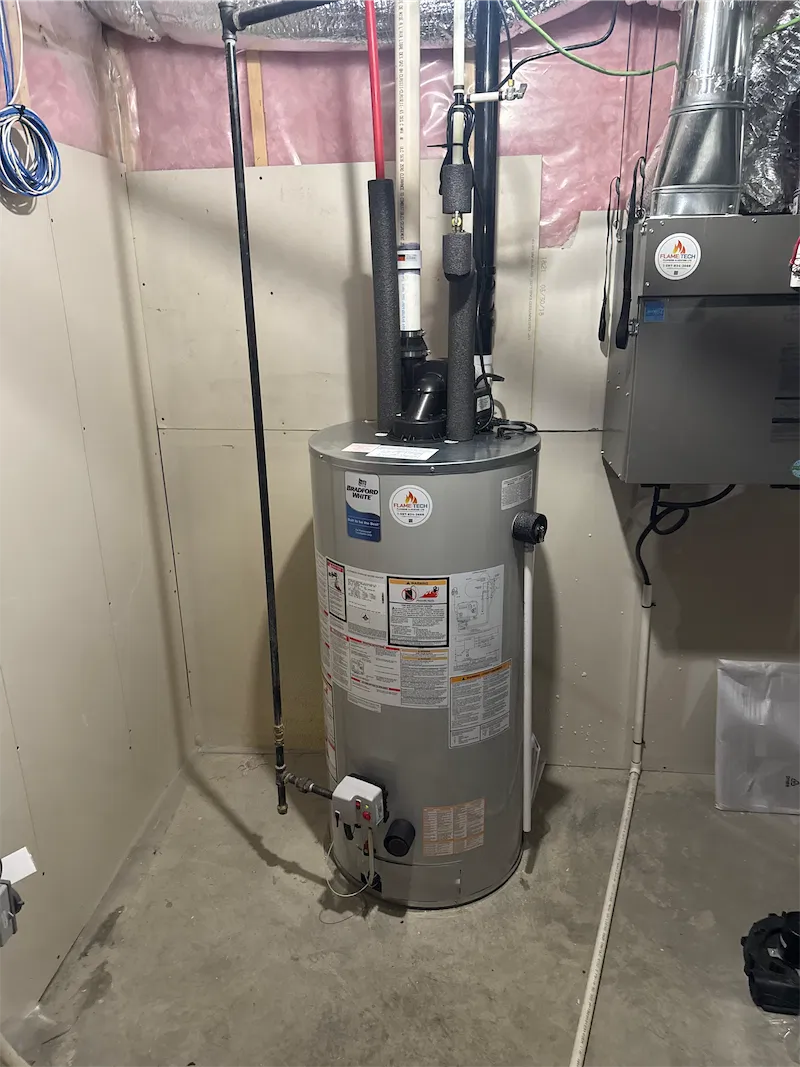
Hot Water Tanks Airdrie | Professional Installation & Repair Services
Airdrie's hard water and temperature swings are brutal on hot water tanks. FlameTech's technicians have replaced hundreds of tanks in Airdrie neighborhoods, from Coopers Crossing' newer builds to established areas where original tanks are hitting the 12-year mark. When your tank starts leaking or you're running out of hot water, our Airdrie plumbers know exactly what's wrong and how to fix it.
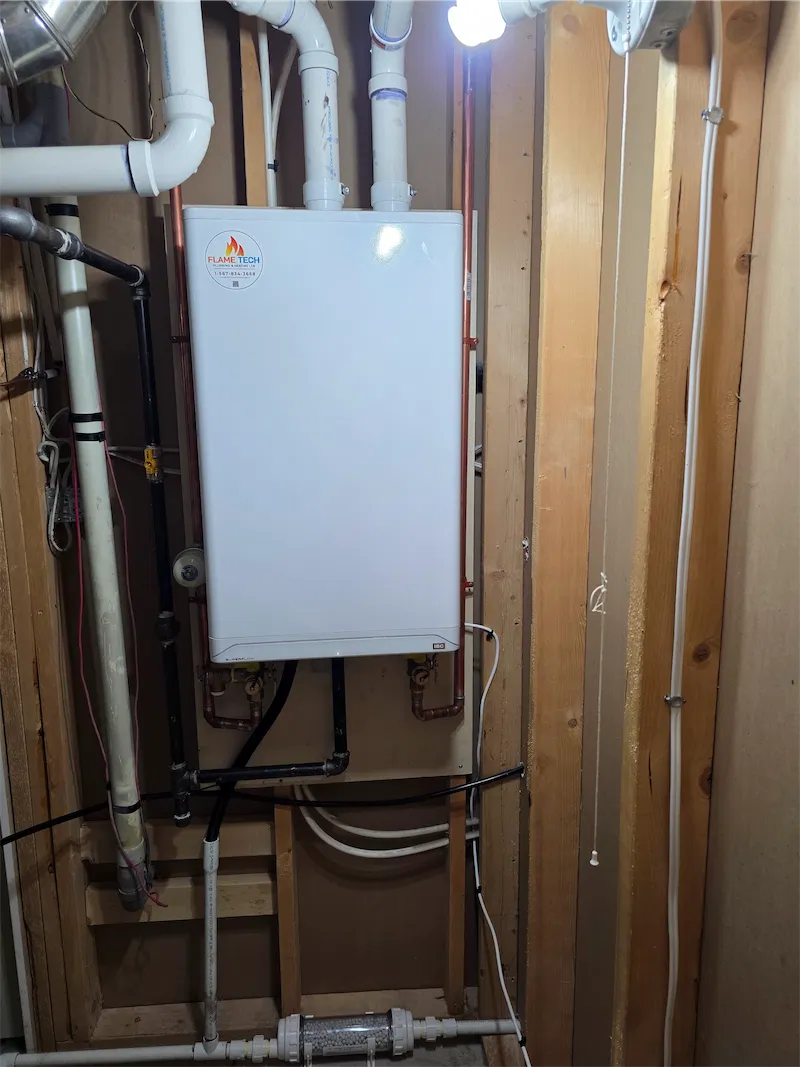
Tankless Water Heaters Airdrie — Navien, Rinnai, IBC Install + Service
Endless hot water, 20-year lifespan, and a wall-mounted footprint sound great — but tankless is the right call for some Airdrie homes and the wrong call for others. We install Navien, Rinnai, and IBC, walk through the tank-vs-tankless trade-off honestly before quoting, and dispatch locally from Coopers Crossing so service times are short.
Water Heater Repair in Airdrie
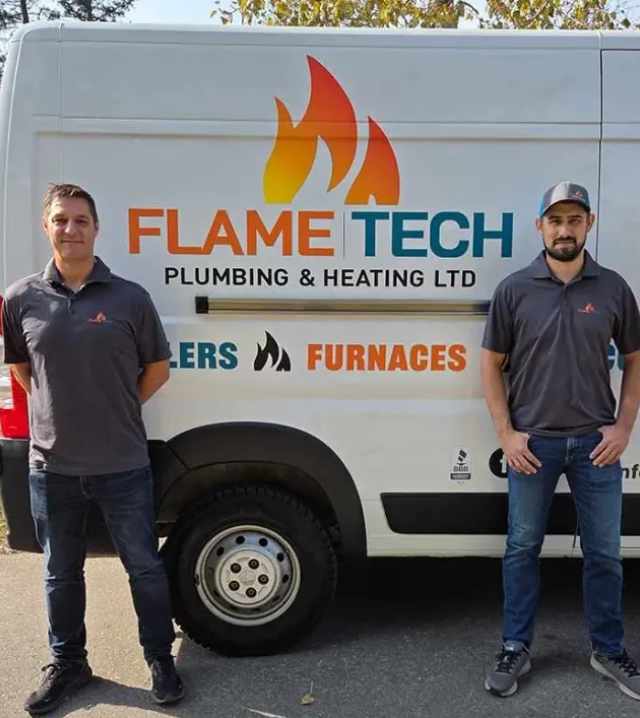
Water heater repair across Airdrie on gas, electric, and tankless units — with a genuinely local advantage. Most Airdrie water heater calls get dispatched in from Calgary, adding drive time and sometimes an out-of-town surcharge. Jason is based right here in Coopers Crossing, so when your hot water's out, you're not waiting on a truck crossing the city.
Where we cover Airdrie.
Local dispatch from Coopers Crossing across every Airdrie neighbourhood. Find your area for build-era notes, hard-water patterns, and the systems we see most.
Also covering nearby Chestermere, Cochrane, and Carstairs.
Get a free water softener quote.
Tell us what's going on and our dispatch team will call you back with pricing and availability.
Book a Red Seal plumber in Airdrie.
Free estimates, upfront pricing, and a satisfaction guarantee — local technicians who treat your home like their own.
Free estimate · No service charge for quotes · BBB Accredited