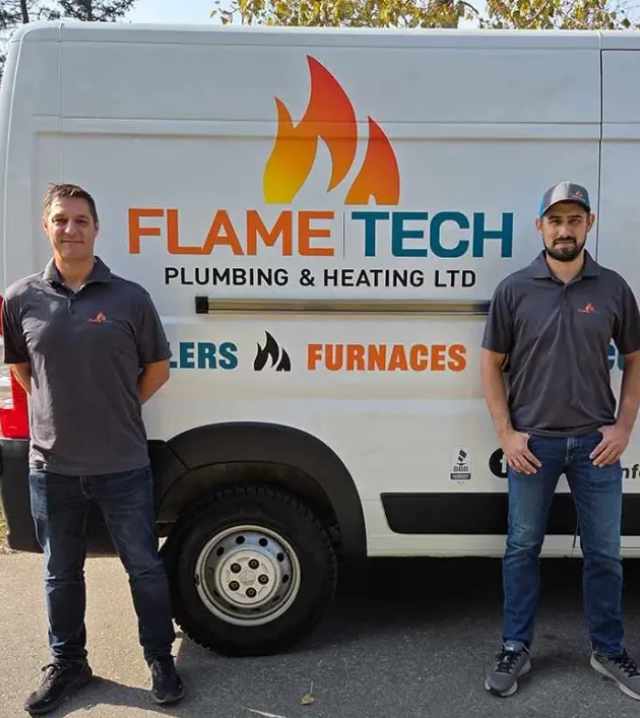

AC Repair in Calgary
Air conditioning repair across Calgary. Most AC failures here are a capacitor or a contactor — cheap parts that die because the unit sat idle for eight months and then got asked to work on the first hot day. We diagnose properly rather than reaching for the refrigerant hose.
Calgary's cooling season is short, and that's exactly what breaks air conditioners here. Your AC sits untouched from September to June, and then a heat wave arrives and it's asked to run flat out. The parts that fail on that first hot day are almost always the cheap ones.
The exception we're blunt about: if your system is low on refrigerant, you have a leak. Air conditioning is a sealed system — it does not consume refrigerant the way a car burns fuel. Anyone who simply tops you up and drives away has sold you the same repair again next summer.
AC quit in a heat wave? Call 587-834-3668 and we'll give you a realistic booking time. We also handle AC installation and heat pumps. Not sure what you're looking at? Start with the signs of air conditioner problems, or go straight to the specific one: no air at the vents, the compressor shutting off after 30 minutes, or a drip pan that keeps filling.
AC out in a Calgary heat wave? Call 587-834-3668 — we'll tell you honestly when we can get there.
Call 587-834-3668“Exceptional customer experience from scheduling an appointment to the service call for our year-old AC unit. Shaun is highly knowledgeable, listens to the customer and their specific needs and comes up with solid options to choose from and has top notch people skills. Shaun has been our go to for plumbing and HVAC for the past 5 years - glad to see he’s started up his own business.”

Pam Louie
Calgary · 1 year ago
Why Calgary Air Conditioners Fail
Our cooling season runs a few short months. That sounds like it should be easy on the equipment, and it's actually the reason so much of it breaks.
Eight months of sitting still
Your AC is idle from roughly September to June. Capacitors degrade sitting there, contactors corrode and pit, and bearings stiffen. Then the first genuinely hot day arrives, the system is asked to run hard, and whatever was marginal gives up. That's why our phones ring on the first hot day of the year and not gradually across the summer.
Hail
Calgary sits in the most hail-prone corridor in Canada, and your condenser is the one piece of your HVAC system parked outside taking the hits. Hail flattens the delicate aluminium fins on the coil, which chokes airflow across it and drops your efficiency without ever fully stopping the unit — so most people never connect the storm to the higher bill. The fins can be combed back out. It's worth an inspection after any serious storm.
Skipped maintenance
Because the season is short, AC maintenance is the easiest thing in the house to forget. A condenser coil packed with cottonwood fluff, grass clippings, and dust can't dump heat, so the system runs longer and hotter to achieve less. A lot of "my AC is weak" calls are really "my AC hasn't been cleaned in six years".
A furnace problem wearing an AC costume
Your central AC uses the furnace's blower to move the cold air. If the blower motor or its capacitor is failing, you get weak airflow and a house that won't cool — and it looks exactly like an AC fault. We check both, because they're one system. See furnace blower issues.
The Refrigerant Conversation Nobody Has Honestly
This is where the industry loses people's trust, so we'd rather be blunt about it than have you find out later.
Air conditioning is a sealed system. It does not use up refrigerant in normal operation the way an engine burns fuel. A system that was correctly charged on install should still be correctly charged a decade later.
So if your system is low on refrigerant, the refrigerant went somewhere. There is a leak. That is the only explanation, and it's not a maintenance item.
Topping it up will genuinely make the AC work again — for a while. Then it leaks back out, and next summer you make the same call and pay for the same visit. That's the business model we're describing, and we're describing it so you can recognise it.
We find the leak. Sometimes it's an accessible fitting or a line-set joint, and that's a straightforward repair. Sometimes it's the evaporator coil itself, which on an older system is a big enough job that replacement is usually the better spend — and we'll say so plainly rather than sell you a repair we don't believe in.
One more thing worth knowing: if your system is old enough to run R-22 refrigerant, that has been phased out. It's expensive and increasingly hard to source, which shifts the repair-or-replace maths hard toward replacement on any significant refrigerant fault.
Common AC Faults We Fix
Capacitor
The single most common AC failure, and the cheapest. It's the jolt that starts the compressor and fan motors. When it fails, you'll often hear the outdoor unit humming without the fan turning. It gets misdiagnosed as a dead compressor more often than any other fault in the trade — which is an enormously expensive mistake to make.
Contactor
The electrical switch that lets power through to the outdoor unit when the thermostat calls for cooling. Its contacts pit and corrode over years of sitting idle, and eventually it won't close. Cheap part, quick swap.
Frozen evaporator coil
Ice on the copper lines or the indoor coil. Counter-intuitively, this is usually an *airflow* problem — a filthy filter or a failing blower means not enough warm air passes over the coil, so it drops below freezing and ices up. It can also mean low refrigerant. Turn the AC off, leave the fan running to thaw it, and call us. Running it while frozen can destroy the compressor.
Dirty condenser coil
The outdoor unit sheds your home's heat through that coil. When it's packed with cottonwood, grass, and dust, or its fins are hail-flattened, it can't. The system runs and runs and never quite cools. Cleaning it is one of the highest-value things we do.
Condensate drain and drip pan
Your AC pulls a surprising amount of water out of the air, and that water drains away. When the drain clogs, the pan overflows — usually onto the furnace sitting underneath it. If you've found water around your furnace in summer, this is almost certainly why.
Compressor
The expensive one. A genuinely failed compressor on an older system usually means replacement rather than repair — the part and the labour together approach the cost of a new unit that would be far more efficient. We confirm it properly before ever saying that word, because plenty of "dead compressors" are actually dead capacitors.
Repair or Replace?
Under 10 years, common fault
Repair, easily. A capacitor, contactor, or drain clog on a system that age is a straightforward fix and the unit has plenty of life left.
Over 12-15 years, major fault
Worth a serious conversation. A failed compressor or a leaking evaporator coil on a system that age is a large spend on an appliance near the end — and modern equipment is meaningfully more efficient. See air conditioning for what a new install involves.
Any age, running R-22
The refrigerant has been phased out and is expensive and hard to get. Any significant refrigerant-side fault on an R-22 system tips the maths toward replacement, and it's worth knowing that before you spend.
The honest bit
A capacitor is one of the cheapest parts in your house, and a compressor is one of the most expensive. Plenty of homeowners get quoted the second when they needed the first. Whatever we find, we'll show you what we measured and why.
Calgary AC Repair FAQs
How much does AC repair cost in Calgary?
It depends what failed, and the range is genuinely wide. A capacitor or contactor is among the cheapest work we do. A refrigerant leak repair depends entirely on where the leak is. A compressor is a major component and costs like one.
We diagnose and quote before we touch anything, so you're deciding with a real number in front of you.
And on an older system where the honest answer is replacement rather than repair, we'll say that instead of taking your money for a fix we don't believe in.
My AC is blowing warm air. What's wrong?
A few likely causes, in the order we'd check them.
First, the free one: make sure the thermostat is set to COOL and the fan is on AUTO rather than ON. On ON, the blower runs constantly even when the AC isn't cooling, which pushes room-temperature air through your vents and feels exactly like a broken AC.
Then: a failed capacitor or contactor (the outdoor unit hums but the fan doesn't turn), a filthy filter choking airflow, a frozen evaporator coil, a hail- or dirt-clogged condenser coil, or low refrigerant — which means a leak.
We check the cheap electrical faults first, because that's where most Calgary AC failures actually are.
There's ice on my AC lines. What do I do?
Turn the AC off at the thermostat, but leave the fan set to ON so warm air keeps moving across the coil and thaws it. Don't try to chip the ice off.
Then call us. Do not keep running it while it's frozen — running a compressor against a frozen coil can send liquid refrigerant back to it and destroy it, which turns a cheap repair into a very expensive one.
The cause is usually restricted airflow (a badly clogged filter, or a failing blower), or low refrigerant from a leak. Both are things we can find. Change your filter while you wait — sometimes that genuinely is the whole story.
Our guide to an AC running with no air coming out of the vents covers the full thaw procedure and what to check before you switch it back on.
My AC just needs a refrigerant top-up, right?
Almost certainly not, and this is the most important thing on this page.
Air conditioning is a sealed system. It does not consume refrigerant in normal use. If your system is low, the refrigerant leaked out — there is no other explanation.
Topping it up will cool your house again for a while. Then it leaks back out, and next summer you're making this call again and paying again. If a contractor tops you up without looking for the leak, they've sold you a repeat visit.
We find the leak, show you where it is, and quote the actual repair. If the leak is somewhere that doesn't justify fixing on an older system — the evaporator coil, typically — we'll tell you that honestly rather than keep charging you to refill it.
Can hail damage my air conditioner?
Yes, and in Calgary it's common enough that we check for it routinely.
We're in the most hail-prone part of the country, and your condenser is the one piece of HVAC equipment sitting outdoors. Hail flattens the thin aluminium fins on the coil. That doesn't usually stop the unit — which is why people miss it — but it chokes airflow across the coil, so the system can't shed heat properly, runs longer, and costs more to achieve less cooling.
The fins can often be combed back out and the coil cleaned, which restores most of the lost performance. It's worth having someone look after any serious storm, and it may be worth a call to your insurer.
Why does my AC always break on the first hot day?
Because that's the day it's finally asked to work.
Calgary's cooling season is short — your AC sits idle from roughly September to June. Capacitors degrade while sitting, contactor points corrode, bearings stiffen. None of it shows while the system is off. Then the first real heat wave arrives, everything is asked to run hard, and whatever was marginal fails.
It's the single most predictable pattern in Calgary cooling, and it's the argument for a spring service call: the point is to find the failing capacitor in May rather than meet it in July.
Do you repair all AC brands?
Yes — every major brand sold in Calgary. Capacitors and contactors are largely universal parts, so the most common failures don't depend on what badge is on your unit.
Where a brand-specific control board or a proprietary part has to be ordered, we'll tell you as soon as we know.
The rest of your cooling system.
AC repair is one part of it. These are the pages worth knowing about.
Air Conditioning Install
New AC and replacement — sizing, line sets, and whether a heat pump is the smarter buy.
See serviceHeat Pumps
Cools in summer and heats most of the year — worth comparing before you replace an AC.
See serviceFurnace Blower Issues
Your AC uses the furnace blower — weak airflow often isn't an AC fault at all.
See serviceAC Repair Airdrie
Same crew, dispatched from Airdrie — cooling service north of the city.
See serviceHumidifiers
The other half of indoor comfort — whole-home humidification for Calgary's dry air.
See serviceSimple, honest, on your schedule.
The short version: we find out why, we tell you, and we don't reach for the refrigerant hose as a first move.
Symptom and system age
What it's doing, when it started, and how old the unit is. Age matters here more than most people expect — an older system may still be running R-22 refrigerant, which changes the repair-or-replace conversation completely.
Electrical first, refrigerant last
We test the capacitor and contactor before anything else, because that's where most Calgary AC failures actually live. Checking them takes minutes and it's the cheapest possible outcome for you.
Airflow, coils, and drainage
Filter, evaporator coil, condenser fins, and the condensate drain. A frozen coil or a warm house is very often an airflow problem, not a refrigerant problem — and treating it as refrigerant would be an expensive mistake.
If refrigerant is low, we find the leak
We don't top up and leave. We locate the leak, show you where it is, and quote the repair — or tell you honestly when the leak is in a place (like the evaporator coil on an older system) where replacement is the better spend.
Also under Air
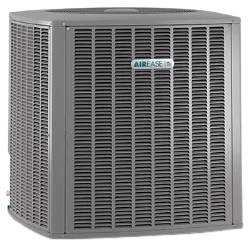
Air Conditioning Calgary — AC Installation + Heat Pump Comparison
Calgary summers used to be a couple of hot weeks per year. Not anymore — 30°C+ stretches are now routine through July and August. If you're adding AC for the first time, replacing a unit at end of life, or repairing a system that's not keeping up, FlameTech installs and services every common Calgary setup. And before you commit to like-for-like AC: ask us whether a heat pump makes more sense. For most Calgary homeowners adding cooling capability today, it does — same outdoor unit, AC plus efficient supplemental heating in one piece of equipment.
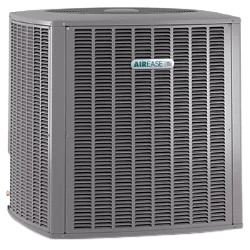
Mini Split AC Calgary — Ductless Cooling for the Room That Bakes
Almost nobody buys a mini split because they want one. They buy it because a single room in an otherwise comfortable house is unbearable — the upstairs bedroom that hits 28°C in July, the finished basement with no ducts, the bonus room over the garage. A ductless system solves exactly that, without touching the rest of the house.
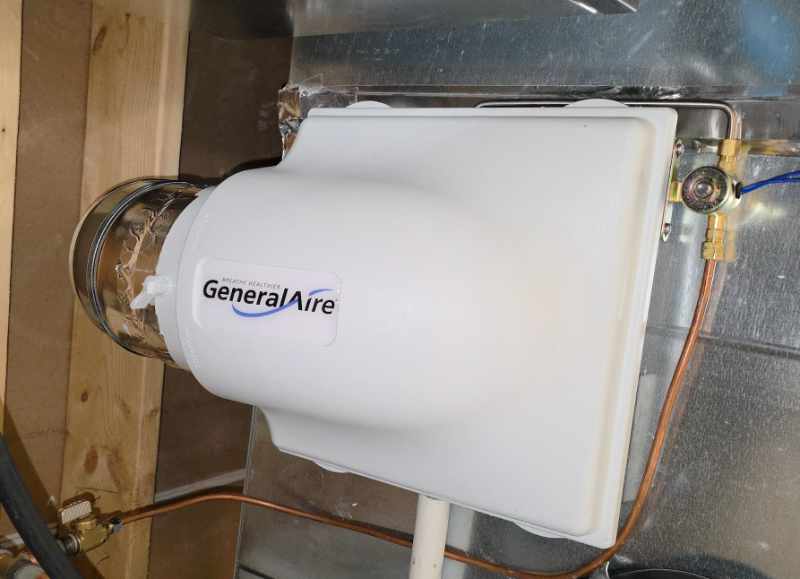
Humidifiers Calgary — Whole-Home Install + Service
Calgary winter air carries almost no moisture — heated indoor air without humidification routinely drops to 15-25% relative humidity, which is drier than most deserts and well below the 30-40% range Health Canada recommends. Cracked wood, bloody noses, static shocks, hardwood floor gaps, dry sinuses, peeling veneer on furniture — these are all symptoms of indoor air that's too dry to live in comfortably. A properly-sized whole-home humidifier integrated with your furnace fixes all of it at once.
Where we cover Calgary.
We dispatch from Calgary and Airdrie. Find your neighbourhood for area-specific notes on common builds, hard-water patterns, and the systems we see most.
Get a free AC repair quote.
Tell us what's going on and our dispatch team will call you back with pricing and availability.
Book a Red Seal plumber in Calgary.
Free estimates and upfront pricing, from local technicians who treat your home like their own.
Free estimate · No service charge for quotes · BBB Accredited