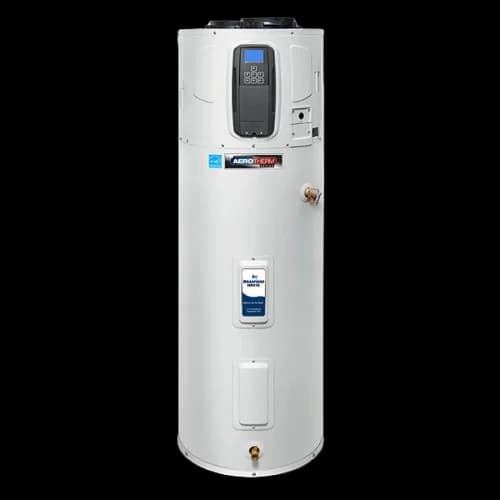

Water Heater Service Calgary — Annual Flush, Anode & Safety Check
Almost nobody services a water heater until it fails, and the single component that decides whether yours reaches twelve years or dies at seven is one most homeowners have never heard of. In Calgary's hard water, an annual service is the difference between a tank that lasts and one that doesn't.
The anode rod is the whole argument. It's a sacrificial metal rod inside the tank that corrodes so the tank lining doesn't. Once it's consumed, the corrosion moves on to the steel — and a corroded tank isn't repairable, it's replaced. Checking and replacing that rod costs a fraction of a new water heater.
The rest of a service visit is sediment, safety and settings. Calgary's hard water drops minerals out of solution as it heats, and they collect on the bottom of the tank — insulating the burner from the water it's meant to be heating, which is why an old tank rumbles and why your gas bill creeps up.
This page is preventive work. If yours has already failed, see water heater repair. If it's leaking now, that's a leaking water heater and it needs attention today. And if it's past ten years with an anode nobody ever checked, service may be too late — replacement is the more honest conversation. Call 587-834-3668.
Tank never been serviced? Call 587-834-3668 — we'll check the anode and tell you honestly whether it's worth it.
Call 587-834-3668“We've used FlameTech for a few issues around our house after finding them through a friend....”

Madison Ritchie
Calgary · 1 year ago
The anode rod — the part nobody mentions at install
If you read one section, make it this one. It is the single biggest factor in whether a water heater reaches its expected life in Calgary.
What it does
A steel tank with a glass lining will eventually corrode wherever that lining has an imperfection — and every tank has some. The anode rod is a length of magnesium or aluminium suspended inside the tank that corrodes preferentially. Electrochemically, it volunteers. While it lasts, your tank doesn't rust.
What happens when it's gone
Nothing, for a while. Then the corrosion has nowhere else to go and starts on the tank itself. By the time you see evidence, it is a leaking tank on a basement floor, and a corroded tank cannot be repaired — only replaced.
Why Calgary is harder on it
Higher mineral content means faster electrochemical activity, which consumes the rod faster than the generic schedules assume. A rod that might last six years elsewhere can be substantially gone sooner here, particularly if the house has a softener — softened water is actually more aggressive on anodes, not less.
The maths
Checking the rod is part of a routine service. Replacing one is a modest job. Replacing a tank that corroded through because nobody looked is a different order of cost entirely, plus whatever the water did on the way out.
If you have a softener
Worth raising specifically, because it surprises people: softened water accelerates anode consumption. A water softener is still absolutely worth having — it protects the tank, your fixtures and your boiler from scale — it just means the anode wants checking more often, not less.
What an annual service actually covers
Not a look-and-leave. This is the list, and any service that skips the middle three isn't really a service.
Full tank flush
Draining the tank to clear the sediment layer off the bottom. On a tank that has never been flushed there can be a surprising amount, and it directly costs efficiency because the burner is heating through it rather than heating water.
Anode rod inspection and replacement
Pulled, inspected, and replaced when it's depleted. On some installations clearance above the tank is tight and a segmented rod is used instead — we check that at the same time.
T&P relief valve test
The temperature and pressure relief valve is the tank's primary safety device. It can seize after years untouched. We test it, and if it doesn't reseat properly it gets replaced — this is not a step to skip.
Temperature and thermostat check
Too low encourages bacterial growth in the tank; too high is a scald risk at the taps and accelerates scaling. The usual answer is storing hot and tempering down at delivery with a mixing valve. We check what yours is doing and explain the trade-off rather than just turning a dial.
Venting and combustion
On a gas unit, the flue and draft get inspected. This matters more than people realise — if a furnace on a shared chimney was replaced with a high-efficiency unit, your water heater may have been left orphaned on a flue that no longer drafts properly.
Connections, expansion tank and drain pan
Flex connectors and shutoffs checked for corrosion, the expansion tank pressure verified where one is fitted, and the drain pan and its line confirmed clear — so that if the tank does eventually fail, the water goes to a drain rather than across a finished floor.
The signs you're overdue
A tank rarely fails without having said something first. These are the tells.
- 01Rumbling, popping or a kettle-like noise as it heats — that is water boiling under the sediment layer, and it's the most common sign of a tank that has never been flushed.
- 02Hot water running out faster than it used to. Sediment takes up volume the water used to occupy, so the usable capacity drops.
- 03Discoloured or rusty hot water, particularly on first draw. That can mean the anode is gone and the tank has started.
- 04A gas bill creeping up with no change in use. Heating through sediment costs more every single cycle.
- 05A tank over five years old that has never been touched. That's most of them.
- 06Any moisture around the base. That's not a service call any more — see a leaking water heater and get it looked at now.
Tankless is a different service
If you have a tankless unit, forget flushing and anodes. The job is descaling, and in Calgary it is not optional.
- 01Tankless heat exchangers have narrow internal passages, which is exactly the geometry hard water scales fastest.
- 02Scale reduces flow and heat transfer, so output drops and the unit works harder to deliver the same hot water.
- 03Left long enough it triggers error codes and can damage the exchanger, which is the most expensive component in the unit.
- 04Descaling circulates a cleaning solution through the exchanger. Most manufacturers require it annually on hard water to keep the warranty intact — worth checking your own paperwork.
- 05Filters and the inlet screen get cleaned at the same time.
- 06A water softener upstream extends the interval considerably. On a tankless in Calgary it is close to a requirement rather than an upgrade. See tankless water heaters.
What you can do yourself, and where to stop
Some of this is genuinely homeowner work. Some of it isn't, and the line matters.
- 01Reasonable to do yourself: a partial flush through the drain valve, checking the area around the tank for moisture, and knowing where the shutoff and the gas valve are.
- 02Worth knowing: on an old tank that has never been flushed, opening the drain valve can dislodge sediment and cause it not to reseat. It is a small risk and a real one.
- 03Not homeowner work: the anode rod. It is torqued in tight, often seized, and getting it out without damaging the tank fitting takes the right tools.
- 04Not homeowner work: the T&P valve. Testing it is simple; dealing with one that won't reseat afterwards is not.
- 05Not homeowner work: anything to do with venting, combustion or the gas train.
- 06And the honest caveat: on a tank past about ten years with an anode nobody has ever checked, service may be too late to change the outcome. We will say so rather than take the money — see hot water tank replacement.
Calgary Water Heater Service FAQs
How often should a water heater be serviced in Calgary?
Annually is the sensible interval here, and the reason is water hardness rather than the age of the equipment.
Calgary's water drops minerals out of solution as it heats. Those minerals collect on the tank bottom as sediment, and they accelerate consumption of the anode rod. Both processes run faster here than in soft-water cities, so the generic "every couple of years" advice under-serves a Calgary tank.
If yours has a water softener upstream, the sediment side improves markedly — but softened water is actually more aggressive on the anode rod, so that still wants checking annually.
What is an anode rod and why does it matter so much?
It's a sacrificial metal rod inside the tank that corrodes so the tank doesn't.
A water heater is a steel tank with a glass lining, and no lining is perfect. Left alone, corrosion would attack the steel wherever the lining has a flaw. The anode rod — magnesium or aluminium — corrodes preferentially instead. It volunteers, electrochemically.
Once the rod is consumed, the corrosion moves to the tank. And a corroded tank cannot be repaired, only replaced.
That's the whole argument for servicing: replacing a rod is a modest job, replacing a tank because nobody checked one is a much larger one.
Is it worth servicing an old water heater?
Up to a point, and we'll tell you honestly where that point is.
Under about eight years, absolutely — a flush and an anode replacement can add real life, and it's cheap relative to what it protects.
Past ten years with an anode nobody has ever touched, the answer is often no. If the rod is long gone the tank has already been corroding for years, and a service does not undo that. At that stage the useful conversation is about replacing it on your schedule rather than on its own. See hot water tank replacement.
We'd rather have that conversation than take payment for work that won't change the outcome.
My water heater makes rumbling and popping noises. Is that serious?
It's the classic sign of a tank that has never been flushed, and it's worth acting on.
What you're hearing is water trapped under the sediment layer on the tank bottom, boiling and forcing its way out. The sediment sits directly between the burner and the water, so the burner has to fire longer and hotter to deliver the same result.
The practical costs: reduced hot water capacity, a higher gas bill every month, and extra thermal stress on the tank bottom.
A flush usually resolves the noise. If it doesn't, the sediment has hardened and that tells you something about how long it's been building.
Can I flush the tank myself?
Partly, and it's a reasonable thing to do between professional visits.
Attach a hose to the drain valve, run it to a floor drain or outside, and let it flow until it runs clear. Take your time — do it with the tank cool and the supply off, and be careful with hot water.
One genuine risk worth knowing: on an old tank that has never been drained, opening the valve can dislodge sediment and leave it unable to reseat, which turns a maintenance job into a leak. It's not common, but it happens on neglected tanks.
What isn't homeowner work is the anode rod — it's torqued tight and often seized — or the T&P valve, or anything on the venting and gas side.
Do tankless water heaters need servicing too?
Yes, and arguably more urgently — but it's a completely different job.
No flushing, no anode rod. Tankless units need descaling: circulating a cleaning solution through a heat exchanger whose narrow passages are exactly the geometry hard water scales fastest.
Skipped, you get falling output, error codes, and eventually damage to the most expensive component in the unit. Most manufacturers require annual descaling on hard water to keep the warranty valid, so it's worth checking your paperwork.
A water softener upstream extends the interval considerably. On a tankless in Calgary it's close to a requirement. See tankless water heaters.
What's the difference between service and repair?
Service is planned; repair is reactive.
This page is preventive maintenance — flush, anode, safety valve, settings, venting — done on a schedule to extend the life of a working unit.
If yours has already stopped working, is making a new noise, or isn't producing hot water, that's water heater repair. If there's water on the floor, that's a leaking water heater and it needs attention today rather than an appointment next week.
It's the same distinction we draw between boiler service and boiler repair — different questions, different visits.
Simple, honest, on your schedule.
Call or request a quote
Tell us what's going on. We listen first and ask the right questions before we schedule anything.
Free written estimate
We assess the job and give you an all-in price in writing. No pressure, no surprise add-ons.
Schedule at your convenience
Pick a day and window that works for your home — we'll confirm dispatch and arrival time.
Clean, code-compliant service
Licensed technicians complete the work to Alberta code, clean up, and walk you through what we did.
Also under Water
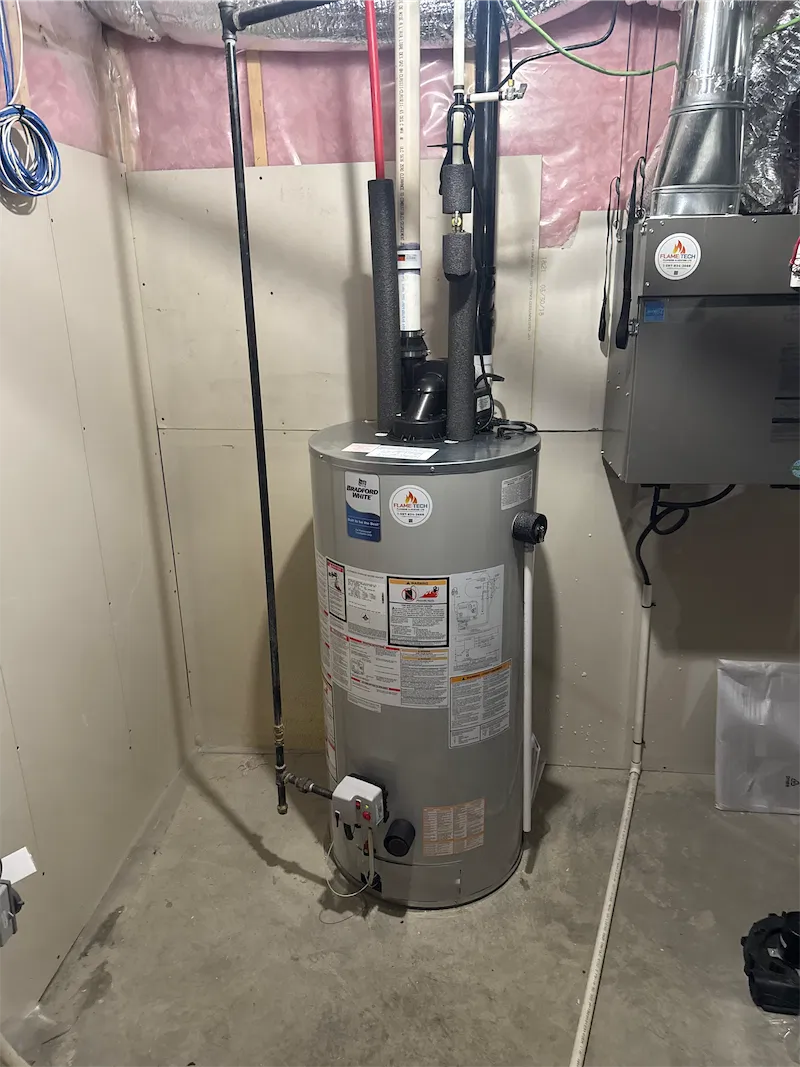
Hot Water Tanks Calgary — Bradford White + John Wood Install, Sized Right
Calgary water hardness (150-200 mg/L) is brutal on hot water tanks — sediment builds in the bottom faster than in lower-mineral cities, and the sacrificial anode rod that's supposed to last 5-7 years is gone in 3-4 — see annual water heater service. The result: tanks rated for 12-15 years typically give up at 8-10 in Calgary unsoftened. FlameTech sizes, installs, and services hot water tanks built for our specific water profile — Bradford White and John Wood are the two brands we've found hold up best — there's a head-to-head on the two if you're deciding. Installed prices by size are in hot water tank replacement cost in Calgary.
Calgary Hot Water Tank Replacement — Same-Day Service
Hot water tanks in Calgary fail at 8-12 years — sooner if you don't have a water softener. When yours goes, FlameTech has stocked trucks rolling for same-day replacement, with the brands that actually survive our hard water.
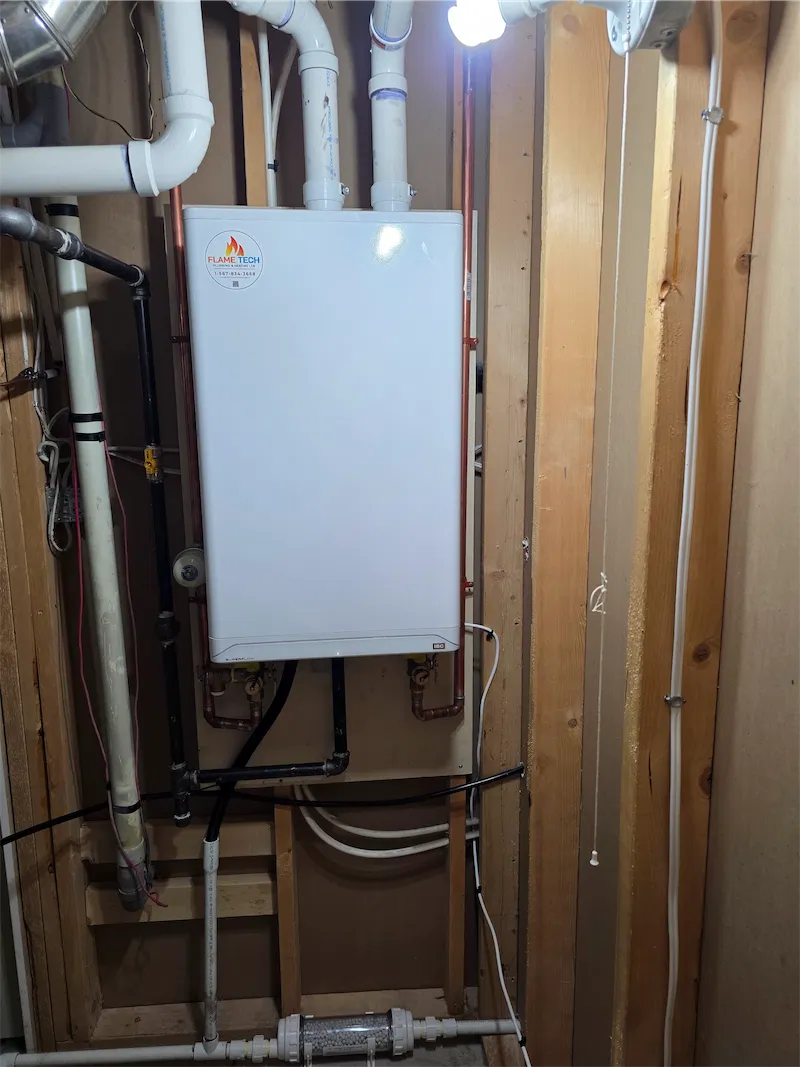
Tankless Water Heaters Calgary — Navien, Rinnai, IBC Install + Service
Tankless water heaters are the right call for some Calgary homes — endless hot water capacity, 20+ year lifespan, big space savings, lower lifecycle operating cost — and the wrong call for others. Calgary's hard water is unusually punishing on tankless heat exchangers (faster scale buildup than tank-style because water passes through narrow internal passages), so annual descaling is non-negotiable and a water softener upstream is strongly recommended. FlameTech installs and services every common brand: Navien NPE-A/S, Rinnai RU/RUR, IBC SL series, Bosch, Noritz. Honest tankless-vs-tank conversation before we quote.
Where we cover Calgary.
Same-day dispatch across Calgary and Airdrie. Find your neighbourhood for area-specific notes on common builds, hard-water patterns, and the systems we see most.
Get a free water heater service quote.
Tell us what's going on and our dispatch team will call you back with pricing and availability.
Book a Red Seal plumber in Calgary.
Free estimates, upfront pricing, and a satisfaction guarantee — local technicians who treat your home like their own.
Free estimate · No service charge for quotes · BBB Accredited