Outdoor Faucet Repair and Replacement in Calgary
Outdoor faucet repair in Calgary starts before any part is picked. First we work out whether the trouble is at the spout, in the stem that runs back through the wall, or in the line that feeds the tap. Each of those is a different job, and the fix for one does nothing for the other two.
If the tap or the pipe behind it is frozen right now, start with frozen pipe repair instead. If water is moving and you can't get it stopped, go straight to emergency plumbing. Everything else at the outside tap belongs on this page: a steady drip, a handle that's hard to turn, a tap that wets the basement wall the first time you open it in spring, or an old hose bib that was never frost-free.
Quotes are free. Whether the tap needs a repair or a full outdoor faucet replacement, you'll hear the price first, and the work waits until you say yes.
We dispatch from both Calgary and Airdrie. The number is 587-834-3668. Airdrie homeowners can find the rest of our local work on the Airdrie plumbing page.
Outside tap dripping, hard to turn, or wetting the basement when you use it? Call 587-834-3668 and we'll tell you honestly when we can get there.
Call 587-834-3668“Fast efficient quality workman ship. I would recommend them any time for plumbing and gas fitting work”

Andy and Debbie Leclerc
Calgary · 6 months ago
Is It the Faucet, or the Pipe Behind It?
Where the water appears narrows it down quickly. Take a look before you call, and tell us what you saw.
Dripping from the spout when it's shut
If water keeps coming out of the spout after the handle is closed, the valve isn't sealing, usually because of a worn washer or seat. On a frost-free tap that valve isn't at the handle. It's at the far end of the stem, inside the house, so the drip you see outside comes from a part you can't.
Leaking around the handle
Water that seeps out around the stem while the tap is open, and stops when it's shut, generally points to the packing or seal where the stem passes through the faucet body. On many taps that's a repair, not a replacement.
Water inside when the tap is on
If the basement wall or ceiling near the tap only gets wet while the tap is running, or while a hose is connected with the nozzle closed, suspect the part of the faucet inside the wall. A frost-free tap with a split tube behaves exactly this way, and the first use in spring is usually when it's found. If the source isn't obvious, start with leak detection.
Weak flow outside only
One outdoor tap with poor flow while everything indoors runs normally points to that tap or its supply: a partly closed shutoff, a restriction in the valve, or a problem in the line feeding it. If every tap in the house is weak, the faucet isn't the cause. See low water pressure.
Frozen now, or water running inside
That's a different call. Go to frozen pipe repair, and if water is running and you can't stop it, emergency plumbing.
How a Frost-Free Sillcock Works
A frost-free sillcock, which some manufacturers call a frost-proof faucet, looks like any other outside tap but works differently. Woodford Manufacturing's explainer, How a Standard Frost-Proof Faucet Works, sets out the design.
The valve is inside the house
The handle is outside, but the part that actually stops the water sits at the end of a long stem. In Woodford's words: "The water is shut off several inches into the home." That puts the valve on the warm side of the wall.
It empties itself when you shut it
Woodford again: "When the valve is turned off, all of the water in front of the valve drains from the faucet leaving the tube empty." With no water left between the valve and the spout, the exposed part has nothing in it to freeze.
It has to slope toward the outside
That draining only works if the faucet falls toward the spout. The explainer keeps it short: "Correct installation requires downward pitch." A tap that sits level, or slopes back toward the house, can hold water in the tube.
A hose left on defeats it
A connected hose stops the tube from draining. Woodford says: "If a hose is attached during freezing weather, water is trapped inside the faucet which may cause the faucet to freeze and burst." Taking the hose off at the end of the season is what lets the faucet do its job.
Frost-free is a design, not a guarantee
A frost-free tap installed without enough pitch, or left with a hose on, can still be damaged by cold. And because that damage sits on the spout side of the valve, it may not show until someone turns the water on.
Repair or Replace?
Some outside taps take a new part and carry on. Others need an outdoor faucet replacement, and a new washer won't change that. If we find other leaks while we're there, plumbing repairs covers those.
When a repair is enough
A drip from the spout, or a seep at the handle, on a tap that's otherwise sound can often be fixed with a new washer, seal or stem, where parts are still available for that faucet. That depends on the make and the age of the tap, and we'll tell you which applies when we quote.
When the faucet has to come out
A split tube inside the wall, a body that's cracked or badly corroded, or a valve that's seized and won't turn without forcing all mean the faucet gets replaced. No washer or seal will close a split in the tube.
Older hose bibs that aren't frost-free
On a short hose bib, the valve sits right behind the handle on the outside of the wall, so water stays in the part that's exposed to the cold. If yours is one of these, ask about a frost-free replacement when we quote. If it has its own shutoff inside, and every fall that shutoff is closed and the tap opened outside to let it drain, it may be doing fine as it is.
The wall it goes through
A new faucet has to suit the wall as well as the pipe. The tube has to be long enough to reach through that wall and put the valve inside the house, the flange has to sit properly against siding, brick or stucco, and the opening it passes through has to be sealed so water and cold air don't get in around it.
Garden Hoses and Backflow
An outside tap with a hose on it connects your drinking water to whatever the hose is lying in. The City of Calgary's cross connection FAQ lists "Outside hosebibbs" among the outdoor cross connections it's concerned about.
What backflow is
The City describes it as "the undesirable reversal of untreated water or other substances through an unprotected cross connection…" With a hose, that could mean water from a pool, a pail or a pond being drawn back toward the house if the pressure in the line drops.
Why the hose matters
The City's residential cross-connection brochure is direct about it: "A hose creates the most common cross connection in the home." Keeping the end of the hose out of standing water while the tap is on is the easy part.
Hose connection vacuum breakers
The FAQ names them among the secondary devices: "Examples of secondary types of devices are the hose connection vacuum breakers, atmospheric vacuum breakers and residential dual check valves." Some outdoor faucets have one built in, and others take one that attaches at the spout. If you're not sure which you have, ask when we quote.
Whose responsibility it is
The City puts it on the owner: "Homeowners must ensure no cross-connections exist on their property that could contaminate their water supply."
Spring and Fall at the Outside Tap
The City of Calgary's seasonal water checklist has a line for the outside tap at each end of the season.
Spring
The checklist says: "Check for water leaks from your outdoor tap and irrigation system." For the tap, that means opening its indoor shutoff if it has one, turning the tap on, and having someone look at the inside of that wall while it runs. A wet wall or ceiling is a reason to close the shutoff again and call.
Fall
For the end of the season, the checklist says: "Turn off the outdoor water supply to avoid winter leaks." Close the indoor shutoff for the outside tap if it has one, take the hose off, and open the tap outside so whatever is left in it can drain. For the rest of the house in a cold snap, see our guide on leaving taps dripping in a cold snap.
Covers and insulation
The checklist also suggests you "Insulate exterior hose bibs and exposed pipes to reduce freeze damage." An insulated cover helps, but it doesn't replace taking the hose off and shutting the supply.
Permits, Condos and the Line Feeding the Tap
A few things worth settling before the work is booked.
Replacing or fixing the existing tap
Two items on the City's list of work exempt from a plumbing permit cover a straight swap or a leak repair at the tap: "Replace existing faucets and fixtures." and "Repair a leak in a water distribution or drainage system."
Moving a tap or adding one
A permit comes back into play under the City's rule that "A plumbing permit is required when: A plumbing system is constructed, extended or altered." Moving an outside tap, or adding one where there wasn't one before, means running new pipe, so it may need one. The City's Planning Services Centre (403-268-5311) can confirm whether yours does.
Condos and townhouses
Outside taps on townhouses and condos are sometimes common property, or fed from a line the complex controls. Read your bylaws, or put the question to your property manager, before booking, both about who is responsible for the tap and about shutting off water so the work can be done.
Grey plastic supply lines
Look at the pipe running to the tap from inside. Grey plastic there is often Poly-B, which went into a lot of Calgary houses through the 1980s and 90s. Swapping the faucet does nothing for that line; Poly-B replacement covers replacing it.
Not sure it's the faucet?
If the water is coming from somewhere else, or the tap is frozen right now, one of these pages is a better fit.
Frozen Pipe Repair
For taps and lines that have frozen or split in a cold snap.
See servicePlumbing Repairs
Leaks, drips and fixture fixes inside the house.
See serviceLeak Detection
Water on a wall or ceiling and no clear source.
See serviceEmergency Plumbing
Water running and you can't get it stopped.
See servicePoly-B Replacement
Grey plastic supply pipe in 1980s and 90s homes.
See serviceLow Water Pressure
Weak flow at every tap, not just the one outside.
See serviceAirdrie Plumbers
Plumbing work for homes in Airdrie.
See serviceSimple, honest, on your schedule.
Outdoor faucet work happens on both sides of the same wall: the spout outside, and the pipe and shutoff inside. Plan on us needing to get to the basement or the room behind the tap.
Call and describe the tap
Tell us what it's doing and where the water shows up: at the spout, around the handle or inside the house. It helps to know whether it's a frost-free sillcock or a short older hose bib, and what the outside wall is finished with.
Both sides of the wall, then a price
We look at the tap from outside and the pipe from inside, and check the shutoff that feeds it. Then we price it, and nothing is done until you've seen that number.
Repair, or old faucet out
If the valve can be fixed, it gets fixed. If it can't, the water to that line is shut off, the old faucet is removed and the new one fitted, sealed where it passes through the wall.
Run and checked both sides
With the water back on, we run the tap, shut it again, and check the spout outside and the connection inside for drips before we leave.
Also under Plumbing
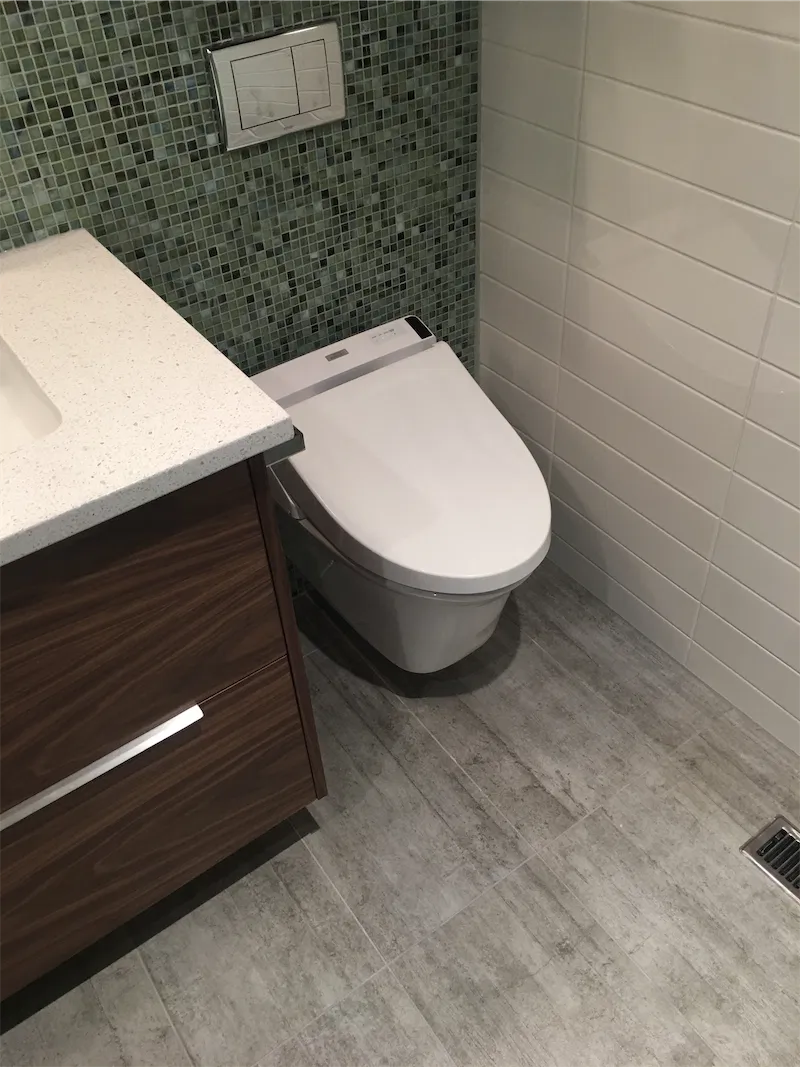
Bathroom Plumbing Calgary | Professional Bathroom Services
Calgary's hard water and extreme temperature swings wreak havoc on bathroom plumbing — we see it every day. FlameTech's bathroom plumbing specialists handle everything from emergency burst pipes in older Mount Royal homes to complete bathroom renovations in new Evergreen developments.
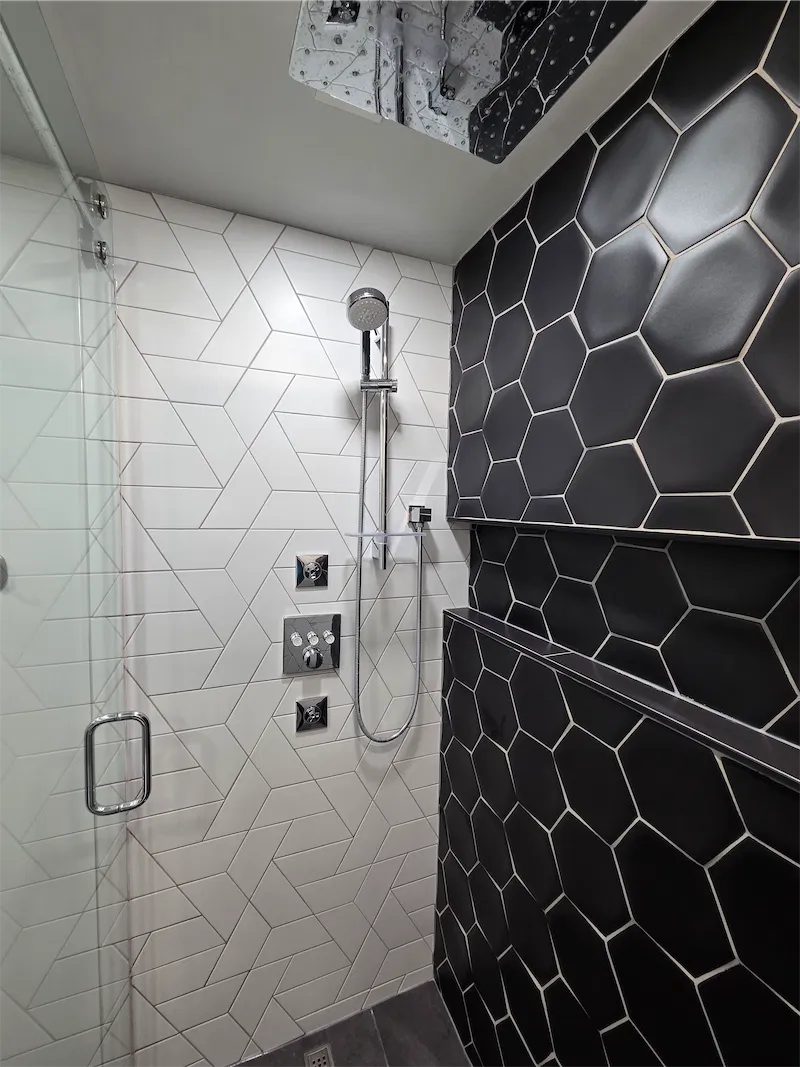
Shower Plumbing Calgary | Expert Shower Installation & Repair Services
Calgary's unpredictable weather puts stress on every part of your plumbing system, but nothing's more frustrating than stepping into a cold shower on a -30 morning. FlameTech's shower plumbing specialists fix pressure problems, temperature swings, and complete shower failures across Calgary.
Toilet Installation in Calgary — Standard, Comfort-Height & Wall-Hung
Most toilet installs are 1-2 hours and look the same on the surface — but how the flange, supply line, and wax ring are handled is the difference between a 15-year toilet and a leak in 18 months. FlameTech installs Toto, Kohler, American Standard, and any owner-supplied unit with a fresh wax ring, supply line, and shutoff every time.
Where we cover Calgary.
We dispatch from Calgary and Airdrie. Find your neighbourhood for area-specific notes on common builds, hard-water patterns, and the systems we see most.
Get a free outdoor faucet quote.
Tell us what's going on and our dispatch team will call you back with pricing and availability.
Book a Red Seal plumber in Calgary.
Free estimates and upfront pricing, from local technicians who treat your home like their own.
Free estimate · No service charge for quotes · BBB Accredited