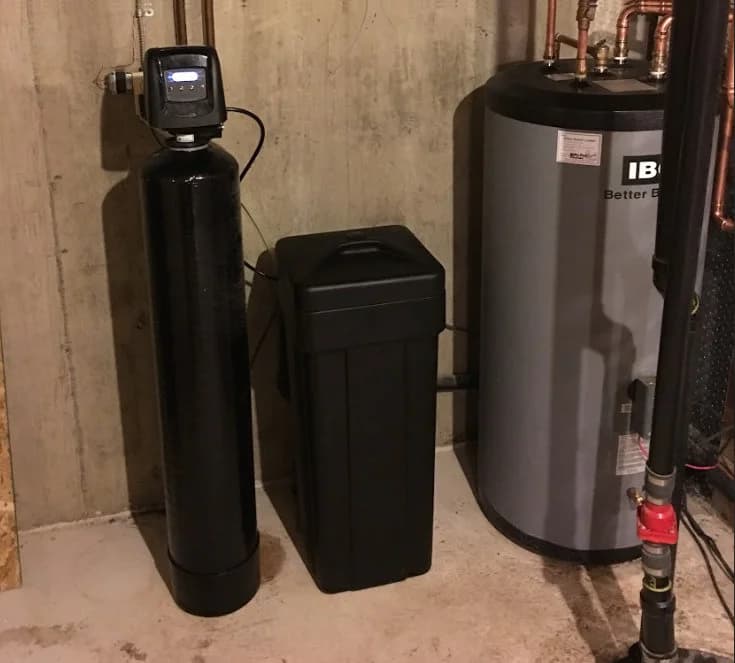
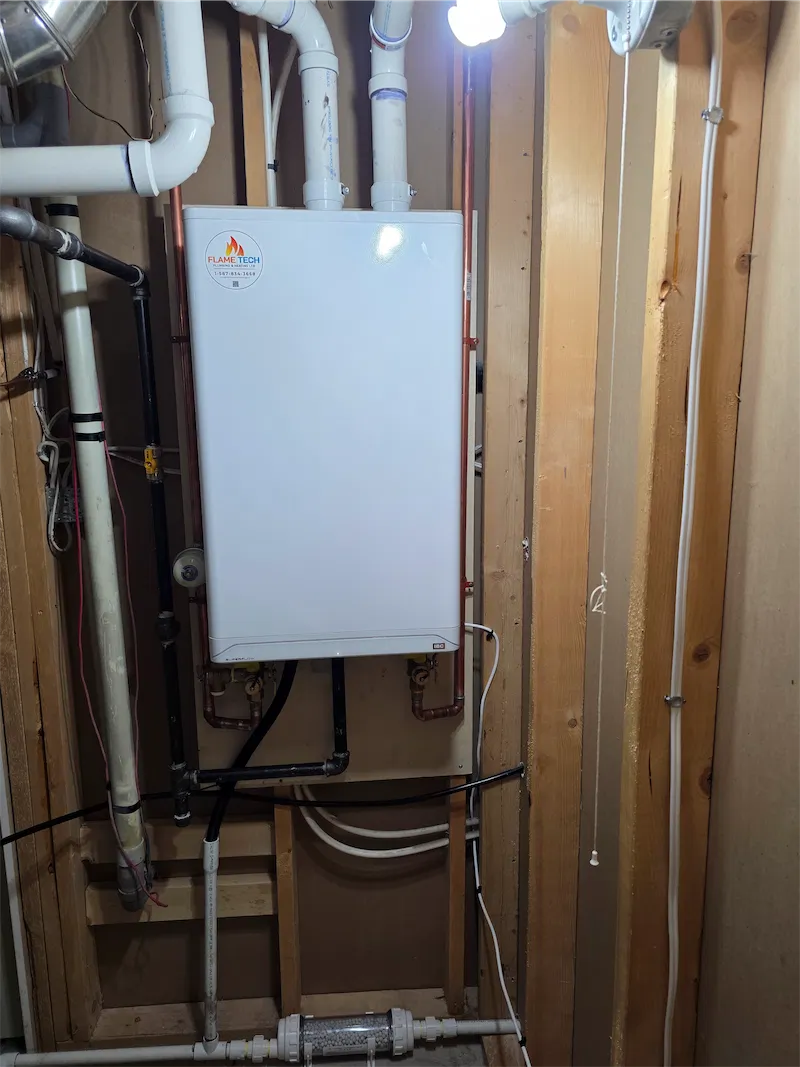
Why is my water heater making noise? Often for no worrying reason. Rheem says many sounds are part of normal operation, and that quiet, brief sounds at regular intervals are "generally nothing to worry about." The sound alone won't diagnose the problem, though. When it happens, whether there's water around the tank, and whether the relief valve is dripping tell you more.
Sounds that are normal
- Ticking or clicking. Rheem puts it down to heat traps or pipes expanding as they warm and cool. A.O. Smith's Bulletin 12 blames "fluctuations in pressure in the piping system," like a toilet flushing, and ties it to heat traps. If the ticking bothers you, removing the heat traps is a plumber's job, not a DIY one.
- Humming from an electric tank while the elements heat, and soft ignition sounds when a gas burner lights. Rheem lists both as normal.
- Sizzling right after a gas tank fills with cold water. The Bradford White manual explains that condensation drips onto the hot burner, which "is normal and does not indicate a leak. It will disappear when the tank becomes heated."
Popping and rumbling: usually sediment
Popping and rumbling usually come from minerals on the bottom of the tank. Bradford White says the noise happens when "water becomes trapped beneath hardened mineral deposits and boils." A.O. Smith's Bulletin 13 calls it "popping of water trapped under lime deposits."
The City of Calgary says Calgary's water is hard because of "calcium and magnesium in the water from the Bow and Elbow Rivers." Bradford White adds that sediment can "force the heater to work harder," so the noise is the least of it.
On electric tanks, scale on the elements can cause a "singing" or "hissing" sound, according to Bradford White's bulletin for plumbers.
What helps
Flushing removes loose sediment. Bradford White says to flush "according to manufacturers' guidelines"; A.O. Smith's maintenance page says "Refer to your owner's manual." As Bradford White puts it, "A licensed plumber can inspect the system, perform a proper flush and recommend treatment options." A flush is part of our water heater service.
Bradford White's bulletin warns that a flush may not remove all the hardened lime, and the noise can come back. In hard water, it calls a water softener "the best solution for eliminating the noise problem," because it slows scale from forming.
If the noise continues after a flush, A.O. Smith's repair-or-replace guide says you may have "a failing heating element or a cracked tank." An element can be replaced. A cracked tank can't be fixed.
Hissing, sizzling or whistling
Hissing or sizzling once the tank is already hot isn't refill condensation. Rheem lists water dripping onto a hot burner on gas models and a leaking element gasket on electric ones. Turn the gas control to off or switch off the breaker, if that's safe to do, stop using it, and have it inspected. Leave relighting to the technician. If there's water around the base, see our leaking water heater page.
Whistling or screeching usually means water is squeezing through a restriction. Rheem's causes: a partly closed inlet or outlet valve, a faulty temperature and pressure (T&P) relief valve, sediment, or higher pressure inside the tank. The only one to check yourself is that the shutoff valves on the tank's pipes are fully open.
Banging or knocking: often the pipes
Rheem says banging "often points to an issue in your plumbing system rather than the heater itself." That's water hammer: moving water stops suddenly and the pipes jump. A.O. Smith's Bulletin 11 names single-lever faucets and the solenoid valves in dishwashers and washing machines as common triggers. If the bang lines up with the washer or dishwasher shutting off its fill, or a single-lever tap snapping shut, that's your clue.
The bulletin warns the surges can permanently deform the tank shell; water hammer arrestors are "the only effective means of control." That's plumbing repairs work.
Pressure warning signs that matter more than the noise
A dripping or discharging relief valve
The T&P relief valve has a discharge pipe running down the side of the tank. A.O. Smith says these valves "will drip if the water pressure is too high or due to thermal expansion on a closed plumbing system," and puts the fix in order: "Control water pressure and install a thermal expansion tank before replacing a dripping T&P relief valve." If pressure or expansion is the cause, a new valve alone won't stop the drip.
The Bradford White manual says "Do not plug the combination temperature and pressure relief valve outlet." Don't lift its lever, test it or remove it either.
A sudden gush of hot water is different. A.O. Smith's Bulletin 52 says "The only cause of this problem is a malfunctioning thermostat." Turn the heater off at the gas control or breaker if that's safe to do, stay clear of the pipe, and call.
Thermal expansion and closed systems
Water expands as it heats. The Bradford White manual says a back-flow preventer, check valve, pressure-reducing valve or "water meter with check valve" on the cold supply makes a closed system, which needs provisions to manage thermal expansion, such as "a properly sized and properly installed thermal expansion tank and/or other device(s)." A.O. Smith's Bulletin 41 adds that "The temperature and pressure relief valve is not intended to protect against thermal expansion," and lists a bulged tank bottom among the signs of pressure damage.
The City of Calgary's water pressure page says "Homes built after 1990 in areas of over 80 PSI are equipped with a pressure reducing valve (PRV)," and that high pressure "may be caused by a PRV that is over five years old." If you have a PRV and no expansion tank on the cold line by the heater, mention it when you call. Expansion is also worth settling as part of any hot water tank replacement.
Not a tank?
Rheem's maintenance guide says "Mineral scale can build up inside the heat exchanger" of a tankless unit. See our tankless maintenance guide or tankless water heater repair. For a boiler, see boiler popping noises.
What not to do
- Don't plug or cap the relief valve or its discharge pipe.
- Don't try to delime the tank with vinegar or any other acid.
- Don't remove the elements or heat traps, or open the burner compartment.
- Don't keep using a tank that's hissing while hot, or leaking.
Checks to run before calling
- When does it happen: while the burner or elements run, when a tap or the washer shuts off, or just after a refill?
- Gas or electric?
- How old is it? The rating plate has the model and serial number.
- Any water under the tank, or a wet discharge pipe?
- Is there an expansion tank on the cold line? A water softener?
When to call
Rheem says to call a professional for noise that continues after a flush, hissing, visible leaks, or "A unit that's 8–12+ years old." A.O. Smith says a unit "over 10 years old and showing multiple symptoms" is usually better replaced.
Call 587-834-3668 with what you noticed and when it happens. We price the repair before any work starts. If an old tank isn't worth fixing, you'll hear that from us, along with a price for a hot water tank replacement. The crew includes Red Seal journeyman plumbers and Alberta-licensed gas fitters, and we dispatch from both Calgary and Airdrie. As for timing, call and we'll tell you honestly when we can get there. See water heater repair, or north of the city, water heater repair in Airdrie.