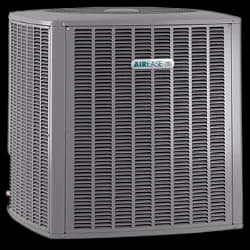

Mini Split AC Calgary — Ductless Cooling for the Room That Bakes
Almost nobody buys a mini split because they want one. They buy it because a single room in an otherwise comfortable house is unbearable — the upstairs bedroom that hits 28°C in July, the finished basement with no ducts, the bonus room over the garage. A ductless system solves exactly that, without touching the rest of the house.
A mini split is one outdoor unit connected to one or more indoor heads by a slim refrigerant lineset. No ductwork, no tearing into ceilings, and each head has its own control — so the room that needs cooling gets it without over-cooling everywhere else.
The part most people don't realise: it heats as well as it cools, and cold-climate models keep working down to roughly −25°C. That makes it a year-round device rather than a summer one, which changes the value calculation considerably in a city with our winters.
For whole-home cooling through existing ductwork, central air conditioning is usually the better answer. For whole-home heating and cooling, look at heat pumps. This page is about the ductless case specifically. Call 587-834-3668.
One room that's unbearable while the rest of the house is fine? Call 587-834-3668 for a free assessment.
Call 587-834-3668“Friendly and courteous staff. Very knowledgeable and professional. Dealt with my problem in an effective and timely manner. A pleasure to do business with.”

Don Serink
Calgary · 1 year ago
When a mini split is the right answer
These are the situations where ductless genuinely beats the alternatives in Calgary homes. If yours isn't on this list, central AC is probably the better buy.
The upstairs bedroom that bakes
Extremely common in 1960s–80s two-storey homes across Brentwood, Edgemont, Varsity and similar stock. The original ductwork was designed to push warm air up in winter, and it does a poor job of pulling heat out of an upper floor in summer. A single head in the worst room fixes it without re-engineering the whole system.
A finished basement with no ducts
Basement developments frequently end up with minimal supply and no return, so the space is cold in winter and stuffy in summer. A ductless head gives it independent heating and cooling without cutting into finished ceilings.
Bonus rooms over garages
The worst-performing room in most Calgary houses, because it has cold air underneath it on three sides and is usually at the end of a long duct run. Ductless gives it its own control instead of fighting the rest of the house for air.
Secondary suites
A suite needs its own comfort control and, ideally, its own operating cost. A dedicated ductless system does both, and it avoids tying the suite's heating to the main house's system — which matters if the suite is tenanted.
Additions and garage conversions
Extending existing ductwork into an addition is often impractical or performs badly. A dedicated head is usually cheaper than re-engineering the trunk line and it performs better.
Heritage homes where ducts don't exist
Inner-city character homes heated by boilers and radiators have no ductwork to add AC to. Retrofitting a full duct system into plaster and lath is invasive and expensive. Ductless is frequently the only sensible cooling option in Mount Royal, Bridgeland, Inglewood and similar stock.
When it's the wrong answer
A house with sound existing ductwork that's uniformly too warm. Central AC costs less per square foot, needs no wall heads, and uses distribution you already paid for. We'd rather tell you that than sell you four indoor units.
How it actually installs
Worth knowing before you decide, because two of these are the things people wish they'd asked about.
The outdoor unit
A condenser outside, mounted on a pad or wall brackets. In Calgary it needs to sit above expected snow depth and clear of any roof drip line, because if it's heating in winter it produces its own meltwater during defrost and shouldn't be standing in a refreezing puddle.
The lineset
Refrigerant lines, a drain and a power cable run together in a bundle through a hole of roughly three inches. Outside it usually runs in a slim white or painted duct down the wall. Where that penetration goes, and how the run is routed, is worth agreeing before install day rather than after.
The indoor head
Wall-mounted is the default and the cheapest. Ceiling cassettes sit flush in a dropped ceiling and are far less visible. Floor consoles sit low like a radiator and suit rooms where wall space is committed. Each costs progressively more.
Condensate drainage
Cooling produces water at the indoor head, and it has to go somewhere. Gravity drainage to the outside is simplest. Where that's not possible — a basement head below grade, for instance — a small condensate pump handles it. This is the detail most commonly got wrong on a cheap install.
Electrical
Most systems need a dedicated circuit. On an older Calgary home with a 100A panel and a full breaker box, that can mean panel work, which is a separate trade and a separate cost. We check capacity at quote stage rather than discovering it mid-install.
Timeline
A straightforward single-zone install often finishes in a day. Multi-zone systems, longer lineset runs, or anything needing electrical work take longer, and we'll give you a realistic figure with the written quote.
Cooling and heating in a Calgary winter
This is the part that changes the value case, and it's routinely undersold.
Cold-climate ductless units hold useful heating capacity down to roughly −25°C, which covers the large majority of a Calgary heating season.
Below that you need another heat source, so a mini split supplements rather than replaces whole-home heating in this climate.
For a basement, a suite or a bonus room, that limitation rarely matters — those spaces already have some baseboard or duct heat as backup for the coldest nights.
In heating mode the outdoor unit runs a defrost cycle, which is normal. Steam rising off it is melted frost, not a fault — see a mini split not working in heat mode — the same behaviour covered in our guide to a heat pump not warming the house.
Running costs in shoulder season are genuinely good, because moving heat is more efficient than burning gas to make it. It's in a deep cold snap that gas wins.
If you're weighing this against whole-home options, our comparison of heat pumps and furnaces in Calgary covers the wider decision.
Keeping it working
Ductless systems are low-maintenance rather than no-maintenance, and the one job that matters is one you can do yourself.
- 01The indoor head has washable filters behind the front panel. Rinse them monthly through the cooling season — it takes minutes and it's the single biggest factor in how well the unit performs.
- 02A neglected head loses output gradually, so people adapt to it rather than noticing. If yours isn't cooling like it did, start there — and if it isn't heating, start with the remote.
- 03Keep the outdoor unit clear of grass clippings, cottonwood fluff and drifting snow, with clearance around and beneath it.
- 04The indoor coil and blower wheel need a proper clean periodically — that's a service task, and it's where the musty smell comes from when it appears.
- 05Check the condensate drain runs freely. A blocked drain on a wall head shows up as water marking the wall below it.
- 06Annual service before the season, same as any cooling equipment. See air conditioning repair if something has already gone wrong.
Calgary Mini Split FAQs
Is a mini split cheaper than central air conditioning?
For one room, yes. For a whole house, usually not.
A single-zone ductless system cooling one problem room is typically less than installing central AC across a house that doesn't have it. But once you're adding three or four indoor heads to cover a whole home, the per-room cost adds up past what central AC would have been — assuming you have usable ductwork.
So the honest test is whether you have ductwork worth using. If you do and the whole house is too warm, central AC is the better buy and we'll tell you that. If you don't, or the problem is one or two specific rooms, ductless wins.
Does a mini split heat as well as cool?
Yes, and in Calgary that's often the bigger half of the value.
Cold-climate ductless units hold useful heating capacity down to roughly −25°C, which covers most of our heating season. Below that you need another heat source, so it supplements rather than replaces whole-home heating here.
For a basement, a suite or a bonus room that already has some baseboard or duct heat for the coldest nights, that limitation rarely bites. What you get is a space that's genuinely comfortable in both directions for the first time.
How visible are the indoor units?
Visible. That's the honest trade-off and it's worth seeing one before you commit.
A standard wall head is a white unit roughly a metre wide, mounted high on the wall. Plenty of people stop noticing within a week; some never do.
If that's the sticking point there are alternatives. Ceiling cassettes sit flush in a dropped ceiling and are far less obtrusive. Floor consoles sit low, roughly where a radiator would. Both cost more than a wall head, and the ceiling option needs somewhere to put it.
Can one outdoor unit run several rooms?
Yes — multi-zone systems run up to four or five indoor heads from a single condenser, each with its own thermostat and each controlled independently.
That independent control is the real advantage. You can cool the upstairs bedroom overnight without cooling the whole floor, which central AC can't do without zoning dampers.
The trade-off is that all the heads share one outdoor unit, so if it needs service everything is offline at once. On a large multi-zone we'll talk through whether one system or two makes more sense.
Will it work for a basement suite?
It's one of the best applications there is.
A suite needs its own comfort control, and ideally its own operating cost, separate from the main house. A dedicated ductless system gives you both, and it avoids tying a tenant's heating to your furnace.
The practical checks are where the outdoor unit can sit, how the lineset routes to the suite, and condensate drainage — a below-grade head usually needs a small condensate pump rather than gravity drainage. All straightforward, but worth designing rather than improvising.
How much does a mini split cost in Calgary?
A single-zone mini split in Calgary runs $3,500 to $5,000 installed as of September 2026. Multi-zone systems cost more and scale with the number of indoor heads, so we won't quote those over the phone.
The variables that move it most: how many indoor heads, whether they're wall units or the more expensive ceiling and floor options, how far the lineset has to run, whether condensate needs a pump, and panel capacity. That last one is the common surprise on older homes with a full 100A panel.
We come out, assess all of it, and give you the model, the capacity, the scope and the all-in price in writing at no charge. Financeit monthly payments are available.
How often do I need to clean it?
Rinse the indoor filters monthly through the cooling season. It takes a few minutes, they slide out from behind the front panel, and it's the single biggest factor in how well the unit performs.
This is the most common reason a ductless system disappoints. Output falls gradually as the filters load, people adjust to it, and by the second summer it seems like the unit was never any good.
Beyond that: keep the outdoor unit clear, check the condensate drain runs freely, and have the indoor coil and blower wheel properly cleaned periodically — that's a service task and it's where a musty smell comes from if one appears.

Monthly Financing Available
Spread the cost into manageable monthly payments.
Spread the cost of a ductless system into monthly payments via our Financeit partner.
Simple, honest, on your schedule.
Call or request a quote
Tell us what's going on. We listen first and ask the right questions before we schedule anything.
Free written estimate
We assess the job and give you an all-in price in writing. No pressure, no surprise add-ons.
Schedule at your convenience
Pick a day and window that works for your home — we'll confirm dispatch and arrival time.
Clean, code-compliant service
Licensed technicians complete the work to Alberta code, clean up, and walk you through what we did.
Also under Air
AC Repair in Calgary
Air conditioning repair across Calgary. Most AC failures here are a capacitor or a contactor — cheap parts that die because the unit sat idle for eight months and then got asked to work on the first hot day. We diagnose properly rather than reaching for the refrigerant hose.
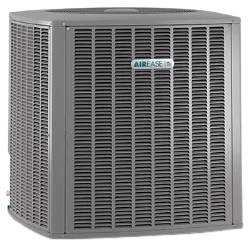
Air Conditioning Calgary — AC Installation + Heat Pump Comparison
Calgary summers used to be a couple of hot weeks per year. Not anymore — 30°C+ stretches are now routine through July and August. If you're adding AC for the first time, replacing a unit at end of life, or repairing a system that's not keeping up, FlameTech installs and services every common Calgary setup. And before you commit to like-for-like AC: ask us whether a heat pump makes more sense. For most Calgary homeowners adding cooling capability today, it does — same outdoor unit, AC plus efficient supplemental heating in one piece of equipment.
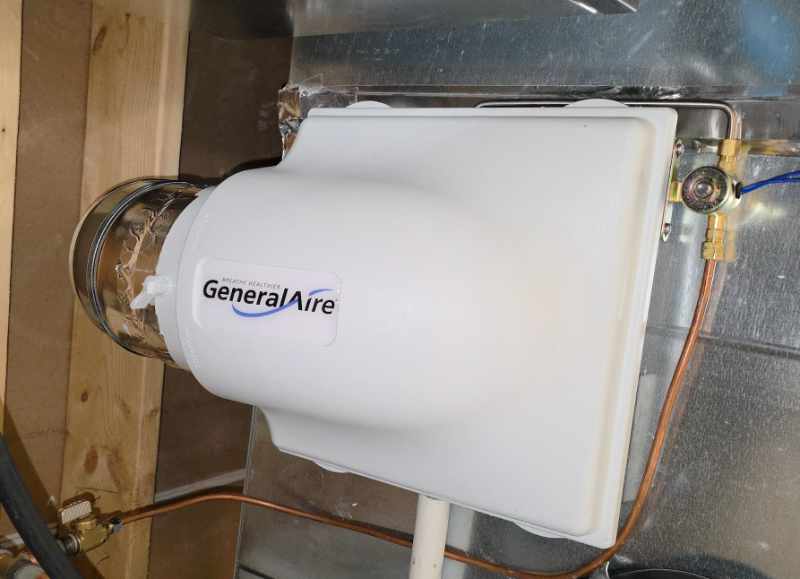
Humidifiers Calgary — Whole-Home Install + Service
Calgary winter air carries almost no moisture — heated indoor air without humidification routinely drops to 15-25% relative humidity, which is drier than most deserts and well below the 30-40% range Health Canada recommends. Cracked wood, bloody noses, static shocks, hardwood floor gaps, dry sinuses, peeling veneer on furniture — these are all symptoms of indoor air that's too dry to live in comfortably. A properly-sized whole-home humidifier integrated with your furnace fixes all of it at once.
Where we cover Calgary.
Same-day dispatch across Calgary and Airdrie. Find your neighbourhood for area-specific notes on common builds, hard-water patterns, and the systems we see most.
Get a free mini split quote.
Tell us what's going on and our dispatch team will call you back with pricing and availability.
Book a Red Seal plumber in Calgary.
Free estimates, upfront pricing, and a satisfaction guarantee — local technicians who treat your home like their own.
Free estimate · No service charge for quotes · BBB Accredited