

Leak Detection Calgary — Find It Before You Open the Wall
The expensive part of a hidden leak is rarely the repair. It's the searching — drywall opened in three places before anyone finds the one that mattered. We locate leaks acoustically and thermally first, so the only wall that gets opened is the right one.
Start with the free test below. Calgary homes are metered, and your meter will tell you whether you have a leak at all before you pay anyone to look for one. A surprising number of the calls we take turn out to be a toilet flapper, which you can confirm in ten minutes without tools.
When it is a genuine hidden leak, the question is where. Behind plaster in a heritage home, at a Poly-B fitting inside a wall, a pinhole in galvanized supply, or a loop in an in-floor radiant slab — each needs a different approach, and none of them reward guessing.
We locate first and open second, then carry out the repair — the same crew that handles our broader plumbing repairs. Call 587-834-3668 and a real person answers.
Water bill jumped, or a damp patch you can't explain? Call 587-834-3668 — start with the meter test and we'll go from there.
Call 587-834-3668“Very impressed how quickly you came. Look forward to Jason coming tomorrow to fix problems.”

Pat Strong
Calgary · 7 months ago
The free test — do this before calling anyone
Calgary homes are metered, which means you can confirm whether a leak exists at all in about half an hour, at no cost. It's the first thing we ask about on the phone.
1. Shut everything off
Every tap, the dishwasher, the washing machine, the ice maker, any humidifier, and the irrigation system if it's the season for it. Nothing in the house should be calling for water.
2. Read the meter
Most meters have a small low-flow indicator — a triangle, star or tiny dial — that spins on the slightest flow. Note the reading and whether the indicator is moving at all.
3. Wait 30 to 60 minutes and read it again
If the reading has changed or the low-flow indicator is turning, water is leaving the system somewhere. If nothing has moved, you don't have a supply-side leak — which is genuinely useful to know, because it redirects the search to drains, appliances or something that isn't a leak at all.
4. Narrow it to inside or outside
If you can find your main shutoff where the supply enters the house, close it and repeat. If the meter keeps moving with the house isolated, the leak is on the service line between the meter and the building. If it stops, it's inside.
Rule out the toilets first
Put a few drops of food colouring in the tank, don't flush, and come back in fifteen minutes. Colour in the bowl means the flapper is passing water. It's the most common silent leak in any house and it's usually a cheap part.
Signs of a leak you can't see
Most hidden leaks announce themselves indirectly for weeks before anything visible happens.
- 01A water bill that climbed with no change in how the household uses water — compare against the same month last year rather than last month.
- 02The sound of running water with every fixture off, usually noticed at night.
- 03A damp or musty smell in one part of the basement that doesn't shift.
- 04Staining or a soft patch on a ceiling below a bathroom, or at the base of a wall.
- 05Water pressure that has gradually fallen without an obvious cause.
- 06A warm patch on a basement floor, which can indicate a hot-water line or an in-floor heating loop losing water.
- 07Mould appearing somewhere with no obvious moisture source.
- 08A boiler or in-floor heating system that needs topping up repeatedly — a sealed system shouldn't lose pressure, and if it does, the water is going somewhere.
Where leaks hide in Calgary homes
Build era tells you a lot about where to look first, which is most of what makes a search efficient rather than exploratory.
Poly-B fittings inside walls
Homes built roughly 1978 to 1995 often have polybutylene supply, and the failure point is usually the fitting rather than the tubing — including the fittings buried behind drywall. It's the single most common hidden supply leak we attend in that housing stock. See Poly-B replacement, and our guide on whether you need to replace Poly-B.
Pinholes in galvanized supply
Heritage homes with original galvanized lines corrode from the inside out. The pinhole is often small enough to weep rather than spray, which is why it can run inside a wall cavity for a long time before anything shows.
Behind plaster and lath
Inner-city character homes in areas like Mount Royal, Elbow Park, Bridgeland and Inglewood have wall finishes that are part of the value of the house. Locating precisely matters more here than anywhere.
In-floor radiant loops
A leak in a slab loop is among the hardest to find and among the most disruptive to fix badly. Thermal imaging is genuinely effective here, because a leaking heated loop shows as a temperature anomaly. Jason has twenty years on hydronics — see in-floor heating.
Freeze-damaged joints that didn't fully fail
A pipe that froze and split can stay sealed by its own ice, then start weeping when it thaws — sometimes days later during a chinook. If your pipes froze last winter and something feels damp now, that's worth connecting. See frozen pipe repair.
Outdoor taps and irrigation
A frost-free sillcock that split inside the wall over winter leaks only when you open the tap in spring — behind the wall, out of sight. Underground irrigation leaks show up as an unexplained meter reading with nothing wet indoors.
A note on slab leaks
Most Calgary homes have basements rather than slab-on-grade construction, so the classic under-slab supply leak that dominates American plumbing content is far less common here than the search results suggest. Worth knowing before you assume the worst.
How we find it
The goal is a specific location, not a general area. Everything below is about narrowing before anything gets opened.
- 01Acoustic listening equipment picks up the sound of pressurised water escaping — audible through walls, floors and slabs at frequencies you can't hear unaided.
- 02Thermal imaging reads the temperature signature of moisture behind a surface, and is especially effective on hot-water lines and heated floor loops.
- 03Pressure isolation — closing off sections of the system one at a time to establish which branch is losing water, which often halves the search on its own.
- 04Moisture meters confirm the extent of what's already wet, so the repair scope matches reality rather than guesswork.
- 05Camera inspection where a drain rather than a supply line is the suspect.
- 06And the unglamorous one: reading the house. Where the runs go, what era the plumbing is, what's been renovated. Experience narrows a search faster than any instrument.
What we repair, and where we stop
Worth being explicit, because "leak detection" covers a wide range and not all of it is our trade.
- 01In scope: supply line leaks, fitting and joint failures, pinholes, fixture and valve leaks, water heater connections, and hydronic and in-floor heating loops.
- 02In scope: locating the leak and carrying out the repair, including the section replacement in copper or PEX.
- 03In scope: locating a drain leak and telling you precisely what and where it is.
- 04Not our work: structural sewer repair — lining or excavating a failed sewer lateral is specialist excavation work we don't take on. We'll document what we found so a specialist can quote from evidence.
- 05Not our work: drywall finishing and painting after a repair. We open the smallest area we can and make it good to patch, but the finishing trade is someone else's.
- 06If a leak has been running long enough to need remediation rather than repair, we'll say so — that's a restoration conversation, and pretending otherwise helps nobody.
Calgary Leak Detection FAQs
How do I know if I actually have a leak?
Use your meter — it settles the question for free.
Turn off every fixture and appliance that uses water, then find your water meter and look for the small low-flow indicator, usually a triangle, star or tiny dial. Note the reading. Come back in thirty to sixty minutes.
If the reading has moved or the indicator is turning, water is leaving the system. If nothing has changed, you don't have a supply-side leak.
Before you go further, rule out the toilets: a few drops of food colouring in the tank, don't flush, check the bowl fifteen minutes later. Colour in the bowl means the flapper is passing water, and that is by far the most common silent leak in any house.
My water bill jumped but I can't see anything wet. What now?
That's the classic hidden leak presentation, and the meter test is the first step.
If the meter confirms a leak, the next question is inside or outside. Close the main shutoff where the supply enters the house and watch the meter again — if it keeps moving with the house isolated, the leak is on the service line between meter and building. If it stops, it's inside.
From there we locate acoustically and thermally rather than opening walls to look. Common culprits in Calgary: a Poly-B fitting inside a wall, a pinhole in galvanized supply, or an outdoor tap that split over winter and only leaks when it's opened in spring.
Will you have to cut open my walls?
Usually a small, deliberate section — and only after we know where the leak is.
The point of acoustic listening and thermal imaging is to narrow the location before anything is opened. Exploratory demolition is what turns a modest repair into a drywall and paint job, and it's avoidable in most cases.
In a heritage home with original plaster and lath, this matters more than convenience — that finish doesn't go back the way it came out. We'll always tell you what we've established and how confident we are before anything gets cut.
Can you find a leak under a concrete slab?
Yes, and thermal imaging is genuinely effective on heated slabs because a leaking in-floor loop shows as a temperature anomaly.
Worth setting expectations though: most Calgary homes have basements rather than slab-on-grade construction, so the classic under-slab supply leak that dominates American plumbing content is much less common here than search results suggest.
Where we do see slab work is in-floor radiant heating loops, which is specialist hydronic territory. See in-floor heating.
My boiler keeps losing pressure. Is that a leak?
Almost certainly, because a sealed heating system shouldn't lose water at all.
If you're topping the pressure up repeatedly, that water is going somewhere — a fitting, a valve, an expansion vessel that has failed, or a loop in the floor. Some of it evaporates off a warm pipe before it ever shows as a puddle, which is why it can run for a long time unnoticed.
Our guide on why boilers lose pressure covers the causes, and boiler repair covers the fix.
How much does leak detection cost in Calgary?
It depends on how accessible the suspect area is and how much of the system has to be isolated to narrow it down — and we won't quote it sight-unseen.
What we can tell you is the shape of it: locating is quoted separately from repairing, because until we know where the leak is nobody can price the repair honestly. Anyone quoting a repair before locating the leak is guessing.
Start with the free meter test. If it shows nothing, you've saved yourself a call. If it shows something, we'll come out and give you the location and the repair scope in writing.
Do you fix sewer leaks?
We'll find one and tell you exactly what and where it is. We don't repair them.
Structural sewer work — lining or excavating a failed lateral — is specialist excavation and it isn't a trade we take on. What we do is the diagnostic half: camera inspection, locating the damage and its depth, and a written description of what we found.
Take that to a sewer specialist and they can quote from real evidence rather than re-running the diagnosis at your expense. For everything on the supply side, and for drain clearing short of structural failure, we're the call. See drain cleaning.
How fast can you come out?
Same day for an active leak — water running where you can see it, a ceiling coming down, anything getting worse by the hour.
Before we arrive: shut the water off at the main if you can, and stay out of any water near electrical outlets or the panel.
For a suspected hidden leak with nothing visibly wet, it's usually worth doing the meter test first — it tells us a great deal before we arrive and occasionally saves you the visit entirely. A real person answers at 587-834-3668.
Simple, honest, on your schedule.
Call or request a quote
Tell us what's going on. We listen first and ask the right questions before we schedule anything.
Free written estimate
We assess the job and give you an all-in price in writing. No pressure, no surprise add-ons.
Schedule at your convenience
Pick a day and window that works for your home — we'll confirm dispatch and arrival time.
Clean, code-compliant service
Licensed technicians complete the work to Alberta code, clean up, and walk you through what we did.
Also under Plumbing
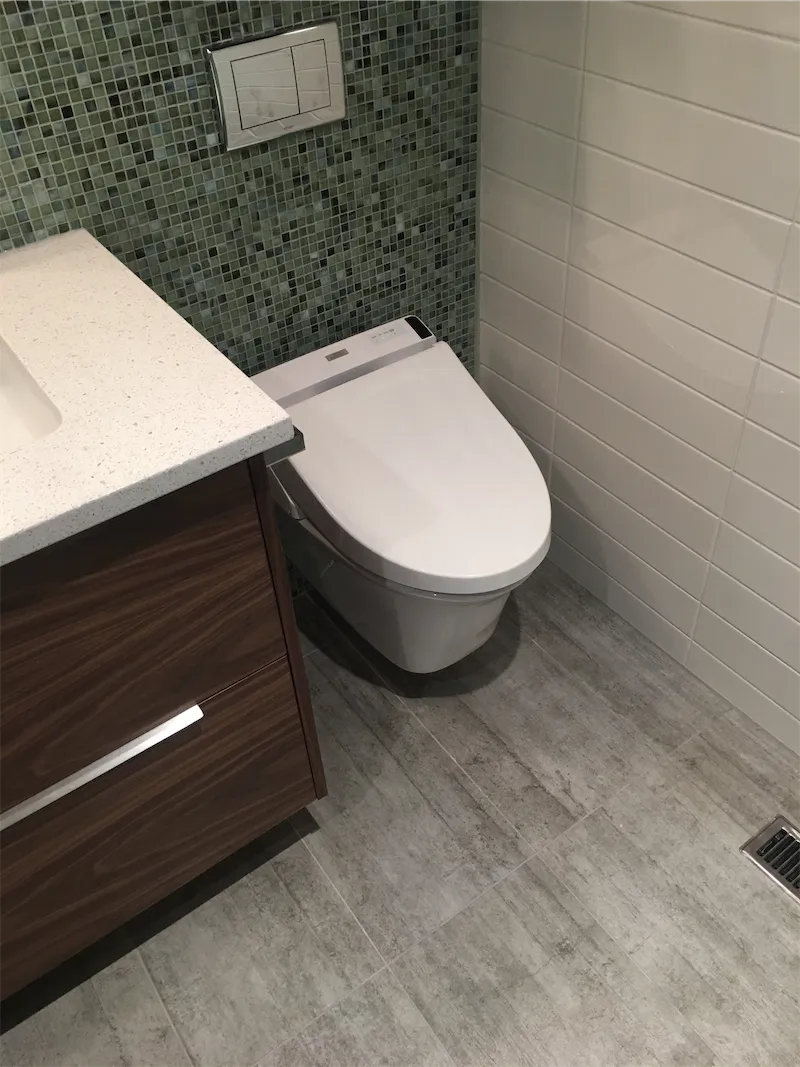
Bathroom Plumbing Calgary | Professional Bathroom Services
Calgary's hard water and extreme temperature swings wreak havoc on bathroom plumbing — we see it every day. FlameTech's bathroom plumbing specialists handle everything from emergency burst pipes in older Mount Royal homes to complete bathroom renovations in new Evergreen developments.
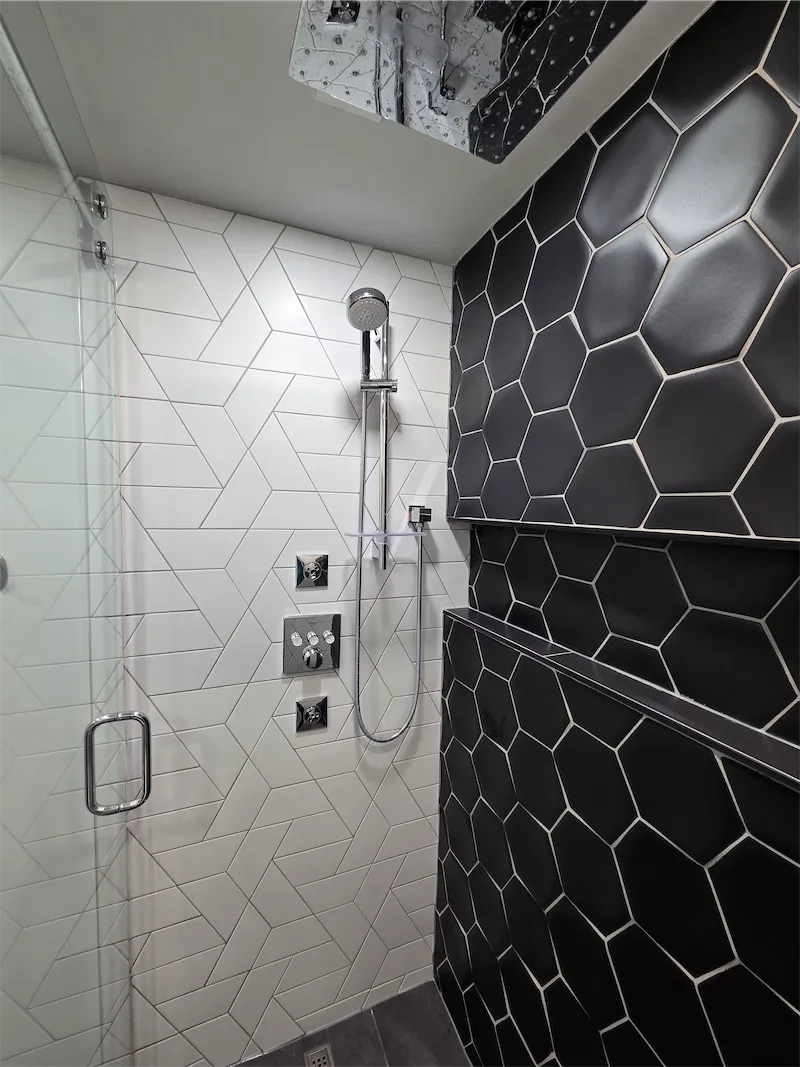
Shower Plumbing Calgary | Expert Shower Installation & Repair Services
Calgary's unpredictable weather puts stress on every part of your plumbing system, but nothing's more frustrating than stepping into a cold shower on a -30 morning. FlameTech's shower plumbing specialists have been fixing pressure problems, temperature swings, and complete shower failures across Calgary for over two decades.
Toilet Installation in Calgary — Standard, Comfort-Height & Wall-Hung
Most toilet installs are 1-2 hours and look the same on the surface — but how the flange, supply line, and wax ring are handled is the difference between a 15-year toilet and a leak in 18 months. FlameTech installs Toto, Kohler, American Standard, and any owner-supplied unit with a fresh wax ring, supply line, and shutoff every time.
Where we cover Calgary.
Same-day dispatch across Calgary and Airdrie. Find your neighbourhood for area-specific notes on common builds, hard-water patterns, and the systems we see most.
Get a free leak detection quote.
Tell us what's going on and our dispatch team will call you back with pricing and availability.
Book a Red Seal plumber in Calgary.
Free estimates, upfront pricing, and a satisfaction guarantee — local technicians who treat your home like their own.
Free estimate · No service charge for quotes · BBB Accredited