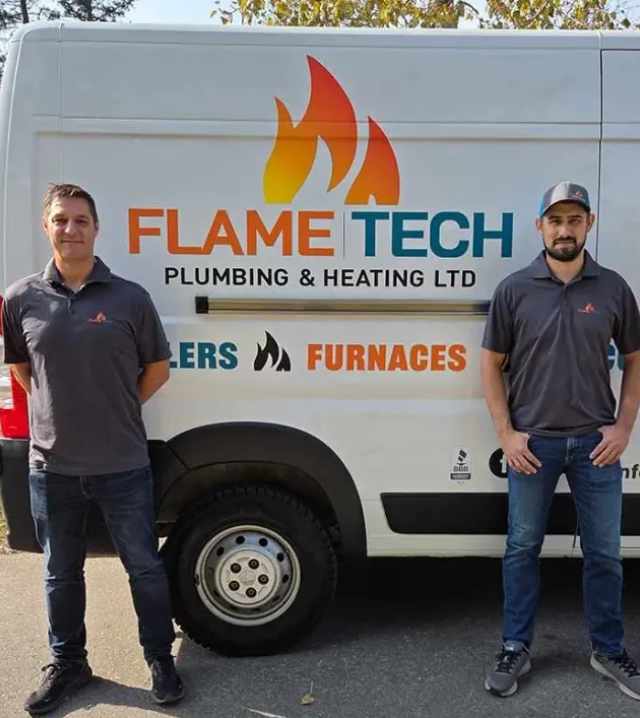

Furnace Repair in Calgary
Furnace repair across Calgary on every major brand. We diagnose the actual failure before quoting a part — because "probably the motor" is how homeowners end up paying for a new blower when a cheap capacitor was the whole problem.
Most furnace failures come down to a short list of parts: an igniter, a flame sensor, a capacitor, a limit switch, a pressure switch, a control board. Those are repairs, and we measure the suspect part before we quote it, so you pay for the fix your furnace actually needs.
What isn't a repair is a cracked heat exchanger. That's a combustion-safety problem, it can put carbon monoxide into the air you breathe, and we will not patch one — we'll show you the crack on the camera and quote a replacement instead.
No heat in a cold snap? Call 587-834-3668 and we'll give you a realistic booking time. Also serving furnace repair in Airdrie. Trying to work out what's wrong first? We've written up the symptoms we're called to most: a furnace blowing cold air, a fuse that keeps blowing, a burning plastic smell, and a gas smell — that last one, leave the house first.
Furnace down in a Calgary cold snap? Call 587-834-3668 and we'll give you a straight answer on when we can be there.
Call 587-834-3668“Shaun arrived promptly and completed servicing my furnace and water heater.
In addition he installed a new humidifier.
Very professional, knowledgeable and personal service. Highly recommend FlameTech!”

Elaine Cunningham
Calgary · 1 year ago
What Usually Fails on a Calgary Furnace
After enough winters you learn the short list. These are the faults we actually find, roughly in the order we find them.
Failed igniter
The most common modern-furnace failure by a wide margin. A hot-surface igniter is a ceramic element that glows to light the gas, it lasts 5-10 years, and it dies without warning. The tell: you hear the inducer spin up, then nothing.
Dirty flame sensor
A metal rod that confirms the burner actually lit. Carbon builds up on it, it stops seeing the flame, and the furnace shuts itself down within seconds of igniting as a safety. The tell: fires, runs a few seconds, quits, tries again. Cleaning fixes it — no part needed.
Failed capacitor
A cheap cylindrical component that gives the blower motor the kick it needs to start. When it fails, the motor hums but won't spin. This is the one people most often overpay for — it gets misdiagnosed as a dead motor, and it's one of the cheapest parts in the whole furnace. See furnace blower issues.
Blower motor
PSC, X13, or ECM depending on the vintage. ECM motors on modern high-efficiency units have the controller built in, which makes them the priciest part in the furnace — and on an older unit, that's often the failure that tips the math toward replacement.
Limit switch tripping on airflow
A badly clogged filter restricts airflow so much that the heat exchanger overheats and the high-limit switch shuts the burner off to protect it. The tell: short bursts of heat, then nothing, then it tries again. Sometimes the filter is the whole fix. Sometimes the switch itself has given up after enough cycles.
Pressure switch and inducer faults
The inducer pulls combustion gases out through the vent, and the pressure switch confirms it's actually doing so. A blocked vent, a cracked hose, or a failing inducer motor and the furnace won't fire at all — correctly, because that safety exists for a reason.
Control board
The brain. When it goes, the symptoms are strange and inconsistent, which is exactly why it gets blamed for a lot of faults that aren't its doing. We test the board's signals rather than replacing it on a hunch — it's an expensive part to guess at.
The Calgary-Specific One: Frozen Condensate
This is the call that fills our phone lines every deep cold snap, and it catches people out because the furnace is fine — it's the drain that's failed.
- 01A high-efficiency condensing furnace produces acidic water as a by-product of pulling extra heat out of the exhaust. That water has to drain somewhere.
- 02In a lot of Calgary homes, that drain line runs through an unheated space — a crawl space, an attached garage, a cold corner of the basement — or exits outdoors. At −30°C it freezes solid.
- 03The furnace detects the blockage and locks itself out. You get no heat, often with an error code, on the single coldest night of the year — which is exactly when the line was always going to freeze.
- 04Thawing it gets your heat back that day. But it will happen again next January unless the cause is fixed, and we'd rather tell you that than come back annually.
- 05The permanent fix is rerouting the condensate line through heated space, with heat trace where an outdoor exit genuinely can't be avoided. It's a small job compared to having no heat in a cold snap.
The Repairs We Won't Do
Being straight about the limits is more useful than a list of everything we can fix. There are three situations where the honest answer is no.
A cracked heat exchanger
The heat exchanger separates combustion gases from the air you breathe. When it cracks, carbon monoxide can enter your home's airstream. There is no patch, no weld, no sealant that makes that safe. The fix is a new furnace, at any age, and anyone offering to repair one is putting your family at risk to make a sale. We scope it and show you the crack before we say a word about replacement.
Ignoring delayed ignition
If your furnace makes a loud bang on startup — not a soft whoof, a bang — gas is pooling in the heat exchanger before it lights. That pressure damages the exchanger over time and can crack it. We won't just swap the igniter and leave; we find why it's lighting late, because the bang is the warning.
Repairing a furnace we'd replace
If the unit is past 18-20 years and the failure is a major one — ECM motor, control board on a discontinued model, exchanger — we'll quote the repair honestly and quote the replacement next to it. Sometimes the repair still makes sense. Often it's an instalment plan on a furnace you're replacing anyway. We'll tell you which one we think you're looking at.
Repair or Replace? The Honest Framework
Under 12 years, single failure
Repair it. A furnace in that window with a dead igniter, a dirty flame sensor, or a failed capacitor has years of life left, and replacing it would be throwing away a working appliance.
Over 18 years, major failure
Strongly consider replacement. You're putting an expensive part into a furnace whose other original components are all the same age — and the next one will fail soon after.
12-18 years, major failure
This is the genuine judgement call. We quote both and walk you through it: what the repair costs against what a new unit costs, what efficiency you'd gain, and how long you plan to stay in the house. Then you decide, not us.
Cracked heat exchanger, any age
Replace. It isn't a cost question, it's a safety one, and it's the one item on this list where there's nothing to weigh.
Calgary Furnace Repair FAQs
How much does furnace repair cost in Calgary?
It depends entirely on what failed. A flame sensor cleaning is among the cheapest work we do — often no part at all. An igniter or a capacitor is a modest part. A gas valve, an ECM blower motor, or a control board is a serious component and costs accordingly.
We diagnose first and quote before we touch anything, so you're deciding with a real number rather than a guess made over the phone.
And if the repair doesn't make sense — a cracked heat exchanger, or major work on a furnace already near the end — we'll tell you that instead of quietly doing it.
My furnace is blowing cold air. What's wrong?
Usually it means the burner isn't lighting, or it lit and then shut down while the blower kept running.
Common causes: a failed igniter (you'd hear the inducer spin up, then nothing), a dirty flame sensor (fires, runs seconds, quits), or a furnace that's locked out on a safety.
One to rule out first for free: check that your thermostat fan is set to AUTO rather than ON. On ON, the blower runs continuously whether the furnace is heating or not — so it pushes room-temperature air through the vents between cycles, which feels exactly like cold air. It's a surprisingly common false alarm.
Our guide to a furnace blowing cold air works through the full list by symptom pattern — cold all the time, warm-then-cold, and cold that only starts in a cold snap each point at a different cause.
Why does my furnace keep shutting off and restarting?
That's short-cycling, and you shouldn't let it keep going.
The usual causes are a dirty flame sensor (it stops seeing the flame and shuts down as a safety), restricted airflow from a badly clogged filter (the heat exchanger overheats and the high-limit switch cuts the burner), or a failing limit switch.
It matters because running short-cycled damages things — the heat exchanger takes thermal stress it wasn't designed for, and the inducer motor burns out early. Change the filter, and if that doesn't fix it, turn the thermostat down and call us. Most short-cycle causes are quick, cheap fixes if you don't wait.
My furnace bangs loudly when it starts. Is that dangerous?
A soft whoof on ignition is normal. A loud bang is not, and it's worth taking seriously.
It means gas is building up in the heat exchanger before it ignites, then lighting all at once. That's delayed ignition, and the pressure spike it creates is exactly what cracks heat exchangers over time — and a cracked exchanger is a carbon monoxide risk.
The usual causes are dirty burners, low gas pressure, or an igniter that's taking too long to light. All of them are fixable. Shut the furnace off and call us — the bang is the warning, and it's cheaper to act on it than to ignore it.
Why does my furnace stop working on the coldest night of the year?
If it's a high-efficiency furnace, it's very often a frozen condensate line — and the timing isn't bad luck, it's the cause.
Condensing furnaces produce acidic water that has to drain away. When that line runs through an unheated space or exits outdoors, deep cold freezes it solid, the furnace detects the blockage, and it locks itself out as a safety.
We'll thaw it and get your heat back. But the permanent fix is rerouting the line through heated space, with heat trace where an outdoor exit can't be avoided — otherwise you'll be calling again next January.
Can you repair a cracked heat exchanger?
No — and neither can anyone else, whatever they tell you.
The heat exchanger is the barrier between combustion gases and the air circulating through your house. A crack in it can put carbon monoxide into the air your family breathes. There's no patch or weld that restores that barrier to a state anyone should trust.
The only correct answer is a new furnace, regardless of the unit's age. We scope the exchanger with a camera and show you the crack before we recommend anything — you shouldn't take that on faith, from us or from anyone.
Do you repair all furnace brands?
Yes. We work on every major brand sold in Calgary — AirEase, Carrier, Lennox, Trane, Goodman, Heil, Rheem, and the rest.
Universal parts (igniters, flame sensors, capacitors, pressure switches) cover most brands. Where a brand-specific part has to be ordered, we tell you as soon as we know.
What should I do if my furnace dies in a cold snap?
Call 587-834-3668. Cold snaps fill every heating company's schedule, ours included, so we'll give you a realistic booking time on the call rather than a promise we can't keep.
If your furnace is completely dead right now, our no heat page has things worth checking while you wait.
Know the symptom? Start there.
If you've got one specific problem, these pages go deeper. If you just want it fixed, call 587-834-3668.
No Heat Issues
Furnace completely dead, won't fire, thermostat blank — what to check and when to call.
See serviceFurnace Blower Issues
Weak airflow, loud rattling, blower that won't shut off — usually a capacitor, not the motor.
See serviceHome Heating Issues
Running but not warming, cold rooms, climbing bills, odd noises — broader symptom triage.
See serviceFurnace Replacement
When the repair no longer makes sense — sizing, gas, venting, full commissioning.
See serviceHigh-Efficiency Furnaces
95-98% AFUE condensing units sized for Calgary's design temperature.
See serviceFurnace Repair Chestermere
Diagnostic appointments for furnace faults in Chestermere.
See serviceFurnace Repair Airdrie
Same crew, dispatched from Airdrie — furnace repair north of the city.
See serviceFurnace Tune-Ups
Most of these parts show wear before they quit. An annual tune-up finds them in September.
See serviceSimple, honest, on your schedule.
The goal is to find the actual fault, fix it properly, and be honest with you when the furnace isn't worth the repair.
Symptom, age, and history
What it's doing, when it started, and how old the unit is. Age reframes everything — an eight-year-old furnace with a dead igniter is an easy yes; the same fault on a twenty-year-old unit is a different conversation.
Watch a startup cycle
We drop the thermostat and watch what the furnace actually does. Most failures announce themselves in the sequence — no inducer, inducer but no ignition, ignition but no flame hold. Each one points somewhere different.
Measure the suspect part
Igniter resistance, flame sensor microamp draw, capacitor microfarads, limit and pressure switch continuity, control board signals. We test before we quote, so you don't pay for a part your furnace didn't need.
Fix it, or tell you not to
We quote the repair before we start it. If we find a cracked heat exchanger, or the repair cost stops making sense on a furnace near end of life, we say so and quote a replacement in writing.
Also under Heating
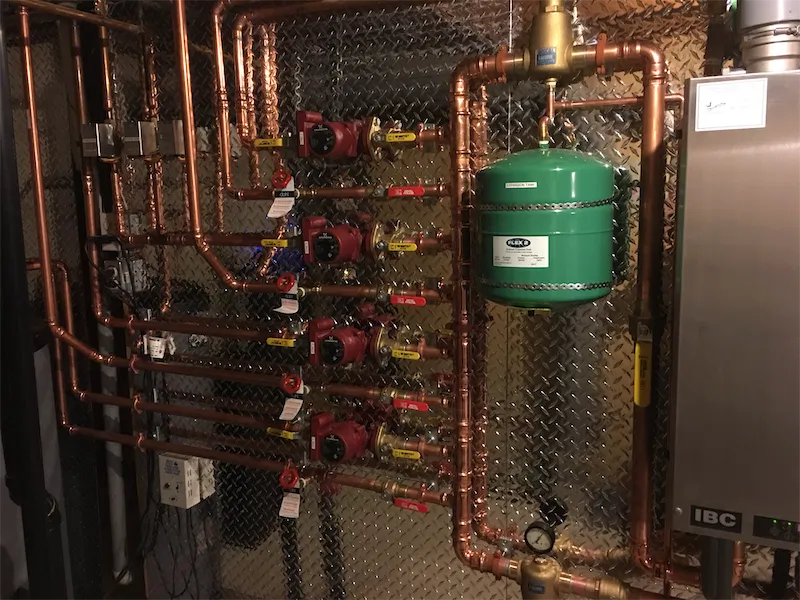
Expert Boiler Installation in Calgary
Most Calgary boilers fail at 18-22 years. When yours is on the way out, FlameTech replaces it without the cold-snap scramble — correctly sized, manufacturer-matched system, full install and commission in a single day for a straight swap.
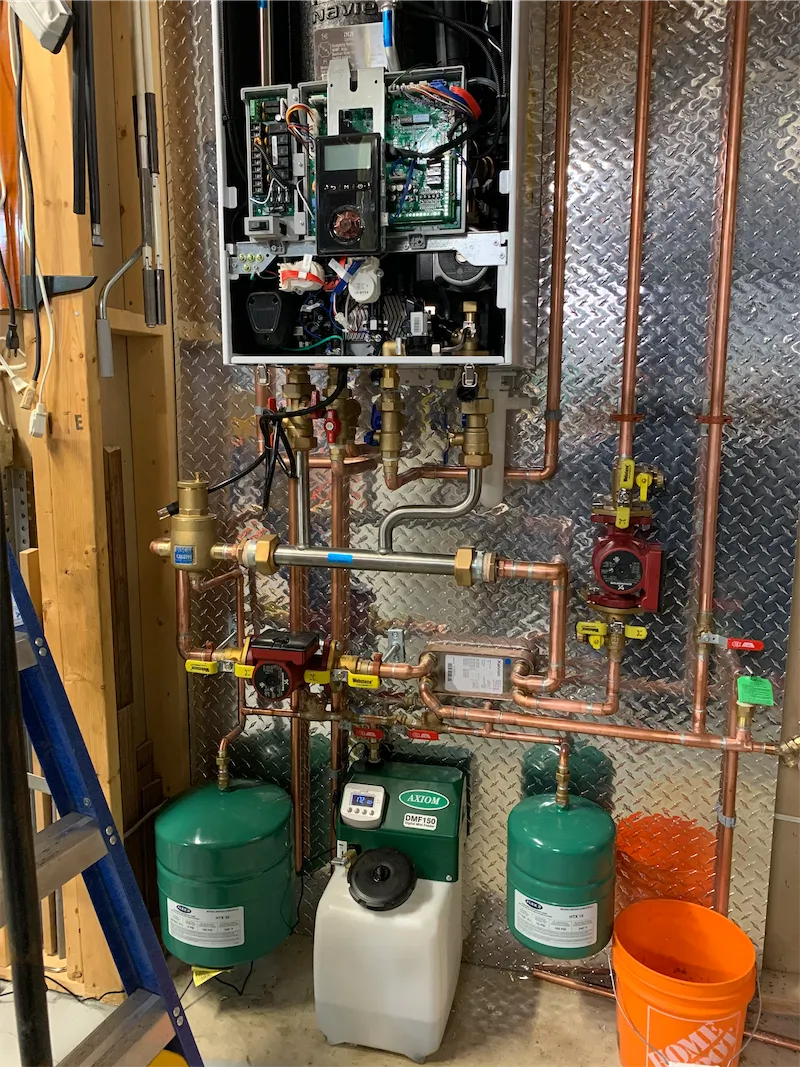
Combi Boiler Installation Calgary
One wall-hung unit for both your heat and your hot water — no storage tank, no second appliance. FlameTech sizes, installs, and commissions combi boilers across Calgary, and we'll tell you straight if your home isn't a good fit for one.
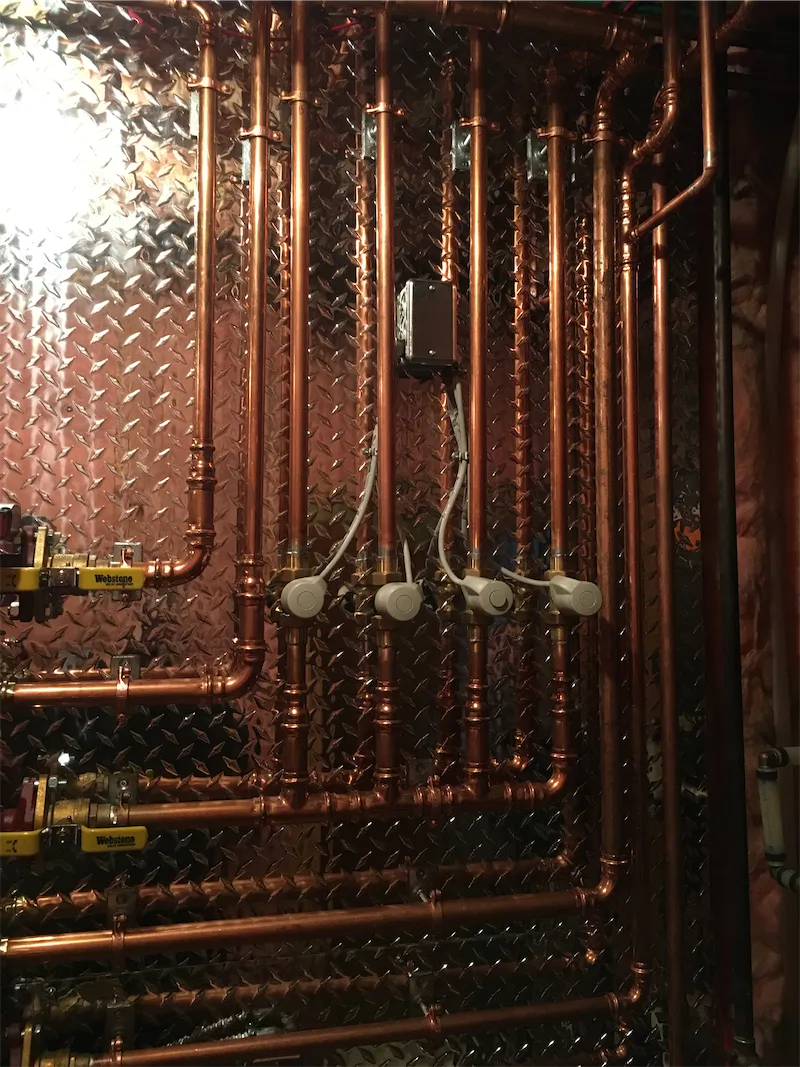
Boiler Replacement Calgary — Honest Repair-or-Replace Advice
Replacing a boiler isn't the same job as installing one. You're inheriting an existing system — old radiators, old pipework, decades of sludge — and getting that part right is what decides whether the new boiler lasts twenty years or five.
Where we cover Calgary.
We dispatch from Calgary and Airdrie. Find your neighbourhood for area-specific notes on common builds, hard-water patterns, and the systems we see most.
Get a free furnace repair quote.
Tell us what's going on and our dispatch team will call you back with pricing and availability.
Book a Red Seal plumber in Calgary.
Free estimates and upfront pricing, from local technicians who treat your home like their own.
Free estimate · No service charge for quotes · BBB Accredited