
Furnace Installation Calgary — Sizing, Venting & Commissioning
Two furnaces of the same model, installed in the same house, can perform completely differently. The equipment is rarely the variable — sizing, venting, ductwork and commissioning are. This page is about the install itself: what a good one involves, and where the ones that disappoint go wrong.
The most common fault we find on Calgary furnaces isn't a failed part. It's a unit that was oversized because someone matched the badge on the old furnace instead of calculating what the house actually needs. An oversized furnace short-cycles, swings the temperature, wears its own components out faster, and costs more to run for its entire life.
We size every install off a heat-loss calculation against Calgary's design temperature, check that the gas line and venting can actually carry it, look at whether the ductwork can move the air, and commission the unit properly at the end. That last step is the one most often skipped and the one that decides how the furnace behaves.
If you're still deciding whether to replace at all, or weighing furnace-only against a hybrid heat pump, start with furnace replacement — that page covers the decision. This one covers the work. Monthly financing is available via Financeit.
Planning a furnace install, or want a second opinion on a quote you've been given? Call 587-834-3668 for a free assessment.
Call 587-834-3668“FlameTech is always on time. They are very knowledgeable. They worked on our furnace and hot water heater today. They explained everything they did and asked if we had any questions.”

Barbara Fiselier
Calgary · 12 months ago
Sizing — where most installs go wrong
If you take one thing from this page, take this. Sizing is decided before anyone picks a brand, and it affects comfort and running cost for the entire life of the furnace.
Why bigger isn't better
An oversized furnace satisfies the thermostat quickly, shuts off, and repeats. Those short cycles mean the temperature swings noticeably between them, the rooms furthest from the furnace never quite catch up, and the ignition, blower and heat exchanger all see far more starts than they were designed for. It also runs at its least efficient during startup, which is most of what an oversized unit does.
Matching the old furnace repeats the old error
The unit coming out was very often sized by rule of thumb decades ago, and Calgary homes have been getting better sealed and better insulated ever since. Sizing the new one to match means inheriting a mistake and adding twenty years to it.
What a heat-loss calculation actually looks at
Floor area, ceiling heights, window area and glazing type, insulation levels, orientation, and how tight the house is — measured against Calgary's design temperature rather than an average winter day. The output is a BTU figure the house genuinely needs.
Two-stage and modulating units
A furnace that can run at partial capacity handles the mismatch between a design-day load and a typical day far better than a single-stage unit that only knows full blast. It runs longer and gentler, which is both more comfortable and easier on the equipment. Worth the conversation on any install.
If the house has cold rooms now
Say so before we quote. A room that never heats properly is usually a duct or balancing problem, and a bigger furnace will not fix it — it will just short-cycle harder while that room stays cold. Better to identify it at quote stage than to spend money on capacity that isn't the answer.
Venting, gas and the orphaned water heater
The parts of a furnace install that most often surprise people, and the reason two quotes for the same furnace can differ substantially.
High-efficiency furnaces need their own venting
A condensing furnace extracts so much heat from the exhaust that what leaves the unit is cool and acidic. That can't go up a masonry chimney — it needs sealed plastic venting, usually through a new sidewall penetration, with intake and exhaust terminations placed to code and clear of snow line.
The orphaned water heater
This is the one that catches people. If your old mid-efficiency furnace shared a chimney with an atmospheric water heater, the furnace was providing most of the heat that made that flue draft. Take the furnace off it and the water heater can be left on a chimney that's now oversized and too cool to draft properly. We look at both appliances together at quote stage, because the answer sometimes involves relining, or moving the water heater to a power-vented or tankless unit.
Gas line capacity
Gas piping in older Calgary homes was sized for the appliances of the day. A higher-input furnace, or a furnace plus a newer water heater on the same run, can exceed what the existing line will carry. We check it at quote stage rather than mid-install.
Condensate, and why it freezes here
Condensing furnaces produce acidic water that needs neutralising and draining. Where the drain runs through an unheated garage, crawlspace or along an exterior wall, it can freeze solid in a deep cold snap — the furnace detects the blockage and locks out, always on the coldest night. Routing it through heated space at install time avoids a call every winter. See frozen pipe repair for the wider version of that problem.
Permits and inspection
Furnace installations in Calgary require a gas permit and an inspection. We handle the application and schedule the inspection as part of the job.
The ductwork nobody quotes on
A furnace can only deliver what the duct system lets it move. This is the most under-examined part of a Calgary install and the most common cause of a new furnace that still doesn't feel right.
- 01Return air is usually the bottleneck. Many Calgary homes have generous supply runs and undersized returns, which starves the blower and raises static pressure across the whole system.
- 02High static pressure shows up as noise at the registers, a furnace running hotter than its designed temperature rise, and a blower drawing more power than it should.
- 03We measure static pressure rather than assume the existing ductwork is adequate — it takes minutes and it changes what we recommend.
- 04A high-efficiency furnace with an ECM blower moves more air at a lower temperature rise than the unit it replaces, so ducting that was borderline before can become the limiting factor after.
- 05Where the duct genuinely can't support the airflow, we'll say so and price the modification rather than install into a system that will underperform.
- 06Filter cabinet sizing matters too — a restrictive filter in an undersized cabinet undoes airflow gains you just paid for.
Commissioning — what should happen before we leave
This is the difference between a furnace that was installed and a furnace that was installed properly. None of it takes long and all of it is measurable.
- 01Temperature rise measured across the heat exchanger and compared against the range printed on the nameplate. Outside that range, something is wrong with airflow or gas input.
- 02Gas manifold pressure checked and adjusted to the manufacturer's specification for the altitude.
- 03Static pressure measured on both supply and return.
- 04Combustion analysed to confirm the burner is running clean.
- 05Venting inspected end to end, terminations confirmed clear, condensate drain flow verified.
- 06Thermostat paired, staging configured, and the changeover set up correctly if the system is dual-fuel with a heat pump.
- 07Then a walkthrough — where the filter is, what size, how often, and what the furnace should sound like when it's behaving.
Calgary Furnace Installation FAQs
How much does furnace installation cost in Calgary?
Most furnace installations in Calgary run $4,500 to $9,600 as of September 2026. That is a wide range because it spans an entry single-stage unit in a straightforward swap at one end and a premium modulating furnace with venting and ductwork changes at the other — which is why we won't commit to a firm number over the phone.
The variables that move it most: the furnace itself and whether it's single-stage, two-stage or modulating; whether the existing venting can be reused or a new sidewall vent has to be cut; whether the gas line needs upsizing; whether any ductwork modification is needed; and whether removing the furnace leaves a water heater orphaned on the chimney.
We come out, run the heat-loss calculation, check all of the above, and give you the model, the efficiency rating, the full scope and the all-in price in writing at no charge. Financeit monthly payments are available.
What size furnace do I need?
Whatever the heat-loss calculation says — which is very often smaller than the furnace coming out.
Most furnaces we replace in Calgary were sized by matching the previous unit, which was itself sized by rule of thumb decades ago. Meanwhile the house has probably had windows, insulation or air sealing improved since. The result is a lot of oversized furnaces.
Oversizing isn't harmless. The unit heats in short bursts, the temperature swings between cycles, rooms furthest from the furnace lag, and the ignition and blower see far more starts than they were built for. Right-sizing is quieter, steadier and cheaper to run.
How long does a furnace installation take?
A straight changeover — new furnace onto compatible existing venting, gas and ductwork — is typically a single day, and you'll have heat that evening.
Add a new sidewall vent, a gas line upgrade, or ductwork modification and it becomes one to two days.
We give you a realistic timeline with the written quote, and if the work has to span two days we plan the heat-off window rather than leaving you to find out.
Can my new furnace use the existing chimney?
If it's a high-efficiency condensing furnace, almost certainly not.
Condensing furnaces produce cool, acidic exhaust that masonry chimneys aren't designed to handle. They need sealed plastic venting, normally through a new sidewall penetration.
There's a knock-on effect worth knowing about. If your old furnace shared that chimney with an atmospheric water heater, the furnace was doing most of the work making the flue draft. Remove it and the water heater can be left on a flue that's too cool and too large to draft properly. We assess both appliances together at quote stage, because that's a safety matter rather than a preference.
Do I need to upgrade my ductwork?
Sometimes, and it's worth knowing before rather than after.
The usual issue in Calgary homes is undersized return air. It starves the blower, raises static pressure, and shows up as register noise, uneven rooms, and a furnace running outside its designed temperature rise.
It matters more with a modern furnace than it did with the old one, because an ECM blower moves more air at a lower temperature rise — so ducting that was marginal before can become the limiting factor after.
We measure static pressure as part of the assessment. If the duct is fine, we'll tell you that and leave it alone.
What's the difference between installation and replacement?
Mostly the question you're asking.
Furnace replacement is about the decision — whether it's time, furnace-only or hybrid with a heat pump, which brand, and how to time it. That's where to start if you haven't committed yet.
This page is about the work itself: sizing, venting, gas, ductwork and commissioning. In practice most Calgary installs are replacements, so the two go together — but the questions are different and it's worth reading whichever one you're actually asking.
Do you handle the gas permit?
Yes. Furnace installations in Calgary require a gas permit and an inspection, and we handle the application and schedule the inspection as part of the job.
It's worth checking that any quote you're comparing includes it. A permit-free install is a problem when you sell the house, and it can be a problem with your insurer before then.
Do you install furnaces in Airdrie too?
Yes — see furnace installation in Airdrie, which we dispatch locally rather than routing a truck up from Calgary.
The work is the same; the scheduling is better. Same heat-loss sizing, same venting and gas assessment, same commissioning.

Monthly Financing Available
Spread the cost into manageable monthly payments.
Spread the cost of a new furnace into flexible monthly payments via our Financeit partner.
Simple, honest, on your schedule.
The unit goes in fairly quickly. Everything that decides how well it works happens either side of that.
Heat-loss calculation
We measure the house — square footage, insulation, windows, ceiling heights, air sealing — and calculate the actual load against Calgary's design temperature. We do not size from the old furnace's badge, because that number is usually wrong and copying it repeats someone else's mistake for another twenty years.
Venting, gas and duct assessment
Can the existing gas line carry the input? Can the chimney be reused, or does a sidewall vent need cutting? Is the return air adequate for the airflow? All three get checked before we quote so they're priced rather than discovered on the day.
Changeover
Old unit disconnected and removed, new furnace set and connected, venting run, condensate routed to a neutraliser and drain, gas connected and leak-tested, thermostat wired. A straight changeover is typically a single day and you'll have heat that evening.
Commission and walkthrough
Temperature rise measured against the nameplate range, gas manifold pressure verified, static pressure checked, combustion analysed, and the staging and thermostat set up. Then we register the warranty, book the first service, and show you where the filter goes.
Also under Heating
Expert Boiler Installation in Calgary
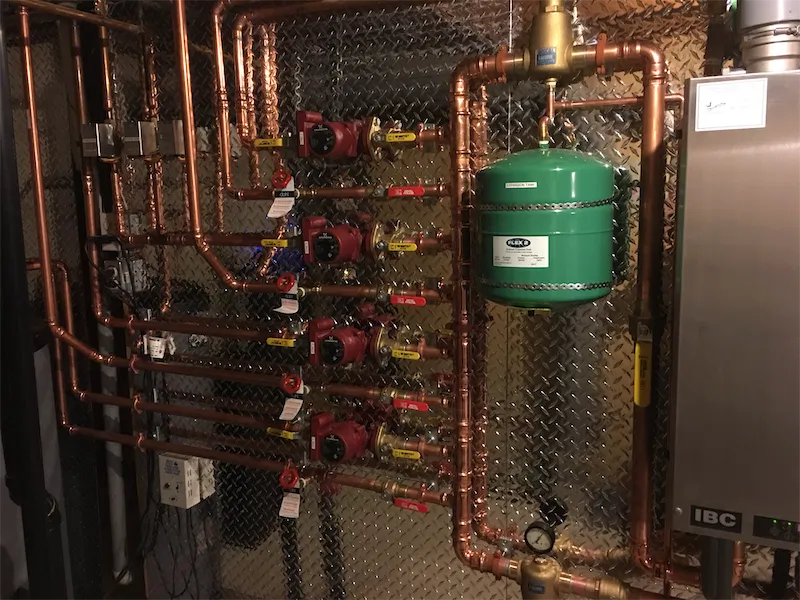
Most Calgary boilers fail at 18-22 years. When yours is on the way out, FlameTech replaces it without the cold-snap scramble — heat-loss calc, manufacturer-matched system, full install and commission in a single day for a straight swap.
Combi Boiler Installation Calgary
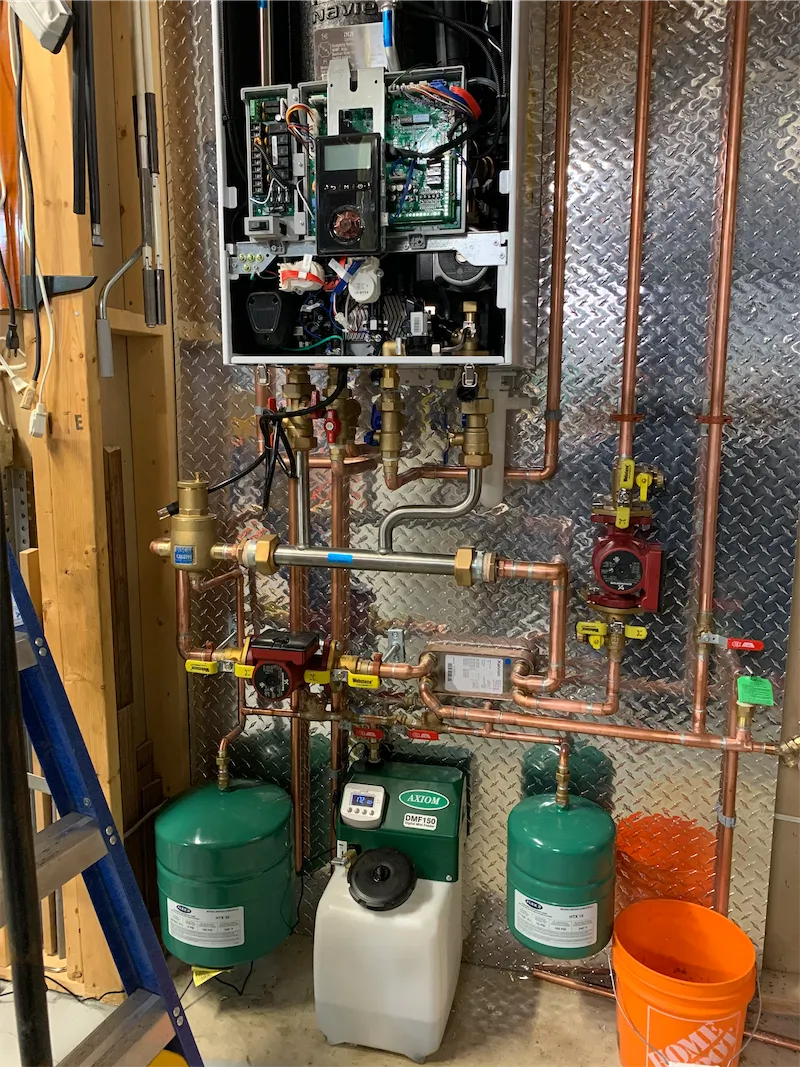
One wall-hung unit for both your heat and your hot water — no storage tank, no second appliance. FlameTech sizes, installs, and commissions combi boilers across Calgary, and we'll tell you straight if your home isn't a good fit for one.
Boiler Replacement Calgary — Honest Repair-or-Replace Advice
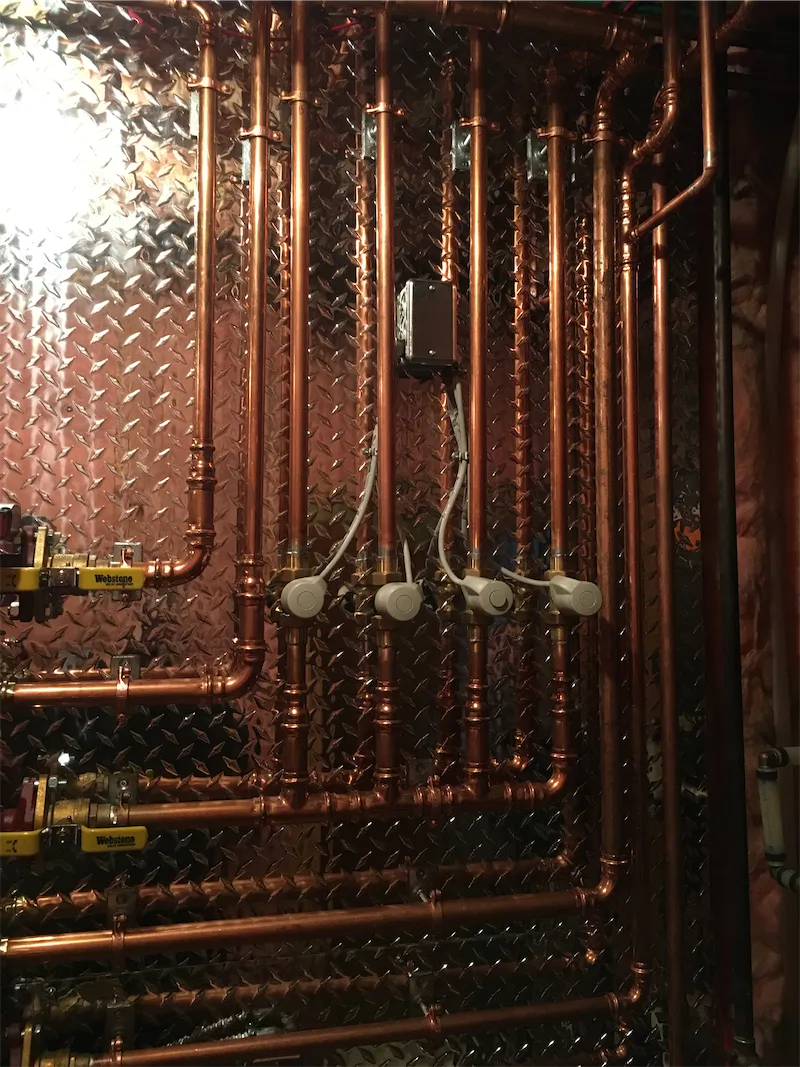
Replacing a boiler isn't the same job as installing one. You're inheriting an existing system — old radiators, old pipework, decades of sludge — and getting that part right is what decides whether the new boiler lasts twenty years or five.
Where we cover Calgary.
Same-day dispatch across Calgary and Airdrie. Find your neighbourhood for area-specific notes on common builds, hard-water patterns, and the systems we see most.
Get a free furnace install quote.
Tell us what's going on and our dispatch team will call you back with pricing and availability.
Book a Red Seal plumber in Calgary.
Free estimates, upfront pricing, and a satisfaction guarantee — local technicians who treat your home like their own.
Free estimate · No service charge for quotes · BBB Accredited