Why is my water heater not working? Start by pinning down what "not working" means at your house. No hot water at all, hot water that runs out or stays lukewarm, and water on the floor around the tank are three different problems, and the safe checks for each are different too.
If you smell gas near the water heater, don't touch it. Get out of the house first.
If you smell gas, stop here
The City of Calgary says to "leave the building immediately and do not turn light switches on or off, use a phone, or create a spark." Then call the ATCO Gas emergency line at 1-800-511-3447, or 9-1-1, once you're somewhere safe.
Leave every check below until the house has been declared safe. A.O. Smith's pilot light guide is plain about it: "Do not continue if you smell gas."
First, work out which problem you have
- No hot water at all, from any tap. See no hot water at all.
- Some hot water, but not enough, or only lukewarm. See not enough hot water.
- Water around the tank, whether the hot water still works or not. See water around the tank.
Our hot water issues page covers the repairs behind all three.
No hot water at all
Gas tanks: checks you can make from the outside
None of these involves opening anything.
- Do your other gas appliances work? If the furnace and stove are out too, suspect the gas supply rather than the heater.
- Is the gas valve on the heater's line open? The handle should run in line with the pipe. A.O. Smith's on-and-off guide says to close it by turning the handle "so it's at a right angle to the gas line." If you find it closed and don't know why, find out before opening it.
- Is the control knob on Off or the vacation setting? It sometimes gets left there after maintenance or time away.
- Can you see a flame through the sight window? A.O. Smith's repair guide puts it simply: "Is there a visible flame? If so, your pilot light is still lit."
- Is a status light flashing? The same guide says a flashing light usually means a lack of power or an empty tank, and to look up the pattern in your manual.
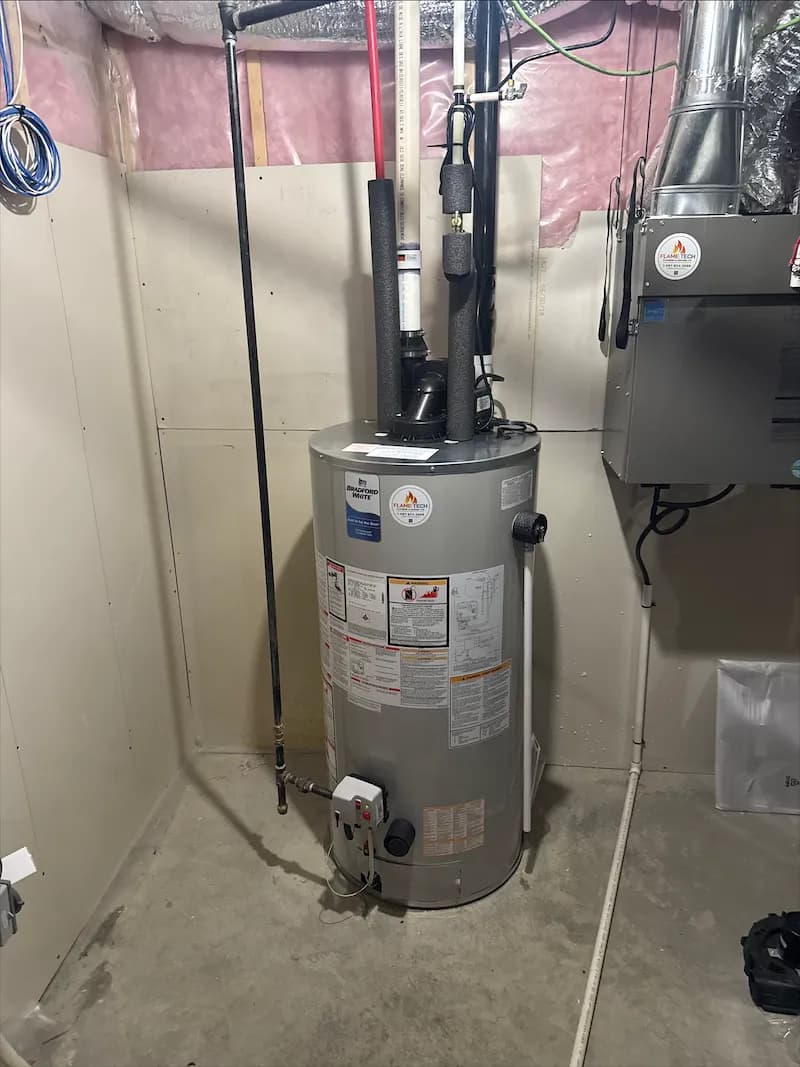
- Is it a power-vent tank? Those have a fan on top and plug in. Bradford White says a heater that needs external power "will not be able to provide hot water" without it, so check for an outage or a pulled plug.
If the pilot is out, relight it only by following the lighting label on the tank. A.O. Smith says the label and manual "supersede the instructions in this guide." If the label has you removing a panel or cover, stop there and call a technician. If the pilot won't light, or keeps going out, stop. A failed gas control valve is one cause, and A.O. Smith calls it "an emergency water heater repair, so call a professional immediately."
Electric tanks
Check the water heater's breaker in your panel. A.O. Smith's repair guide says "the solution may be as simple as changing a fuse or flipping the breaker. However, having no hot water often indicates a more serious problem."
If the breaker has tripped, reset it one time. If it won't stay on, something behind it is faulty, so leave it off and call. Don't take off the access panels on the tank, press the reset button behind them or test the elements. There's live wiring under those covers.
Tankless units
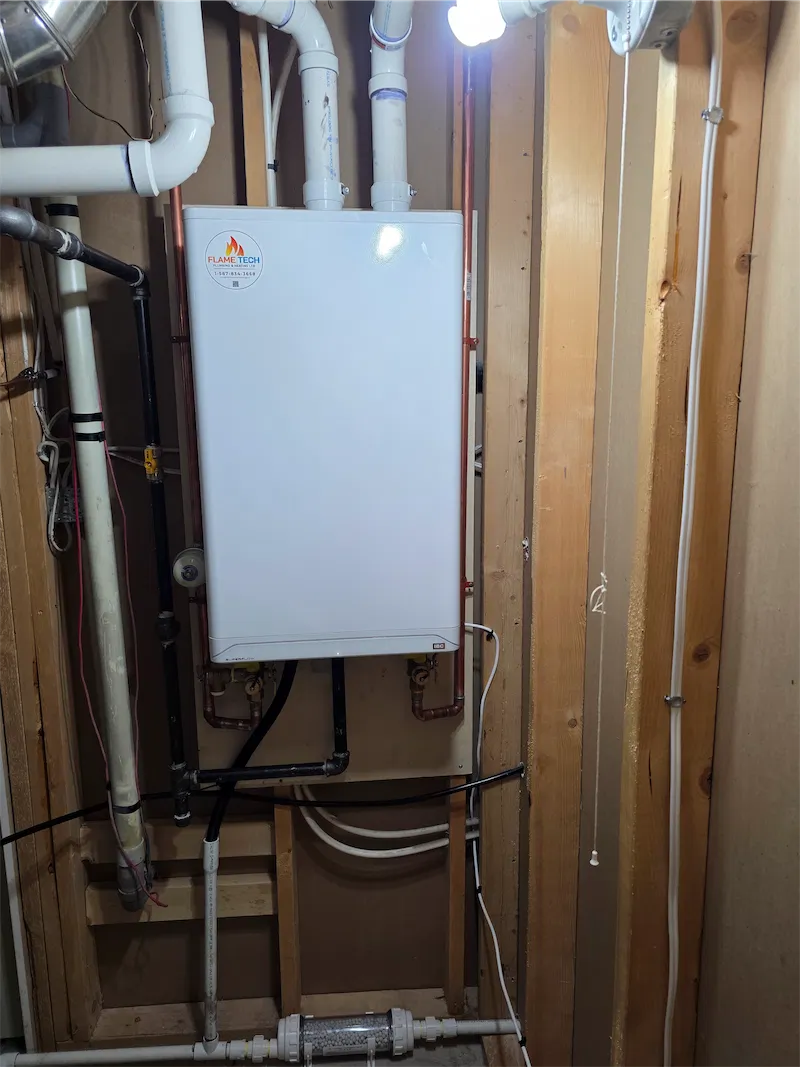
Gas tankless heaters still need electricity. A.O. Smith says they "stop working during power outages." If the display shows an error code, look it up in the manual for your model. Beyond that, see tankless water heater repair.
If nothing here explains it, our no hot water page covers what a technician checks next.
Some hot water, but not enough or only lukewarm
Running out isn't always a fault. Bradford White says a tank "might not have enough capacity to meet the demand," and recovery time, how fast it reheats once emptied, matters too. Rheem adds that "In colder months, incoming water is much colder," which slows heating. A tank that kept up in July can fall short in January.
Sediment is the other usual cause. The City of Calgary says our water is hard because of "calcium and magnesium in the water from the Bow and Elbow Rivers." Over time they build up as a layer on the tank floor, where Bradford White says they "act as an insulator, preventing the burner or heating element from effectively heating the water." If the tank pops or rumbles too, read about popping or rumbling. Our water heater service includes a flush.
A broken dip tube is another. Bradford White says that when it cracks, "cold water will mix with the hot water at the top of the tank just as you're turning on the shower." On electric tanks, a failed element or thermostat gives the same lukewarm result. All of these are a plumber's diagnosis, not something to open the tank for.
If only one shower goes cold when someone runs a tap, the heater may be fine. Rheem says that "is often mistaken for a heater problem, but it's typically a worn cartridge or mixing valve." Its shower article recommends a pressure-balancing valve. That's shower work, not heater work.
Water around the tank
First, rule out condensation. A.O. Smith's Bulletin 51 says it "should only be noticeable after a long draw of hot water," and stops once the tank is warm again. Water that keeps coming is a leak. The usual sources are:
- the fittings on the inlet and outlet pipes
- the drain valve near the bottom
- the T&P relief valve or its discharge pipe, which can mean the valve is doing its job
- the tank itself
While you wait for help, A.O. Smith's leak guide says to close the shut-off valve on the cold water line into the heater. Switch off the breaker on an electric tank. On a gas tank, turn the gas off at the shut-off valve only if you're comfortable doing it.
Fittings and drain valves can be repaired. A leaking tank can't. Bulletin 51 says "If the tank is confirmed to have a leak, the tank should be replaced." The leak guide adds that a leak from the base can mean a corroded tank, and that replacing is usually the more practical fix. See leaking water heater, and hot water tank replacement if it's the tank.
What to leave to a technician
- Relighting by any method other than the label on the tank.
- Opening the burner compartment.
- Removing element or thermostat covers, or testing anything behind them.
- Pressing the high-limit reset button.
- Plugging, capping or lifting the lever on the T&P relief valve.
- Descaling, or putting any chemical in the tank.
- Any work on the gas line past the shut-off handle.
When to call
A.O. Smith says "When your water heater is 10 to 15 years old and keeps having issues, replacement may be necessary." Our article on what a replacement costs lists our tank prices.
Before you call, note:
- Gas or electric, tank or tankless.
- Its age, from the rating plate on the side.
- Which of the three problems you have, and since when.
- Any water on the floor, and where it seems to come from.
- Any error code or flashing pattern.
Once you have those notes, call 587-834-3668. We price the repair before any work starts, and if the tank isn't worth fixing, we'll say so. Our team includes Red Seal journeyman plumbers and Alberta-licensed gas fitters, and we dispatch from both Calgary and Airdrie. Call and we'll tell you honestly when we can get there. For more, see water heater repair in Calgary or water heater repair in Airdrie.