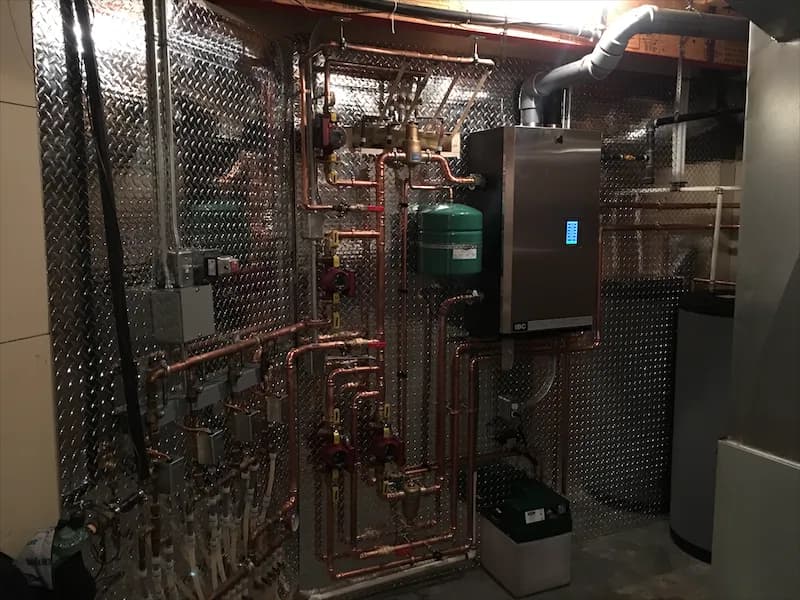

Boiler Not Working in Calgary — Diagnosis + Repair
Boiler dropped pressure overnight? Locked out on a fault code? Pump running but rooms cold? Combi giving heat but no hot water at the taps? Most boiler failures in Calgary trace back to one of a small handful of causes — and the right fix depends on diagnosing which. FlameTech diagnoses the actual fault, agrees the price with you before work starts, and tells you straight whether it's a repair or a replacement. Jason Mounsey, who leads our boiler work, has 20+ years in the trade.
Boilers fail differently from furnaces — pressure issues, expansion tank failures, locked-out flame faults, frozen condensate lines in cold snaps, failed circulator pumps, stuck zone valves, scale on combi heat exchangers. The diagnostic toolkit is different and the parts list is different. Before you call, two or three things are worth checking — covered in the try-these-first checklist below. If those don't bring heat back, that's our call.
We work on every common Calgary boiler setup: condensing combi units (Navien NPE, IBC SL, Viessmann Vitodens, Triangle Tube), condensing system boilers paired with indirect water heaters, conventional cast iron boilers in older inner-city homes, and high-mass radiant systems in luxury rebuilds across Mount Royal, Bel-Aire, and Aspen Woods. Same crew handles boiler repair, annual boiler service, boiler installation, and the broader no heat work.
Call 587-834-3668 and we'll tell you honestly when we can get there. In the meantime, the checklist below covers what's safe to try yourself.
Boiler not working in a Calgary cold snap? Call 587-834-3668 — hydronic specialists, and we'll give you a realistic booking time.
Call 587-834-3668“My boiler stopped working at my house. Service was very timely (same day service), professional, and well priced. I’d highly recommend FlameTech”

Michael Ciaramella
Calgary · 1 year ago
Try these first (before calling)
Worth checking these before booking a service call — if any of them solves it in two minutes, you've got your heat back without waiting for a visit. If none of them work, the issue is component failure and that's our call.
Check the system pressure gauge
Almost every boiler has a pressure gauge on the front, usually reading PSI. Cold-system pressure should be around 12-15 PSI; hot-running pressure around 18-22 PSI. If the needle is below ~8 PSI, the boiler likely won't fire as a low-pressure safety. Most boilers have a filling loop (a braided hose with two valves under the boiler) — opening both valves briefly will re-pressurize the system. If pressure drops again within hours/days, there's a leak somewhere and that's our call. (Don't keep refilling — repeated overfilling damages the expansion tank and contaminates the system with fresh oxygenated water that corrodes from the inside.)
Press the reset button
Most modern boilers have a reset button on the front panel — sometimes labelled "reset," sometimes a small button next to a fault light. Press once and wait 60 seconds to see if it relights. If it locks out again immediately on the same fault, stop resetting — it's locking out for a real reason (flame failure, overheat, sensor fault) and continuing to reset can damage components or create a gas safety risk. That's our call.
Thermostat + breaker check
Boiler controls run off a 24V signal from the thermostat. Swap thermostat batteries even if it looks fine. Confirm it's set to HEAT and the setpoint is above current room temperature. Check the boiler's dedicated breaker in the electrical panel — flip OFF for 30 seconds, then back ON. Many boilers also have a switch on the unit itself; confirm it's ON.
Check the condensate trap + drain line (high-efficiency boilers)
Condensing boilers (most post-2005 installs in Calgary) produce acidic condensate that drains through a small plastic line. In deep cold snaps, sections of this line that run through unheated spaces or exit outdoors can FREEZE — boiler locks out as a safety. Look for a clear plastic line near the floor; if you see ice in it, that's the fault. We clear it and reroute through heated space if needed.
Note any fault code on the display
Modern boilers (Navien, IBC, Viessmann, Triangle Tube, Bosch, NTI) display error codes when they fail. Photograph the code before you call — it tells us exactly which component failed before we arrive. Don't try to interpret it from forum posts; different brands use overlapping numbers for different faults.
Common Calgary boiler failures (and what we usually find)
If the above didn't solve it, the issue is likely one of these. Each has a different fix and a different cost — diagnosis matters, and the parts list for boilers is different from furnaces.
Low system pressure (the #1 boiler complaint)
Boilers need water pressure (12-15 PSI cold) to circulate. Pressure drops slowly over weeks/months from a small leak somewhere — often a tired expansion tank that's lost its air charge (causing pressure to swing wildly hot-to-cold and forcing the PRV to dump water), a failed automatic air vent, a leaking zone valve, or a slow leak in a copper joint somewhere in the system. Topping up via the filling loop is the temporary fix; finding the leak source is the real one. Calgary's freeze-thaw cycles stress joints over decades.
Lockout fault — flame failure
Boiler tries to fire, fails to detect flame, locks out. Common causes: failed ignition electrode (universal part), failed flame sensor or flame-rectification ground issue, gas valve electrical failure, gas pressure issue (sometimes traces back to Atco gas pressure at the meter, especially in cold snaps when demand peaks), or a blocked condensate trap backing up into the combustion chamber. We find which one it is before quoting the repair.
Frozen condensate line (cold-snap classic)
Condensing boilers exhaust acidic water condensate through a small PVC line. If this line runs through an unheated space (cold storage room, attic, garage) or exits outdoors with insufficient slope/insulation, it can FREEZE during −25°C or colder weather — boiler locks out as a safety. Clear the ice + permanently reroute through heated space + add heat trace where needed. Common Calgary fix — we see a wave of these calls during every deep cold snap.
Failed circulator pump
Boiler fires, you hear it running, but rooms stay cold — the pump isn't moving heated water to your radiators or in-floor loops. Bearing failure (audible grinding or silence), seized rotor, or failed pump capacitor. Universal Taco 007 and Grundfos UPS pumps cover most common replacements. Some luxury systems have multiple pumps (one per zone + a primary) — diagnosis identifies which one failed.
Stuck zone valve (multi-zone systems)
Multi-zone hydronic systems use motorized zone valves to direct hot water to specific areas of the house. A stuck-closed valve means one zone gets no heat while others work fine. Common in luxury Mount Royal / Bel-Aire / Aspen Woods radiant systems with 4-8 zones. Diagnosis: check which thermostats are calling vs which zones are firing. Valve replacement or motor swap depending on what failed — Honeywell + Taco motors are the common ones.
Failed expansion tank
Hydronic systems include an expansion tank to absorb water volume changes as the system heats up. When the tank's internal bladder fails or loses air charge, pressure swings wildly between cold (~12 PSI) and hot (40+ PSI) — at the high swing, the PRV safety valve dumps water, then cold pressure drops below 8 PSI and the boiler shuts off as low-pressure safety. Symptom: PRV repeatedly dumping water, low-pressure lockouts every few days. Tank replacement is the fix — usually a 1-hour job.
Combi boiler — heat works but no hot water at the taps
Combi boilers (Navien NPE, IBC SL, Viessmann Vitodens) heat the house AND produce domestic hot water on demand through a separate heat exchanger. When the DHW heat exchanger scales up (Calgary's hard water is brutal on these — much faster than tank-style heaters), DHW output drops or fails while heating still works. Symptom: heat fine, hot taps run cold or lukewarm, error codes around water flow. Descale fixes it; severely scaled heat exchangers sometimes need replacement.
Kettling / banging from the boiler
Sound like a kettle boiling violently — caused by sediment or scale buildup on the heat exchanger that traps water and lets it flash to steam. Common Calgary cause: hard water + no annual flush + aging system. System flush + chemical descale usually quiets it. Persistent kettling over years can crack the heat exchanger — at which point the fix is replacement, not repair. Catching it early is the difference between a routine service call and a full boiler replacement.
Cracked heat exchanger (serious — replace, don't repair)
Cracked heat exchangers can leak combustion gases (carbon monoxide) into the home, or in condensing units leak water out through the cracks shorting electronics. Never repaired — full boiler replacement is the only safe answer. Common causes in Calgary: years of kettling without descaling, untreated hard-water scale, age (15+ years), or a single severe overheat event. We show you the crack on a borescope before quoting replacement.
PRV (pressure relief valve) dumping water
Almost always means system pressure went too high — usually because the expansion tank failed (see above) or because someone over-filled the system through the filling loop. PRVs are safety devices; if yours is dumping water, the immediate fix is to diagnose the pressure-side cause, not just replace the PRV. A weeping PRV that won't reseat after the pressure issue is fixed gets replaced (universal part).
Why Calgary boiler failures look the way they do
Calgary's climate, water profile, and housing mix shape what we see on service calls. Knowing the local context speeds up diagnosis.
Deep cold snaps stress condensate routing
−25°C and colder weather sticks around Calgary several weeks each winter. Any condensate line routed through an unheated space or exiting outdoors without proper insulation + slope will freeze and lock out the boiler. We see a wave of frozen-condensate calls every cold snap. Fix: reroute through heated space + add heat trace + insulation where outdoor exit is required by venting code.
Hard water scales combi heat exchangers fast
Calgary water hardness (150-200 mg/L) is brutal on tankless heat exchangers in combi boilers. Without annual descaling, DHW heat exchangers can scale to the point of failure within 5-7 years. Tank-style hot water systems show this slower (sediment settles at the bottom) but tankless heat exchangers run water through narrow passages where scale accumulates aggressively. Annual descale + a properly-sized water softener extends life dramatically.
Chinook freeze-thaw stresses joints + venting
Calgary's signature chinook freeze-thaw cycles (warm to cold and back within hours) put thermal stress on copper joints, PVC venting, and outdoor condensate exits. Over decades, this is the slow leak that drops your system pressure and the cracked vent that allows recirculation. Routine annual inspection catches stress damage before it becomes a lockout.
Luxury rebuild radiant systems = multi-zone complexity
Mount Royal, Bel-Aire, Aspen Woods, Britannia, Roxboro rebuilds in the post-2010 era often have 6-12 zone in-floor radiant systems with multiple circulator pumps, complex manifold setups, and brand-specific control boards (Viessmann Vitotronic, Triangle Tube Prestige, IBC SL series). Diagnostic and repair on these isn't generalist plumber work — Jason specializes in these systems.
Inner-city heritage homes = old atmospheric boilers
Erlton, Inglewood, Mission, Bridgeland heritage homes often still run cast iron atmospheric boilers from the 60s-80s with standing pilot lights, draft hoods, and chimney venting. Different failure modes: thermocouple, pilot generator, draft induction issues, cracked sections in old cast iron. We service these but at 40+ years old, replacement conversations become realistic.
60s-70s baseboard hydronic — original boilers still common
Brentwood, Glendale, Banff Trail, Wildwood, Charleswood-era homes (1960s-70s) commonly still run original or 2nd-generation cast iron boilers with baseboard fin-tube radiation. Workhorse systems but past expected life. We see a lot of replacement conversations in these neighbourhoods — usually triggered by a major component failure that's not worth fixing on a 50-year-old block.
What we do on a boiler-not-working call
Standard diagnostic sequence. Common parts are universal; brand-specific control boards sometimes need to be ordered.
1. Symptom + timeline + what you've already tried
What's happening, when it stopped working, when the boiler was last serviced, what's been tried (reset, pressure refill, thermostat batteries, breaker cycle). Photograph any fault code from the display BEFORE we arrive — speeds diagnosis dramatically.
2. Pressure + power + thermostat verification
Check system pressure (cold + hot), incoming 120V to the unit, 24V to the gas valve and controls, signal arriving from thermostat. Rules out the simple stuff in 2 minutes.
3. Watch a startup cycle
Call for heat at the thermostat and watch what the boiler actually does. Most failures show themselves in the startup sequence — no power, no spark, spark but no flame, flame but instant lockout, etc. Each one points at a different component.
4. Test the suspect component
Ignition electrode spark test, flame sensor microamp draw, gas pressure at the valve (manometer test), pump operation (listen + electrical), zone valve actuation, condensate flow, control board signals. Real measurement, not guessing. Box-store "probably the board" approach gets a lot of homeowners overpaying.
5. Repair once the price is agreed
Universal circulator pumps, zone valve heads, expansion tanks, automatic air vents, PRVs, igniters, flame sensors, common-brand control boards — we quote the repair before we start. If we need a brand-specific part (Triangle Tube, NTI, Bosch boards), we'll tell you upfront and recommend space heaters until the part arrives.
6. Honest replace-vs-repair quote on bigger failures
If your boiler is 15+ years old with a major failure (cracked heat exchanger, multiple component failures, severely scaled DHW exchanger on a combi), we'll quote both the repair AND a full replacement so you can do the math. Free written quote on the replacement option. Both boiler install and the broader no-heat work covered in-house.
Boiler Not Working in Calgary — FAQs
My boiler keeps losing pressure — what's wrong?
Almost always one of: (1) tired expansion tank that's lost its air charge — pressure swings wildly hot-to-cold and the PRV dumps water; (2) leaking automatic air vent on top of the system; (3) leaking zone valve; (4) slow leak in a copper joint somewhere in the loop. Topping up via the filling loop is the temporary fix; finding the leak source is the real one. Don't keep refilling repeatedly — fresh oxygenated water corrodes the system from the inside. Call us and we'll find where the pressure is going; the usual fixes are an expansion tank, PRV or air vent.
Boiler is locked out on a fault code — should I keep resetting it?
Press reset ONCE. If it locks out again on the same fault, stop — it's locking out for a real reason (flame failure, overheat, condensate blockage, sensor fault) and continuing to reset can damage components or create a gas safety risk. Photograph the fault code and call us. The code tells us which component failed before we get there.
My boiler is running but the house is cold — what's wrong?
Usually the circulator pump — the boiler is firing but the pump isn't moving heated water to your radiators or in-floor loops, so heat never reaches the rooms. Other possibilities: stuck zone valve (one zone cold, others fine), air locked in the lines (gurgling sounds), or a control board failing to call the pump. Straightforward to diagnose — universal Taco and Grundfos pumps cover most common replacements.
What does it mean if my condensate line is frozen?
Condensing boilers produce acidic water condensate that drains through a small PVC line. In Calgary cold snaps, any section of this line that runs through unheated space or exits outdoors can freeze — boiler locks out as a safety to prevent water backing up into the combustion chamber. We clear the ice and reroute through heated space + add heat trace where needed. This is a Calgary-classic cold-snap call.
My combi boiler gives heat but no hot water at the taps — why?
Combi units have two heat exchangers — one for space heating, one for domestic hot water. The DHW exchanger heats incoming cold water on demand through narrow passages. Calgary's hard water scales these passages aggressively — often by year 5-7, scaling reduces or blocks DHW flow while space heating still works fine. Descale fixes most cases; severely scaled exchangers sometimes need replacement. Annual descaling + a water softener extend life dramatically.
My PRV (pressure relief valve) keeps dumping water — what's happening?
PRVs are safety valves that dump water when system pressure exceeds the rated limit (usually 30 PSI). If yours is dumping, the immediate cause is high pressure — and the root cause is almost always a failed expansion tank that's lost its air charge, so the system can't absorb thermal expansion when water heats up. The fix is the expansion tank, not the PRV. A weeping PRV that won't reseat after fixing the pressure side gets replaced (universal part).
How old is too old to repair vs replace a boiler in Calgary?
Rule of thumb: under 12 years with a single failed component, repair. 12-18 years with a single failure, judgement call — we quote both options. 18+ years with a major failure (cracked heat exchanger, multiple component failures, severely scaled combi DHW exchanger), strongly consider replacement. Cracked heat exchanger at any age = replacement (safety, not optional). Calgary cast iron boilers from the 60s-70s in inner-city homes hit 50+ years routinely but at that age, ongoing parts and efficiency conversations make replacement the more economical long-term move.
Are you available for emergency boiler repair in Calgary?
Yes, we do emergency boiler repair. Call 587-834-3668 and we'll tell you honestly when we can get there — in a cold snap everyone needs heat at once, so we won't promise a time we can't keep. Same crew that handles our no-heat, boiler repair, and emergency plumbing work.
Do you work on every brand of boiler?
Yes — Navien, IBC, Viessmann, Triangle Tube, Bosch, NTI, Lochinvar, Weil-McLain, Burnham, Slant/Fin, plus older cast iron units. Common parts (pumps, zone valves, expansion tanks, PRVs, igniters, flame sensors) work across brands. Brand-specific control boards on premium European brands sometimes need to be ordered — we tell you upfront.
What's the difference between a boiler repair and a boiler service?
Repair: something is broken, we diagnose and fix. Service (annual maintenance): preventive — combustion analysis, safety checks, descale, system flush, expansion tank check, PRV test, pump inspection. Annual service catches most issues before they become breakdowns, and is required to keep manufacturer warranties valid on most modern boilers. See our boiler service Calgary page for the annual tune-up.
Simple, honest, on your schedule.
Call or request a quote
Tell us what's going on. We listen first and ask the right questions before we schedule anything.
Free written estimate
We assess the job and give you an all-in price in writing. No pressure, no surprise add-ons.
Book the work
We give you a realistic booking date up front and confirm it with you before the day.
Clean, code-compliant service
Licensed technicians complete the work to Alberta code, clean up, and walk you through what we did.
Also under Heating
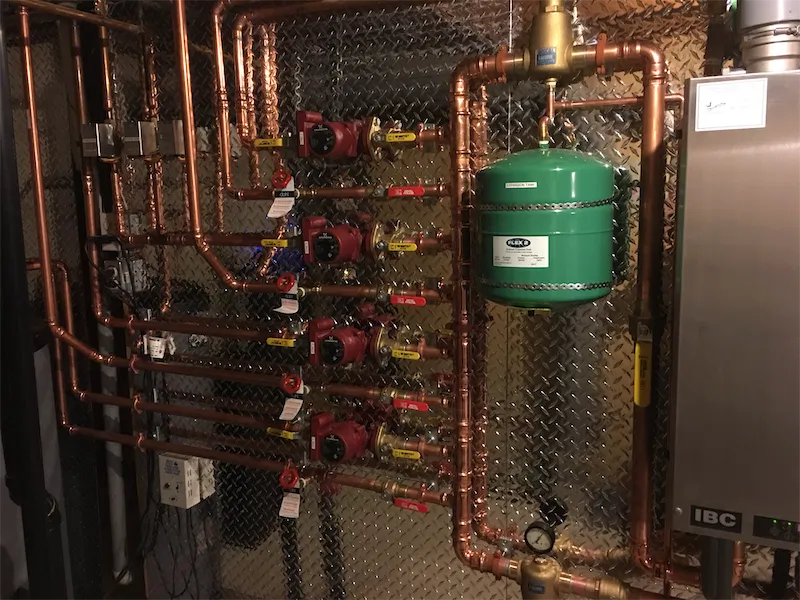
Expert Boiler Installation in Calgary
Most Calgary boilers fail at 18-22 years. When yours is on the way out, FlameTech replaces it without the cold-snap scramble — correctly sized, manufacturer-matched system, full install and commission in a single day for a straight swap.
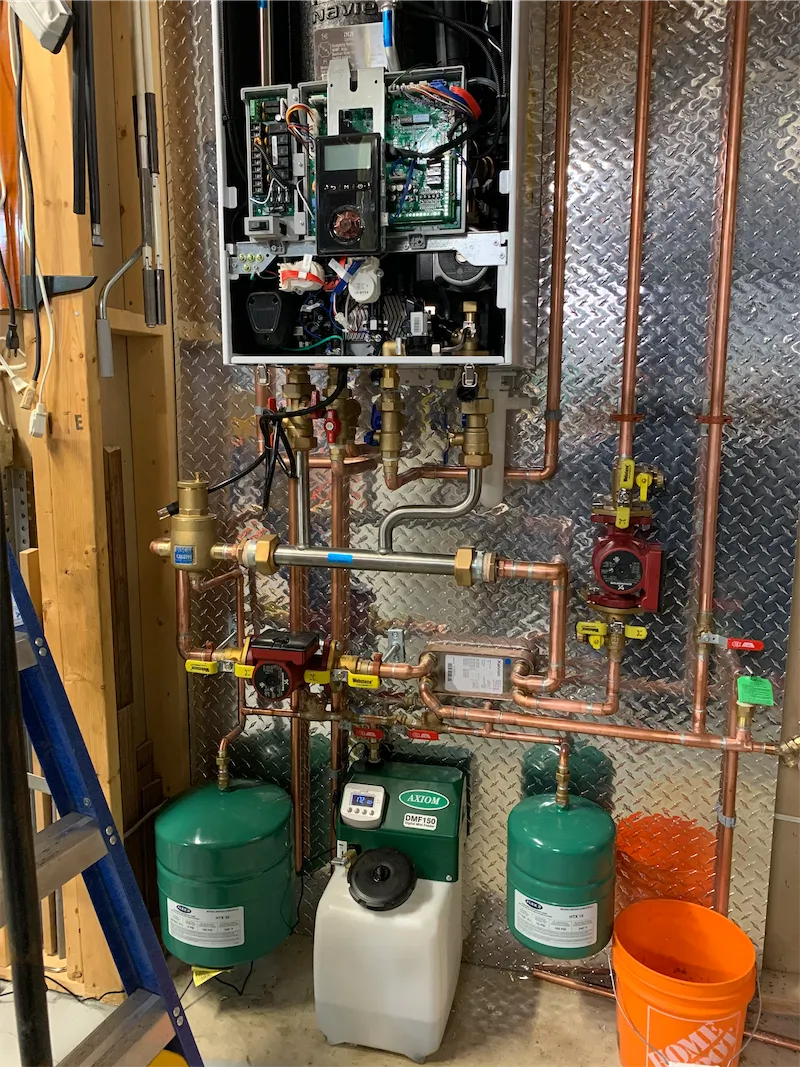
Combi Boiler Installation Calgary
One wall-hung unit for both your heat and your hot water — no storage tank, no second appliance. FlameTech sizes, installs, and commissions combi boilers across Calgary, and we'll tell you straight if your home isn't a good fit for one.
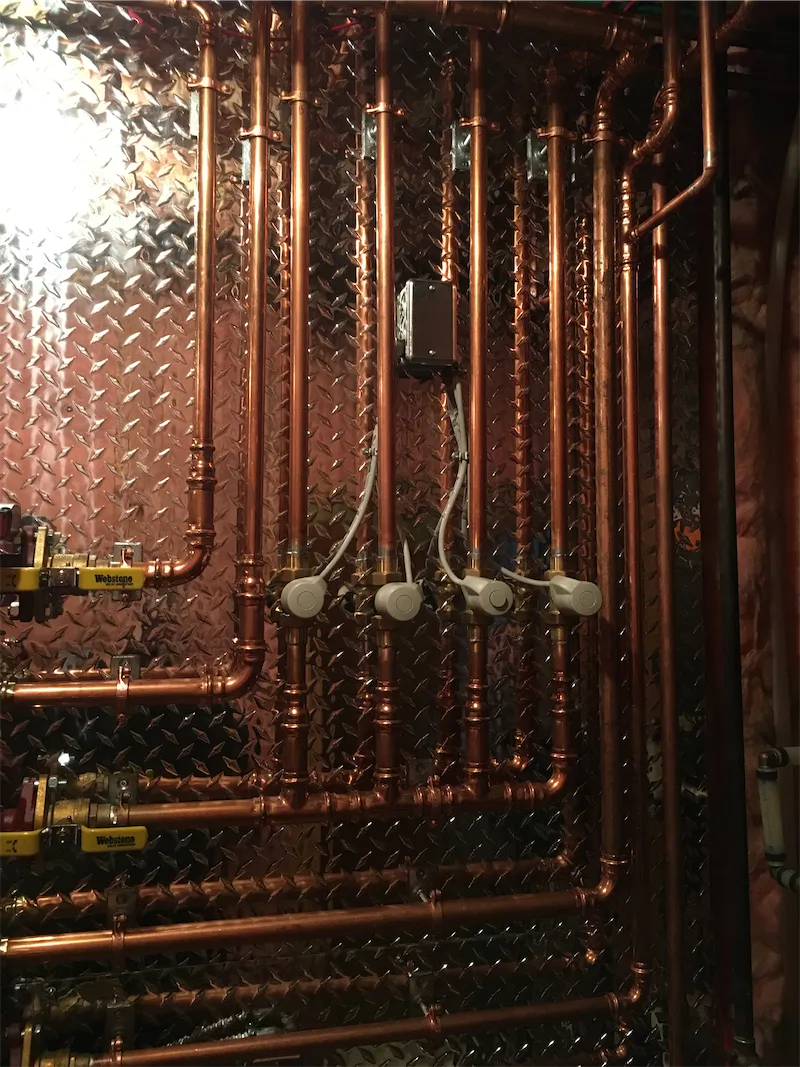
Boiler Replacement Calgary — Honest Repair-or-Replace Advice
Replacing a boiler isn't the same job as installing one. You're inheriting an existing system — old radiators, old pipework, decades of sludge — and getting that part right is what decides whether the new boiler lasts twenty years or five.
Where we cover Calgary.
We dispatch from Calgary and Airdrie. Find your neighbourhood for area-specific notes on common builds, hard-water patterns, and the systems we see most.
Get a free boiler not working quote.
Tell us what's going on and our dispatch team will call you back with pricing and availability.
Book a Red Seal plumber in Calgary.
Free estimates and upfront pricing, from local technicians who treat your home like their own.
Free estimate · No service charge for quotes · BBB Accredited