

Garage Heater Installation Calgary — Gas, Venting & Permit
A garage heater is a small appliance attached to a fair amount of other work. Hanging the unit takes an afternoon. Getting gas to it, venting it somewhere it can safely discharge, giving it power and a thermostat that reads the room honestly, and mounting it so it heats the garage rather than the roof of your car — that is the install, and it is what decides how the thing behaves for the next twenty years.
Most of the cost and nearly all of the judgement sits in the gas line. A forced-air unit on the wall nearest the meter in an attached garage is a straightforward day. The same heater at the back of a detached garage with no gas service out there is a trench, a buried line, a riser and a second permit conversation. We quote both honestly, and we say so when electric is the cheaper answer for the way you actually use the space.
If you have not settled on a heater yet, start at garage heaters Calgary — that page compares forced-air gas, radiant tube and electric, sizes them by garage type, and covers repair and annual service. This page is about the work itself: gas supply, venting, electrical, mounting and clearances, permit and commissioning.
Same Alberta-licensed gas fitters who handle our furnace installs and boiler installs. The gas permit and the inspection are ours to arrange on every job. Call 587-834-3668 for a free in-home assessment and a written quote before anything is ordered. Monthly financing is available.
Planning a garage heater install, or want a second opinion on a quote? Call 587-834-3668 for a free in-home assessment.
Call 587-834-3668“New water softener in April and a new furnace yesterday. Very happy dealing with Jason and Shaun. Would highly recommend FlameTech for all plumbing and HVAC needs.”
Jacquie Launer
Calgary · 3 months ago
What a garage heater install actually involves
Five trades' worth of considerations in one afternoon's work. This is the scope we quote on, and the scope the inspector looks at.
Gas supply, sized to the whole house
The question is never whether there is a gas line nearby. It is whether the line, and the meter behind it, can carry the new load on top of everything already connected on a cold evening when the furnace and the water heater are both running. That calculation sets the pipe size and the route, and it occasionally sends us to the utility for a larger meter. It is also why a heater bought on BTU alone sometimes cannot be fed by the line already in the garage.
Venting and where it is allowed to terminate
Most modern forced-air units power-vent out through the sidewall, which means choosing a termination point that keeps the required distance from windows, doors, air intakes, the gas meter and the property line, and that does not discharge under a deck, across a walkway or straight into the neighbour's yard. On a narrow lot that is the constraint that decides which wall the heater goes on.
Electrical, even on a gas unit
A gas heater still needs power for its fan, ignition and controls, and that circuit has to exist before install day. Electric units are a bigger ask — a heater sized for a double garage draws far more than a single general-purpose circuit can give it, so the panel, the feeder to a detached garage and the available breaker spaces all get checked before we quote. An electric heater on an extension cord is the one we most often arrive to replace.
Mounting height, clearance and aim
Clearances to combustibles come from the unit's own listing, not from a rule of thumb, and they apply to the sides and the front as well as the top. Height has to clear the door tracks, the opener rail, and anything you want to park or lift under it. The discharge gets angled down and thrown along the longest cold run of the garage. Radiant tube has its own geometry — it wants to see the floor and the people, not the top of a shelving unit.
Controls that read the garage, not the heater
A thermostat mounted in the discharge stream satisfies itself in two minutes and leaves the far end of the garage cold. On an exterior wall it does the opposite. We site it at working height on an interior wall, out of the airflow and away from the bay door. If you want the shop warm before you walk out to it, this is the moment to put a programmable or wifi control in rather than the basic mechanical stat most units ship with.
Permit, inspection and the handover
Gas work in Alberta is licensed work with a permit and an inspection behind it. We apply, we meet the inspector, and you end up with documentation that keeps the manufacturer's warranty valid and answers the question when you sell the house. Worth checking that any quote you are comparing includes it, because the cheap ones often do not.
Attached, detached, and getting gas out there
The single biggest variable in a Calgary garage heater quote is how far the fuel has to travel, and what it has to cross to get there.
Attached garage, wall shared with the mechanical room
The best case. The meter is usually on the same side of the house, the run is short, and the venting has a straightforward exterior wall to terminate through. These are the installs that finish in a day with no excavation and no surprises, and they are the ones where the heater conversation can be about which unit rather than about logistics.
Attached garage, opposite end of the house
Still a one-day job most of the time, but the line has to be routed — usually through the basement ceiling and up, which means the joist runs, the finished ceiling and any existing ductwork all affect the path and the price. We walk the route at the assessment so the quote reflects the actual house rather than a straight line on a floor plan.
Detached garage with no gas service
This is the one people underestimate. A buried line from the house to the garage means a trench across the yard, locates before anyone digs, a riser and shut-off at the garage wall, and restoration of whatever the trench crossed. It is entirely doable and we do it regularly, but it needs unfrozen ground, which makes it spring-to-fall work and a poor choice for a panic call in January.
Detached garage where electric makes more sense
If the trench would cross a driveway, a deck or mature landscaping, the gas route can cost more than the heater. For a garage used a few hours at a time rather than all winter, an electric unit on a properly sized circuit is often the honest answer even though it costs more per hour to run. What decides it is hours of use, not the sticker price of the unit — we will do that arithmetic with you.
Shops, acreages and high-ceiling buildings
Outbuildings on acreage bring their own questions: how the building is fed, whether the electrical service can take a heater at all, and whether a single unit can cover the volume. High ceilings usually push the recommendation toward radiant tube, which changes the mounting plan more than the gas plan. These get a longer assessment and a quote that spells out the assumptions.
Install faults we get called out to fix
These are not equipment failures. They are decisions made on install day that the homeowner lives with afterwards, and they are the reason this page exists.
Aimed at the parked car
A forced-air unit hung over the bay door blowing straight at the back of a vehicle heats sheet metal and stalls. Thrown down the length of the garage toward the cold wall, the same unit turns the space over properly. Rehanging one is a couple of hours; it is the single most common fix we make to someone else's install.
Thermostat in the wrong place
Beside the heater, in its airflow, or screwed to the exterior wall by the bay door. The heater then short-cycles or runs endlessly depending on which mistake was made, and the owner concludes the unit is undersized. Moving the stat costs a fraction of the replacement heater they were about to buy.
Vent termination in a bad spot
Under a deck, beside a window that gets opened in shoulder season, tight to the gas meter, or low enough that the first serious snowfall buries it. The unit locks out and the owner assumes it has failed. Choosing the termination properly at install is free; relocating one afterwards means patching cladding.
Hung where the door hardware lives
Opener rails, torsion springs and the open door itself all occupy ceiling space, and a unit fitted without planning around them ends up either in the way or pushed into a corner where it cannot throw air. Overhead storage racks added later cause the same problem in reverse — tell us if any are planned.
No permit, no record
Turns up at resale, or when an insurer asks who did the gas work after an incident. It also tends to travel with the other faults on this list, because the inspection is what would have caught them. If you have an existing heater with no paperwork, we can look at it and tell you where it stands.
Before install day
A few decisions and a bit of clearing make the difference between a clean single-day install and a job that has to come back.
Sort the insulation question first
Heat leaving an uninsulated garage has to be replaced continuously, and that shows up on the gas bill for the life of the heater. If the walls and ceiling are bare, it is usually worth doing that before the install rather than after — partly for running cost, partly because a better-insulated garage may be satisfied by a smaller and cheaper unit. We will tell you which way the numbers point for your building.
Decide how you actually use the space
Warm all winter, warm for a few hours on a Saturday, or just above freezing to keep a vehicle dry are three different jobs. They change the heater type, the control, and sometimes the fuel. The honest answer here is worth more than the brand conversation.
Clear the wall and the ceiling
We need the mounting area, the route for the gas line and the vent path clear on the day. Shelving, a loaded storage rack or a stacked-to-the-rafters corner is the usual cause of an install taking longer than it should.
Book in the shoulder season if you can
September and October installs go in without a queue and without frozen ground. Anything involving a trench to a detached garage really does need unfrozen soil, and the first hard cold snap of the year is when every heating truck in the city is already committed.
Calgary Garage Heater Installation FAQs
How much does garage heater installation cost in Calgary?
Most installs run $4,500 to $6,500 as of September 2026, and what moves a quote within that range is rarely the heater.
The variables that matter: how far the gas line has to travel and what it crosses, whether the meter has capacity left or the utility has to upsize it, whether the vent has a straightforward wall to terminate through, whether a circuit already exists in the garage, and the type and output of the unit itself. A detached garage with no gas service sits at the top of the range or past it, because the trench is real work.
We assess in person at no charge and put the whole scope — unit, gas, venting, electrical, controls, permit and inspection — in writing before anything is ordered.
How long does the install take?
An attached garage with a short gas run is typically a single day, and the heater is working that evening.
A detached garage needing a buried line is usually two: one for the trench and the line, one for the unit, venting and commissioning. Weather and locates can stretch that, which is why we schedule trenching work outside the frozen months where possible.
The inspection happens separately and does not hold up your use of the heater.
Do I need a permit to install a garage heater?
Yes. Installing a gas appliance in Calgary requires a gas permit and an inspection, and the work has to be done by an Alberta-licensed gas fitter. We apply for the permit and meet the inspector as part of the job.
It matters beyond the legality. Manufacturers tie warranty to a compliant install, insurers ask who did the gas work when something goes wrong, and an unpermitted appliance is something a buyer's inspector will find.
Hardwired electric units need their own permit and licensed electrical work.
Can you run a gas line to a detached garage?
Regularly. It means a buried line from the house, utility locates before any digging, a riser and shut-off at the garage wall, and putting the yard back afterwards.
The practical constraint is ground conditions. This is spring-to-fall work in Calgary, and a trench that has to cross a driveway, a deck or established landscaping can cost more than the heater does.
When that is the case we will say so and price the electric option beside it, so you can compare the install cost against the running cost for the hours you would actually use the garage.
Does the install need an electrician as well?
A gas unit needs a 120V supply for its fan, ignition and controls. If the garage already has a circuit with capacity, that part is simple.
A hardwired electric heater is a bigger electrical job — a heater sized for a double garage needs its own dedicated circuit, and a detached garage fed by a small sub-feed often cannot supply one without upgrading the feeder or the panel. We check the panel and the feeder at the assessment so the electrical scope is in the quote rather than discovered later.
Where will you mount the heater?
High enough to clear the door tracks, the opener rail and anything you park or lift beneath it, with the clearances the unit's own listing requires on every side, and angled to throw down the longest cold run of the garage rather than at a vehicle.
The vent termination usually decides which wall, since it has to keep its distance from windows, doors, air intakes and the meter, and needs to sit above where snow piles up.
We walk the mounting position with you before anything is drilled, and we want to know about storage racks or a car lift you are planning even if they are a year away.
Can you install a heater I have already bought?
Talk to us before you buy, because a few things about a unit are hard to work around once it is in your garage.
Worth checking: that it is listed for residential garage installation, that the matching vent kit for a sidewall termination is available for it, that its output is something your gas line and meter can actually feed, and — for electric — that its draw fits the electrical service the garage has.
Tell us the model you are looking at and we will tell you whether it suits your building before you spend the money.
What is the difference between this page and your garage heaters page?
Which question you are asking.
Garage heaters Calgary is about the equipment — forced-air gas against radiant tube against electric, what BTU output suits your garage, why units fail, and repair and annual service.
This page is about the installation: gas supply, venting, electrical, mounting, permit and commissioning. Most people read both, in that order.
Do you install garage heaters outside Calgary?
Yes — garage heaters in Airdrie is dispatched locally rather than routing a truck up from the city, and we cover Cochrane, Chestermere, Okotoks and the surrounding communities on the same terms.
Same licensed fitters, same permit handling, same commissioning. No out-of-area surcharge for those communities.

Monthly Financing Available
Spread the cost into manageable monthly payments.
Spread a garage heater install into flexible monthly payments via our Financeit partner.
Simple, honest, on your schedule.
The unit goes up quickly. Everything that decides whether it works well happens either side of that.
In-home assessment
We measure the garage, look at how it is built and how you use it, and trace the gas supply back to the meter to see what capacity is left. If the space would be better served by insulating first, or by a radiant tube instead of forced air, that is the conversation to have here rather than after the unit is on the wall.
Written quote and permit
One quote covering the unit, gas line, venting, electrical, controls, permit and inspection — so there is nothing to discover halfway through. We apply for the gas permit once you approve it, and order the unit and the matching vent kit together.
Install day
Gas run and pressure-tested, unit hung at the right height and angle with the listed clearances, vent cut and terminated where it belongs, power and thermostat wired, and the garage left swept. A typical attached-garage install is a single day; a detached run with trenching is usually two.
Commission and walk through
Gas pressure verified at the unit, burner and ignition checked through a full cycle, combustion tested on gas units, thermostat set up, and the inspection booked. Then we show you the shut-off, the filter, and what the unit should sound like when it is behaving.
Also under Heating
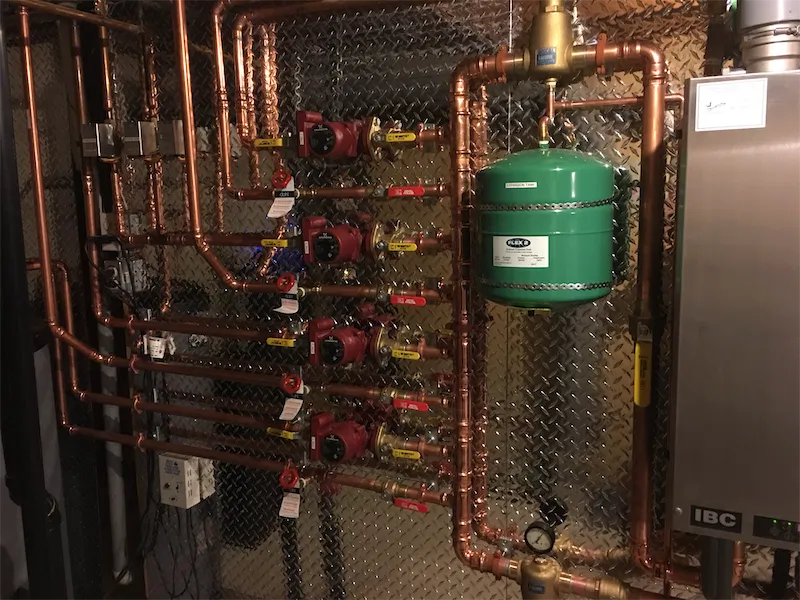
Expert Boiler Installation in Calgary
Most Calgary boilers fail at 18-22 years. When yours is on the way out, FlameTech replaces it without the cold-snap scramble — heat-loss calc, manufacturer-matched system, full install and commission in a single day for a straight swap.
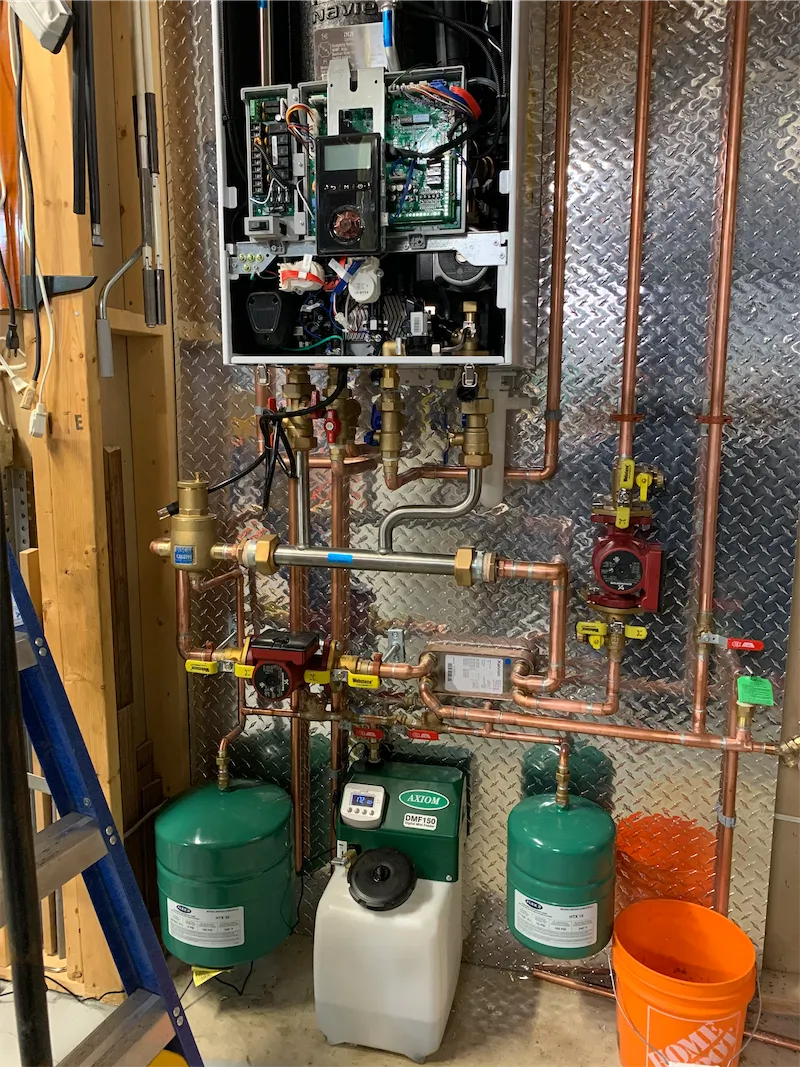
Combi Boiler Installation Calgary
One wall-hung unit for both your heat and your hot water — no storage tank, no second appliance. FlameTech sizes, installs, and commissions combi boilers across Calgary, and we'll tell you straight if your home isn't a good fit for one.
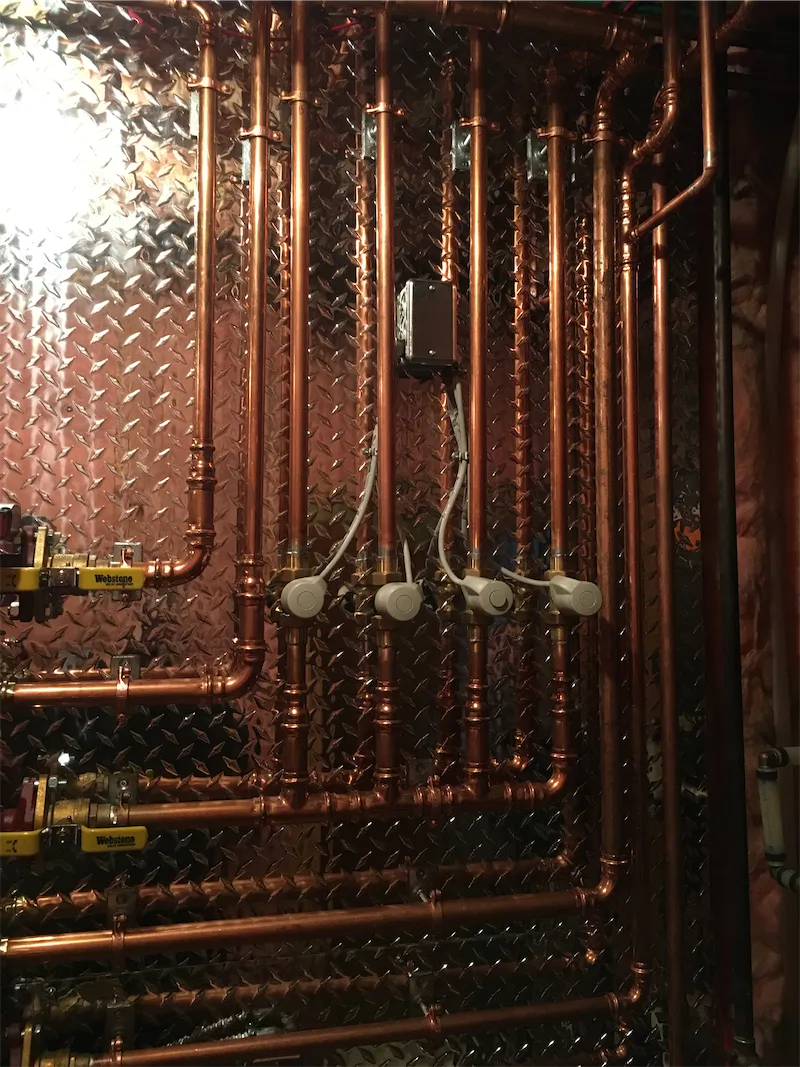
Boiler Replacement Calgary — Honest Repair-or-Replace Advice
Replacing a boiler isn't the same job as installing one. You're inheriting an existing system — old radiators, old pipework, decades of sludge — and getting that part right is what decides whether the new boiler lasts twenty years or five.
Where we cover Calgary.
Same-day dispatch across Calgary and Airdrie. Find your neighbourhood for area-specific notes on common builds, hard-water patterns, and the systems we see most.
Get a free garage heater install quote.
Tell us what's going on and our dispatch team will call you back with pricing and availability.
Book a Red Seal plumber in Calgary.
Free estimates, upfront pricing, and a satisfaction guarantee — local technicians who treat your home like their own.
Free estimate · No service charge for quotes · BBB Accredited