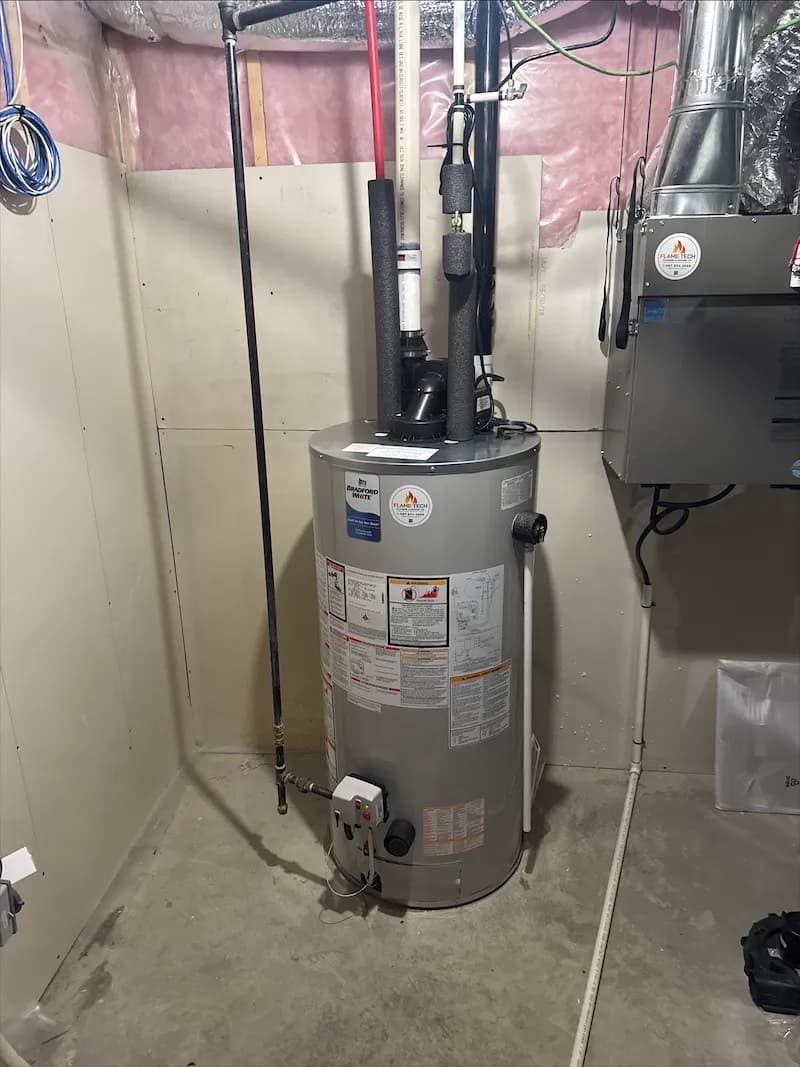
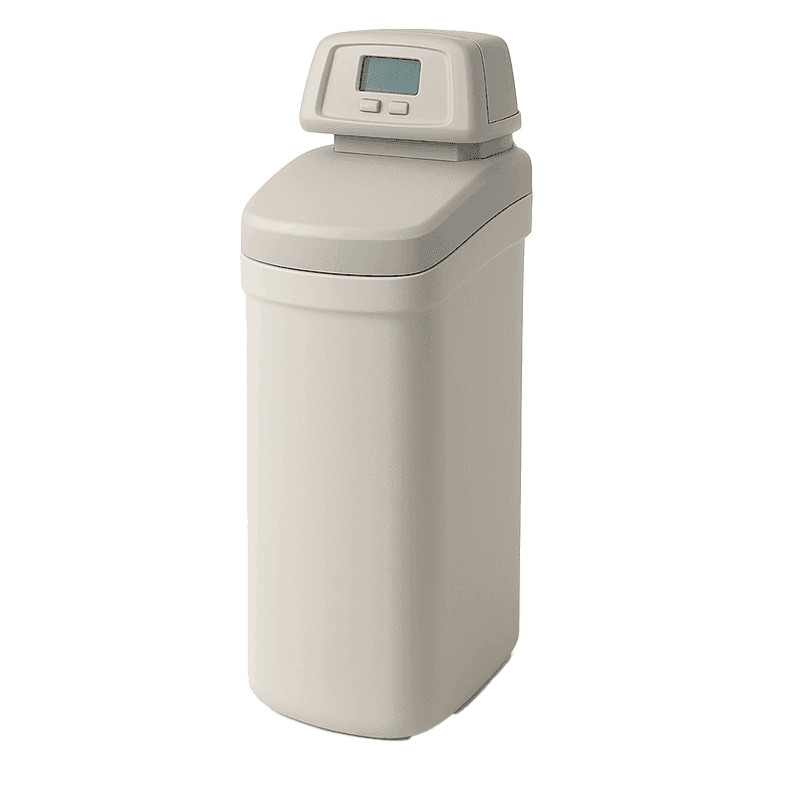
Tankless water heater cost in Calgary, installed by us, runs $5,400 to $6,500 as of September 2026. Tankless water heaters in Airdrie come in on the same range.
Where your house lands inside that range is mostly settled before anyone picks a heater. A tankless needs four things from the house: enough gas reaching it, a way to vent out through a wall, somewhere to send its condensate, and water it can live with. If those are already close to where the heater will hang, the job is straightforward. If they aren't, the work to get them there is what you're paying for.
What the range covers, plus three separate jobs
What your house needs varies, so we list each part of the job separately on the written quote. You read all of it before we start.
For a sense of scale, a standard 40-gallon gas tank is $1,950 installed with us and a 50-gallon is $2,100. A tank swap usually reuses the gas line, the vent and the patch of floor the old tank stood on. A tankless install changes most of those, which is why the gap is as wide as it is. Our hot water tank replacement cost guide goes through tank prices size by size.
These three get priced on their own:
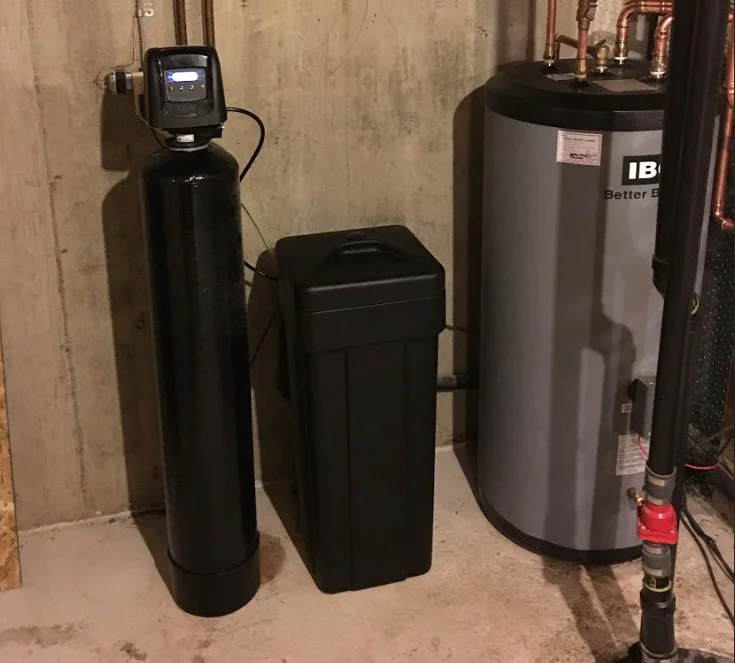
- A water softener. $2,250 to $3,050 installed. It's worth thinking about alongside a tankless, for reasons further down, but it's a separate line.
- A combi unit. One appliance that heats the house as well as the water is a different install, and we quote it separately.
- A recirculation loop. Whether one makes sense, and what it takes, depends on how your pipes are run, so we quote it once we've seen them.
Gas supply
Gas supply is the first thing we look at. A tankless burner fires hard the moment a tap opens, and at full fire it burns far more gas than the burner under a tank ever does. The pipe from the meter has to deliver that while the furnace, the range and the dryer are running too.
So we check the line for size and for length, from the meter to the heater, with everything else on it counted. A line that was fine for a tank can be too small for a tankless, and a long run makes the shortfall worse. If it has to be upsized, it's listed as its own line on the quote. Gas work needs a permit, and ours is done by Alberta-licensed gas fitters.
An undersized line doesn't always show itself on day one. It tends to turn up on a cold morning when the furnace is running, two showers are on, and the water goes lukewarm halfway through.
Sizing for cold winter water
A tankless heater doesn't store anything. It raises the temperature of whatever comes in, as it flows through. Water entering a Calgary house in the middle of winter is a lot colder than it is in July, so the heater has more work to do on every litre, and the flow it can hold at shower temperature drops.
We size from the manufacturer's flow and temperature-rise charts, using the coldest incoming water the house will see, not a summer figure. A unit picked on summer conditions runs two showers happily in August and falls short in February. If you're still deciding between tankless and a tank, the tankless vs tank comparison for Calgary covers that; this post assumes you've made the call.
Venting
A condensing tankless vents out through a side wall, not up a chimney. The route and the termination both follow the manufacturer's installation manual, which limits how long the run can be and how many bends it can take, and sets the clearance the termination needs from windows and doors, from air intakes, and above the snow line. In a Calgary winter that last one earns its place: a vent that drifts over can shut the heater down.
What makes venting cost more
- No outside wall near where the heater is going, so the vent has to travel
- A long run with several turns, close to what the manual allows
- Finished ceilings in the path, which have to be opened and patched, or worked around
If your old tank shared a chimney with another appliance, often an older furnace, that chimney doesn't drop off the list when the tank goes. It was set up for two appliances and now serves one, so it still needs checking.
Condensate and power
A condensing heater makes water as it runs, and that water is acidic. It needs a path to a floor drain, or to a condensate pump if there's no drain close enough. Where the manufacturer or the inspector calls for one, the condensate passes through a neutralizer first.
The line has to stay out of the cold. Condensate run through a cold crawlspace or garage wall can freeze, and when it backs up the heater locks itself out. If that's already happening at your place, our tankless water heater repair page covers frozen-line lockouts.
The heater also needs a 120V outlet nearby for its fan and controls. Plenty of mechanical rooms have one already. If yours doesn't, getting one there is on the quote.
Hard water and upkeep
Calgary's water is hard, and inside a tankless that shows up first on the heat exchanger. Scale builds on the hot surfaces, the heater works harder to reach the same temperature, and sooner or later it starts throwing error codes. Plan on descaling once a year.
We fit service valves at install, so a descale means closing the valves and hooking up a flush kit, not cutting into the pipes. Without them, every yearly descale turns into a bigger job than it needs to be.
Manufacturers attach conditions to their warranties, usually registration, regular maintenance or both. Read the ones on the unit you're getting, and keep a record of each descale.
A softener slows scale in the heater and in everything else that uses hot water. You don't have to have one, and even with one, keep the yearly descale unless the manual for your unit says otherwise. In a hard-water city it's a sensible pairing to consider.
What keeps the price down
- A gas line that already has the capacity for a tankless
- An outside wall a short distance from where the heater will hang
- A floor drain close by for the condensate
- An open mechanical room with no finished ceiling in the way
What adds to the price
- Upsizing the gas line from the meter
- A long vent route, or one through finished ceilings
- A condensate pump, or freeze protection on the condensate line
- Electrical work, such as a new outlet
- A recirculation loop
- A combi setup that heats the house as well
Your quote should tell you which of these your house needs.
What a good tankless quote shows
Whichever company quotes you, us included, the written quote should show:
- Make and model, written out, not "high-efficiency tankless"
- How it was sized: the flow it has to deliver, and the incoming water temperature it was sized for
- Gas line scope: whether the existing line is adequate, and if not, what's changing
- Vent route and termination, including where it comes out on the wall
- Condensate: where it drains, whether there's a neutralizer, and any freeze protection
- Service valves for descaling
- Electrical, if an outlet or circuit is needed
- Permits
- Removal of the old tank
- A softener, if you want one, as its own line
- Manufacturer warranty conditions, including registration and maintenance
If one price comes in well under another, count the lines on each before you compare totals. The difference often sits in what the cheaper quote leaves out.
Questions we get
Can you price my house over the phone? A rough one: $5,400 to $6,500. A firm price needs someone to look at the gas line, the wall the vent would go through, and where the condensate can drain. The quote is free, including the visit to look.
How long does the install take? One to two days. Where it falls depends mostly on the gas line and the vent route.
Do I need a softener with it? Not necessarily. The yearly descale is what keeps the heat exchanger clear either way. A softener cuts scale everywhere hot water goes, which is why people pair them, but we'll price the heater with or without one and you decide. Some manufacturers list water-quality limits in their installation manuals, and we check the one for your unit.
Is tankless worth it over a tank? For some houses, yes; for others, no. We've written that up properly in the comparison linked above rather than squeezing it in here. If a tank suits your house and the way you use hot water better, we'll tell you, and hot water tank replacement covers that job.
Can I spread the cost? Yes. Financeit monthly payments are available on the install.
The short version
Tankless water heater cost in Calgary with us: $5,400 to $6,500 installed (September 2026 pricing), and Airdrie is priced the same. What's already in the house, meaning the gas line, the vent route, a drain for the condensate and an outlet, has more effect on the price than the heater does. Size it for winter water, insist on service valves, and plan on a descale every year. A written quote should list each piece of the job so you can see where the money goes.
To get your house priced in writing, call 587-834-3668. Our tankless water heater installation in Calgary page explains how the install runs.