How to clean a mini split comes down to a short list: turn it off, clean the filters the way your model's manual says, let them dry completely, wipe the outside of the indoor head, and keep the outdoor unit clear. That's the homeowner's share of looking after a ductless mini split. The indoor coil, the blower wheel and the condensate drain sit deeper inside the head, and they belong to a technician.
Switch it off properly first
Use the remote to switch the unit off before you open anything. Carrier says to "always use the remote or breaker to shut down the unit before opening the front panel," and for general maintenance Trane advises you to "turn off each component in the system, including the outdoor and indoor units."
If your manual says to switch off the breaker as well, do it. If the breaker isn't labelled or is hard to reach, stop rather than guess. Lifting the front panel or filter flap is as far into the head as routine cleaning goes.
Cleaning the filters
Check which filters your head has
Most wall heads have mesh filters behind the front panel, which Trane calls "reusable and washable." Some models add a smaller deodorising, carbon or anti-allergen filter, and Trane says those "should not be allowed to get wet."
Lift the front panel, take out the mesh filters, and remove any smaller deodorising or carbon insert first so it stays dry. Bryant warns: "Do not assume that every Bryant mini split uses the same filter or replacement schedule." Your model's manual decides what's washable.
Vacuum first, then rinse if it needs it
Vacuum the filters with a brush attachment on low suction to lift the loose dust. Trane suggests that, and warns that "suction that is too strong can damage the filter."
If they still look dirty, rinse them under lukewarm running water, using detergent only if your manual allows it. Trane and Bryant both say lukewarm. Carrier allows "a mild, non-abrasive detergent" for greasy filters, while Bryant says "do not use cleaning products unless your owner's manual specifically permits them." If your manual is silent, use plain water.
Dry them completely before they go back
Let the filters air dry completely in a shady, well-ventilated spot, then slide them back in before you switch the unit on. That's where LG says to dry them, and Carrier explains why it matters: "Never install a wet filter, as it can promote mold growth." Carrier also says you "should never run a mini split without an air filter," so clean them when the unit can stay off until they're dry.
If your head has a filter reminder light, the manual shows how to reset it.
How often to clean the filters
Your manual sets the interval. Trane says to clean them "at least as often as recommended in your owner manual," and the general figures the brands publish don't agree:
- Bryant: every two to four weeks.
- Carrier: inspect and clean every 4–6 weeks.
- Trane: as often as every two weeks in peak heating or cooling season, once a month with lighter use.
If the filters look loaded every time you check, check sooner.
A mini split in Calgary usually heats as well as cools, so it runs for much of the year. Mitsubishi Electric tells owners to "keep your filter cleaned year-round." Cleaning only in summer leaves the filters loading up through the heating season.
Bryant notes a clogged filter can let the coil freeze, and the melt can overflow the drain pan, the same mechanism behind an air conditioner freezing up.
Wiping the indoor head
Clean the casing only. Carrier suggests a dry cloth or a small vacuum on the cabinet; Trane suggests a damp cloth. Don't spray anything into the vents or louvres, and don't reach past the louvres toward the fan.
Keeping the outdoor unit clear
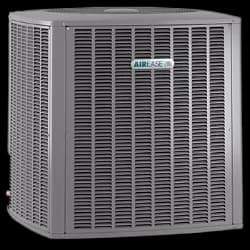
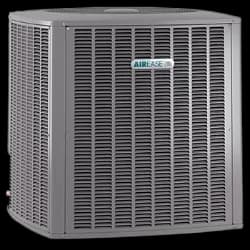
Mitsubishi Electric tells homeowners to "remove plants, trees, leaf buildup, animal nests and any obstruction from the outside unit." Carrier adds grass clippings and says to "keep shrubs trimmed back." Bryant says the outdoor unit "needs room to breathe."
Around Calgary that means cottonwood fluff in early summer and snow through the winter. After a storm, clear the snow away from the sides of the unit and off its top, and keep the shovel blade off the cabinet.
If the unit is sitting in ice, don't chip at it; the fins bend easily. Our guide to mini split heating problems explains why units here end up iced in.
Carrier allows a gentle rinse of the outdoor cabinet with a garden hose "with the power off," "avoiding high-pressure nozzles that could bend the delicate fins." Bryant says "never a pressure washer." Only rinse if your manual allows it, and never in freezing weather. Coil cleaners, fin brushes and fin combs are technician tools.
What needs a technician, and why
Coil and blower wheel
Carrier says the indoor coil "should still be professionally cleaned" because it's "housed in a very tight space inside the ductless air handler." Bryant's dealer service includes "thoroughly cleaning the blower wheel, drain pan, and indoor/outdoor coils," and says "the blower wheel should be pulled and cleaned." Mitsubishi Electric lists both as contractor work.
Reaching either means dismantling the head around its electronics, and Trane warns that "some DIY maintenance and repairs can void the warranty." Signs they're due: a musty smell on start-up, weak airflow with clean filters, or mould visible on the louvres or inside the outlet.
The drain line and pan
Clearing the condensate drain is on Mitsubishi Electric's list of contractor jobs, and Trane says to have a professional take the unit apart to clear the line and pan. Don't pour vinegar, bleach or anything else into the drain. If water is already coming from the head, our mini split leaking water guide covers the causes.
Refrigerant, wiring and "deep cleaning"
Bryant says "electrical and refrigerant service should be handled by a trained HVAC technician." Spray-in coil cleaners and bag-style wash kits put water and chemicals inside a head full of electronics, with the drain as the only way out. Leave that to someone who will open the head properly.
How often the inside gets serviced
Carrier recommends a professional maintenance visit at least yearly, and Natural Resources Canada says "you should have a qualified contractor do annual maintenance on your unit." Trane and Bryant both suggest twice a year. Your manual settles it.
When cleaning doesn't fix it
Cleaning restores airflow lost to dust and does nothing for a blocked drain or a refrigerant leak. If the head still drips with clean filters in, if frost or ice is forming on the head or along the copper lines running to it, or if airflow stays weak once the filters are back, the problem is inside the unit.
Call 587-834-3668. We price the repair before any work starts. Ductless heads are part of our heat pump repair work, including blocked drain lines and leaks, and we dispatch from both Calgary and Airdrie; Airdrie homes have their own heat pump repair in Airdrie page. Call and we'll tell you honestly when we can get there.