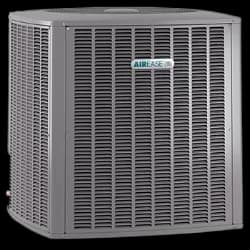
Why is my mini split leaking water? If it's dripping from the indoor head, the water the unit makes isn't getting out: the drain is blocked, the coil has iced up and is melting faster than the pan can empty, or the head or its drain hose sits at the wrong angle. Water under the outdoor unit in winter is usually defrost meltwater, and nothing is wrong. With a ductless mini split, where the water is tells you most of the story.
Indoor head or outdoor unit? Start with where the water is
Water at the outdoor unit is usually normal
On heating days, ice forms on the outdoor coil, so every so often the unit pauses to melt it away. LG says water dripping, or "mist that looks like smoke," coming from the outdoor unit during defrost is "completely normal and not a sign of a malfunction." Trane describes the cloud of steam the same way. LG also says cold pipes on the outdoor unit can sweat and drip in summer, which is normal too.
The Calgary problem is where that water goes. A unit mounted low drips meltwater that refreezes underneath it overnight, and a run of chinook thaws and hard freezes can build it into a solid block. If you're looking at an outdoor unit sitting in ice, treat it as a mounting and drainage problem, not a leak.
Water from the indoor head is not
The indoor head only makes water when it's cooling or dehumidifying. Moisture from the room condenses on the cold coil, runs into a drain pan and leaves through a drain line, usually through the wall to the outside. Trane puts it plainly: "A mini-split should not leak water during heat mode." A head dripping in summer points at the drainage; one dripping while it heats is worth a call on its own.
No wall head, and the water is beside a furnace? That's a different set of causes: see water around the furnace.
Turn it off and protect the wall
- Switch the unit off with the remote so it stops making water. Don't keep running it to see whether the leak clears.
- Put a container under the drip, towel the floor, and move furniture and electronics out from under the head.
- Bryant warns that "water near electrical components can create a safety hazard" and recommends turning the mini split off at the breaker before inspecting it. Only do that if you can reach the panel without standing in water. If you can't, leave it and call.
What makes a mini split leak
A blocked condensate drain
Suspect this first. Bryant calls a clogged condensate drain line "a common reason for water leaking from a mini split," and Carrier lists it alongside a dirty filter and a damaged drain pan as the usual causes. Dust, algae and mould build up inside the line until it blocks, and Trane explains the water then backs up into the unit and drips out of it.
A failed condensate pump
Not every head can drain downhill to the outside. A head on an interior wall, or one in a basement below grade, often sends its water to a small condensate pump instead. LG Canada notes that if the pump breaks, "water can't be pumped outside the house any longer," and says to have it repaired or replaced quickly to prevent water damage.
A dirty filter and an iced coil
The filters sit behind the front flap of the head. When they load up, less air crosses the coil, and both Trane and Carrier say that can freeze it. When the unit shuts off or the ice thaws, Bryant notes the melt "can produce more water than the drain system can handle," and the pan overflows. Frost on the head or the copper lines points this way. That post on how an air conditioner coil freezes is written about central systems, but the mechanism is the same.
Low refrigerant ices the coil too. Carrier says that if you've cleaned the filter and the coil still freezes, you may have a refrigerant leak, and that refrigerant doesn't get "used up."
A head that isn't level, or a drain hose that sags or kinks
Trane says a head tilted forward can overflow and drip, or push water out through the air vents. Carrier says a head that wasn't installed level lets water pool and overflow instead of draining outside.
The hose has to fall the whole way. Bryant and Carrier both give a minimum gradient of 1/100 for the condensate drain, and LG points out that a hose left too long can sag or bend, letting water run back into the unit. LG also warns that a hose end sitting underwater can stop it draining, so check where the outside end finishes. A hose with a dip in it keeps leaking however often the drain is cleaned; the fix is the hose.
Sweating refrigerant lines
Bryant lists insufficient insulation on the refrigerant lines as a cause: the cold copper sweats and the water drips from the line set or runs down the wall.
A cracked or shifted drain pan
The pan sits inside the head under the coil. Trane says it may rust or crack in older units and should be replaced by a professional, and Carrier notes a cracked, rusted or tilted pan lets water escape straight onto the wall or floor.
A leak that started after installation
If it has leaked since it went in, look at the install. Trane notes that "an inexperienced installer may not mount the unit correctly or achieve the proper slope for proper drainage," and Carrier's installation guidance calls for the drainage to be checked during the install. Start with the installer, because the likely cause is in how it was put up.
Checks you can make without opening anything
- What mode was it in? Cooling or dry mode points at the drain. A drip in heating mode is worth a call.
- The filters, behind the front flap. If they're loaded, clean them as your model's manual describes, with the unit off, and let them dry fully before refitting.
- Is the head level? Look at it from across the room against the ceiling line.
- Follow the drain hose outside. Is the end buried in snow, ice or soil, sitting in water, kinked or sagging?
- Frost or ice on the head, its coil, or the copper lines.
- A visible condensate pump. Is it plugged in and running, or is its reservoir brimming?
- Water marks on the wall below the head.
What to leave alone
- Don't open the head beyond the filter flap. Trane warns that some DIY repairs can void the warranty and recommends having a professional dismantle the unit to clear the drain line and pan. Mitsubishi Electric lists cleaning the condensate drain as a job for a licensed HVAC contractor.
- Don't pour anything into the drain, vinegar and bleach included, and don't push wire or anything else up the hose.
- Leave the copper line set and the refrigerant charge to a technician.
- Let ice on the coil or outdoor unit melt; never hack at it.
- Don't bypass or disconnect a condensate pump or its float switch.
When to call
If the head is still dripping once you've been through those checks, if there's frost or ice on the head or its copper, or if a new install is leaking and the installer can't put it right, call 587-834-3668 and describe where the water is and what mode the unit was in. Our heat pump repair work includes ductless heads, from clearing drain lines to finding leaks, and we price the repair before any work starts. We dispatch from both Calgary and Airdrie, and Airdrie homeowners can read about heat pump repair in Airdrie. Call and we'll tell you honestly when we can get there.