A ductless mini split that cools beautifully in July and does nothing useful in November is one of the more common calls we get, and it is very often not a fault.
Mini splits differ from a ducted system in three ways that all bite in heating season. They are controlled by their own handheld remote rather than a wall thermostat, which makes the wrong mode easy to select and easy to miss. They usually have no backup heat source, so when they stop carrying the room there is nothing behind them. And their outdoor units sit low, which in a Calgary winter is its own problem.
Work through these before assuming it is broken. If yours is a ducted whole-home system rather than a wall head, start with a heat pump not warming the house instead — the shared causes are covered there.
Check the remote before anything else
This is the most common cause by a distance, and it costs nothing to rule out.
A mini split has several modes and only one of them heats. On the remote you are looking for the sun symbol or the word HEAT. The others:
- COOL (snowflake) — the obvious one, and it happens more than you would think when the remote gets picked up in October
- DRY (water drop) — dehumidify mode. It runs the compressor and moves almost no heat into the room
- FAN — circulates air only. No heating at all, though the head is clearly running, which is why it fools people
- AUTO — the real trap
AUTO deserves its own warning. In auto mode the unit decides whether to heat or cool based on its own sensor and its own logic, and that logic often has a dead band several degrees wide. On a mild Calgary afternoon it can sit doing nothing while you are cold, then switch to cooling if the sun hits the room. If you want heat, select HEAT explicitly.
Then check the setpoint. It needs to be meaningfully above the current room temperature — the unit reads the temperature at the head, high on the wall, where it is warmer than where you are sitting.
Point the louvers down
Simple, free, and wrong in a large share of the systems we attend.
Warm air rises. In heating mode the horizontal louvers on the indoor head should be angled down, pushing the warm air toward the floor so it circulates back up through the room. Left in the cooling position — horizontal or angled up — the heat collects at the ceiling and the room stays cold at the level you actually live at.
Most units have a heat-mode setting that does this automatically, and many have it switched off. If your head is blowing genuinely warm air and the room still feels cold, look at where it is aiming.
The startup delay is normal
Select heat, nothing happens for two or three minutes, and the fan stays still. That is by design.
The head will not blow until its coil has warmed up, because blowing cold air at someone who just asked for heat is worse than blowing nothing. Manufacturers call it hot-start or cold-draft prevention. It is not a fault, and on a cold start it can take a few minutes.
What is not normal is the fan never starting at all, or the outdoor unit staying silent.
Defrost — and why it hits harder without backup
In cold, damp weather the outdoor coil frosts up and the system reverses briefly to melt it off. That part is the same as any heat pump.
The difference is what covers the room while it happens. A ducted hybrid system has a gas furnace to take over. A mini split usually has nothing. So during defrost the head stops delivering heat entirely for several minutes, the room noticeably cools, and then it recovers. Repeatedly, in the wrong weather.
You will see steam pouring off the outdoor unit during this. That is melted frost evaporating off a warm coil, not a fire.
Defrost is heaviest in the 0 to −8°C damp range, which is exactly what a chinook delivers. In a dry deep freeze it happens far less. If yours seems to misbehave in mild weather and cope at −20°C, that is the reason.
What is not normal: defrosting every few minutes, staying in defrost for long stretches, or an outdoor unit encased in solid ice rather than light frost.
When it is simply too cold
Cold-climate ductless units hold useful heating capacity down to roughly −25°C. Below that, output falls off sharply — not because anything is broken, but because there is very little heat left in the outside air to move indoors.
This is where the missing backup matters. A ducted hybrid hands over to the furnace. A mini split in a basement or bonus room usually has baseboard heat or a duct run as its fallback, and if the space has neither, it will simply get cold on the worst nights of the year.
That is worth knowing before you buy rather than after. A mini split in Calgary is a supplement to whole-home heating, not a replacement for it — which is the honest framing on our mini split AC page too.
There is also a sizing version of this problem. Units are frequently specified for the cooling load, which in Calgary is smaller than the heating load. A system sized to cool that room in July can be genuinely undersized to heat it in January, and no amount of servicing fixes a capacity shortfall.
Real faults worth knowing
Filthy filters. Mini split filters are washable panels behind the front flap, and they are the single most neglected part of the system because nobody is told about them at handover. A loaded filter chokes output gradually, so people adapt rather than notice. Rinse them, let them dry, put them back — it takes minutes and it is the first thing to do.
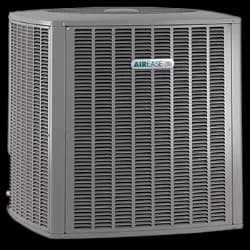
The outdoor unit sitting in ice. This is the big Calgary one. In heating mode the outdoor unit produces meltwater during every defrost cycle. If it is mounted low, on a pad at grade, that water pools underneath and refreezes overnight. Do that for a few weeks and the unit is standing in a block of ice that blocks drainage and stops defrost working properly.
Outdoor units here should be on stands or brackets that raise them well above expected snow depth, with clear space underneath for meltwater to drain away. Also check nothing above is dripping onto it — a roof runoff line over a heat pump is a recurring problem.
Clear snow from around and above it. Do not chip ice off the coil — the fins bend instantly and the refrigerant tubing sits right behind them.
Low refrigerant. Capacity drops, and it often shows in heating before cooling because heating is the harder job in this climate. Refrigerant is not consumed, so if it is low there is a leak, and topping it up without finding the leak just buys a season.
A failed reversing valve. This is the component that switches the system between heating and cooling. Stuck in the cooling position you get genuinely cold air on a heat call — not "cooler than a furnace" but actual air conditioning in January. Unmistakable once you know it exists.
What to check yourself
- Remote set to HEAT, not AUTO, DRY, FAN or COOL
- Setpoint several degrees above room temperature
- Louvers angled down
- Filters pulled, rinsed, dried and refitted
- Outdoor unit clear of snow, with nothing dripping on it and drainage underneath
- Whether the outdoor fan is actually turning
- Batteries in the remote — a weak remote sends commands the unit never receives
That is the list. Past that you are into refrigerant, the reversing valve and the control board, and none of those reward improvising.
When to call
Call if the head never starts after several minutes, if you get properly cold air on a heat call, if the outdoor unit is solid with ice rather than lightly frosted, or if it was heating adequately last winter and clearly is not this one.
That last one matters most. A gradual decline between seasons is usually refrigerant or a fouled coil, and both get worse rather than better. Meanwhile the room stays cold and whatever backup heat you have runs harder to cover it.
If you have worked through the list and it still is not heating, call 587-834-3668 and we will check the charge, the defrost operation and the actual capacity against the room — heat pump repair covers ductless units too. See mini split AC in Calgary for how these systems are specified in the first place, or heat pumps if you are weighing a whole-home option.