Why is my AC freezing up? Because the indoor coil, the evaporator that usually sits in a cabinet above your furnace, has dropped below freezing, so the moisture it pulls from the air turns to ice rather than running off to the drain. That ice then blocks the air crossing the coil, the coil gets colder, and the ice spreads. The two main causes are restricted airflow and low refrigerant, and low refrigerant means a leak. Either way, the first step is to turn the cooling off.
What a frozen AC looks like
The coil is sealed in its cabinet, so you usually see the signs around it.
- Frost or ice on the copper refrigerant lines, either where they enter the furnace or at the outdoor unit. Trane lists frozen refrigerant lines at the outdoor unit as a sign of a frozen indoor coil.
- Water dripping or pooling around the furnace or air handler.
- Weak or warm air at the registers.
No ice anywhere and the air is just warm? See why your AC isn't blowing cold air. Almost nothing coming out? Start with no air coming out of the vents.
Heat pump owners: frost on the outdoor unit in heating mode is normally defrost at work, covered in our piece on heat pump defrost cycles. This article is about ice that forms while cooling.
Turn the cooling off first
Switch from Cool to Off
At the thermostat, change the mode from Cool to Off. Trane and American Standard both warn that running with a frozen coil can cause major damage, and Natural Resources Canada (NRCan) notes that extended periods of inadequate airflow can lead to compressor damage. Bryant says not to restart while significant ice remains on the coil.
Fan On, or everything off?
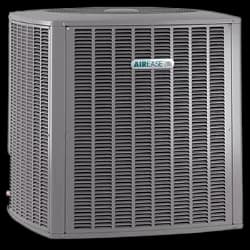
The manufacturers differ. Carrier, Lennox and American Standard suggest the fan On with cooling off, so house air moves across the coil and speeds the thaw. Bryant says to do that only if your system allows it and the manufacturer's instructions permit it. Trane and AirEase just say turn it off.
Check the owner's manual for your furnace or air handler. If you're not sure, leave everything off. The ice still melts, only more slowly.
How long it takes
Bryant says thawing can take several hours, longer with heavy ice. AirEase suggests turning the thermostat off for 1–3 hours to see whether it defrosts. Treat that as when to go back and look, not a promise it'll be clear.
Catch the meltwater
American Standard says a coil fully encased in ice can release 1–2 gallons as it melts, roughly 4 to 8 litres.
- Basement furnace: lay old towels around the base, as American Standard and Bryant suggest.
- Attic air handler: American Standard suggests a plastic tarp, tub or bucket.
- Watch the drain. Carrier says to check that water isn't overflowing from the drain line, and Bryant warns meltwater can overwhelm the drain pan.
If the pan is overflowing, AirEase says the "overflow switch is likely not functioning". Its advice: turn the system off and contact a dealer. Our guide to an AC drip pan that keeps filling up explains more. Mop what reaches the floor, but don't take panels off the furnace or air handler to get at water or look at the coil.
What not to do
- Leave the ice alone. Don't chip or scrape it. Trane, Bryant and American Standard all say so; Bryant notes it can damage the coil or refrigerant tubing.
- No hot water, hair dryers or space heaters. Carrier warns the sudden temperature change can crack or warp components.
- Don't restart while there's still ice.
- Leave the refrigerant side alone. Don't touch the line fittings, add refrigerant or open either unit.
- Stop at the thermostat. Electrical checks past that are technician work.
What makes an AC freeze up
Restricted airflow
Trane puts it plainly: "The biggest reason for frozen coils is restricted airflow." The coil needs warm house air crossing it to stay above freezing. Airflow is the most common cause, usually from one of these:
- A dirty filter. The furnace filter serves heating and cooling, so yours may have been in since last winter.
- Closed or blocked registers and returns. Bryant warns that closing registers in unused rooms upsets the airflow, and Trane lists blocked returns. NRCan says to keep registers clear of furniture and carpets.
- A dirty evaporator coil. Bryant treats coil inspection and cleaning as professional maintenance.
- A weak or failing blower. Bryant names it, and Carrier lists a malfunctioning fan. In a central system that's the furnace blower; see furnace blower problems.
Low refrigerant means a leak
Refrigerant doesn't get used up. Trane says a system is only low if it leaked or was improperly charged at installation. NRCan describes an air conditioner as a closed system that won't release refrigerant if properly maintained, and says leaks should be fixed. Low charge drops the pressure in the coil until it runs cold enough to freeze.
Topping up without finding the leak means it will be low again. Finding and repairing leaks and handling refrigerant are technician-only work.
Running it when it's cool outside
Lennox says running your AC when it's below 60°F outside, about 16°C, can cause it to freeze up. That's Lennox's figure, and your equipment may differ. Calgary evenings often cool off below that even in summer, so a system left cooling into the night after a hot afternoon can run into it.
Thermostat problems
Trane and American Standard both list the thermostat. American Standard's example is a coil frozen only in the morning: a thermostat that doesn't let the system shut down as the night cools keeps it running until the coil freezes.
Before you switch it back on
- Ice completely gone from the coil and copper lines
- Fresh filter in, matching the dimensions on the old one's frame
- Every supply register open, return grilles clear
- Floor around the furnace dry, drain not overflowing
- Thermostat back to Cool, then check the lines for frost returning
Change filters as often as your furnace manufacturer's instructions or user's manual says, which is what NRCan and AirEase both advise.
If it freezes again
Ice that returns after a filter change, with every register open, is past homeowner fixes. Lennox, Carrier and Bryant all say a repeat freeze is a technician call, and Bryant lists the refrigerant charge, evaporator coil and blower motor as what to check. Keep the cooling off until then; Bryant advises diagnosis rather than repeated restarts. If the system runs a while and stops cooling with no ice anywhere, see why an AC compressor shuts off after 30 minutes.
Call 587-834-3668 and we'll track the freeze to a leak, the blower, the coil or another fault. We price the repair before any work starts. Frozen coils, leaks and blower faults are all on our air conditioning repair list. We dispatch from both Calgary and Airdrie; north of the city, the AC repair in Airdrie page has the local details. Call and we'll tell you honestly when we can get there.