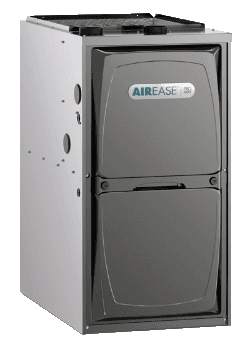
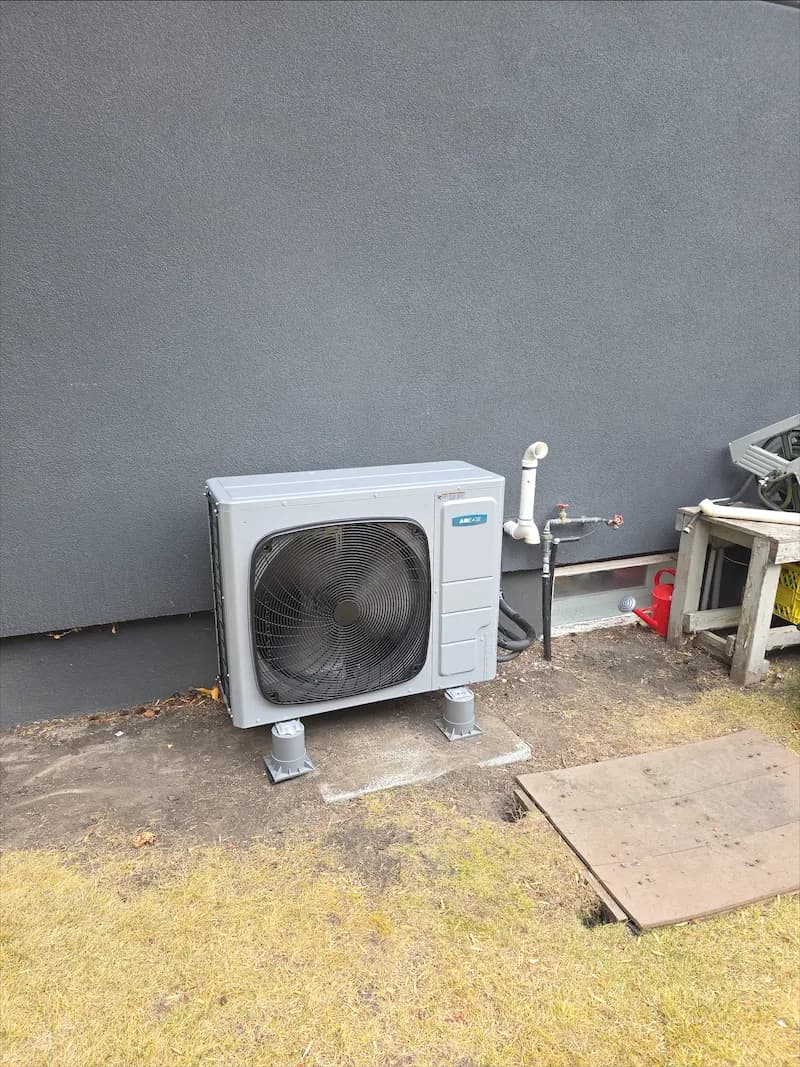
Why is my furnace leaking water? If it's a standard furnace with a metal flue, the water probably isn't from the furnace: Lennox notes a conventional furnace "does not produce water," so look nearby. A high-efficiency furnace does make water, and most leaks around one come from the condensate drain, a humidifier mounted on the furnace, or, in summer, the air conditioner coil sitting on top of it. Bryant Canada says pooling water isn't normal and should be dealt with promptly.
Shut it off and contain the water
Turn the system off at the thermostat so it stops making water.
If water is reaching electrical parts or the leak is large, Bryant says to also cut power at the disconnect or breaker "if you can do so safely." The City of Calgary's home maintenance guide says the furnace switch sits "between the furnace and the entrance and will be marked." If you can't reach the switch or the breaker without standing in water, leave both alone and call.
If the water seems to come from a humidifier, Bryant suggests closing its water supply if that can be done safely. Then soak it up. Trane suggests towels, a wet-dry vac for bigger puddles, and a fan to dry the area, since standing water raises the risk of mould.
Leave the cabinet closed. Bryant says to check only accessible outside parts and "avoid opening the furnace cabinet."
Make sure it's the furnace
Trane recommends ruling out the water heater, washing machine and laundry tub first, and Lennox adds that a plumbing pipe near the furnace can be the real source. Follow the wet trail back. If it leads to the tank, start with our leaking water heater page.
Water while the heat runs points to the furnace's condensate system or the humidifier. Water after the air conditioning has been running is an AC condensate problem, not a furnace leak, as Bryant Canada puts it.
High-efficiency furnaces: the condensate drain
How to tell if your furnace makes water
A high-efficiency furnace pulls extra heat out of its exhaust, and that turns water vapour into liquid. Carrier puts condensing furnaces at 90% to 98% AFUE and says their condensate must be routed through a drain system.
Look at the pipes. Trane's rule: metal exhaust means a standard furnace; PVC exhaust paired with a PVC intake means a condensing one. The City of Calgary notes all new homes have high-efficiency furnaces.
A blocked drain, trap or condensate pump
Condensate runs through a drain line and trap to the floor drain, or into a condensate pump where gravity can't manage. Lennox names dirt and debris in the hose, line or trap as a common cause.
What you can check without opening anything:
- Kinks, visible blockages or a disconnected section on the line you can see.
- Whether the pump has power and whether its reservoir is full. Bryant notes a failed or unpowered pump lets the reservoir overflow.
Clearing the trap and line is the technician's job. When the drain backs up, a float switch can stop the furnace to help prevent water damage, so a blocked drain can show up as no heat or a furnace that keeps turning off, sometimes with water on the floor as well. Bryant is direct: "Do not bypass a condensate safety switch or disassemble internal components."
Frozen condensate line in a cold snap
During a Calgary cold snap, a condensate line running through an unheated garage, crawl space or exterior wall can freeze and block the drain. Where the line is exposed, look for ice. Bryant's warning: "Do not use an open flame to thaw it." Don't put any other heat on it either.
Bryant says the line should follow the furnace manufacturer's specifications "rather than a universal slope or insulation requirement." One that keeps freezing needs its installation checked against those specifications; thawing it only gets you to the next cold snap. How a frozen line cuts the heat is covered in why a furnace blows cold air.
A leak that starts right after an install or service
Bryant notes that a disconnected line, poor routing or another installation issue often shows up as a leak shortly after a new install. If the water started soon after a visit, call whoever did the work. A loose or disconnected drain connection is the first thing to rule out.
A leaking humidifier
A whole-house humidifier on the ductwork is tied into the water line, so it can leak while the furnace is fine. Trane lists a clogged humidifier pad, a clogged or cracked drain line, and loose connections. Bryant notes that water can drip straight onto the furnace, making it look guilty.
Calgary's hard water plays a part. AprilAire explains that the water panel clogs over time from impurities in the water. The City of Calgary lists cleaning or replacing humidifier media as homeowner maintenance, and AprilAire points owners to the model's manual for the specifics.
AprilAire's maintenance guide is blunt: "Leaks and standing water around your unit indicate a problem that should be addressed immediately." Shut off its water supply if you can reach it safely, and have an HVAC professional look at it.
Water in summer is the AC coil, not the furnace
With central air, the evaporator coil sits in a box on top of the furnace. Its condensation drains into a pan and on to a floor drain, and Trane notes a clogged pan overflows beside the furnace. A dirty coil can also freeze over (Bryant Canada notes a restricted filter can contribute), and the water arrives as the ice melts.
Turn the AC off at the thermostat. Trane says a frozen coil needs a professional, and AirEase says an overflowing drain pan means the "overflow switch is likely not functioning": turn the system off and call a dealer. If your AC drip pan keeps filling up, that post goes further; see also AC repair.
When the water means something more serious
These signs mean the furnace stays off:
- Water on or near electrical parts. Carrier: "Do not operate the furnace if doing so could expose electrical components to water."
- Rust or corrosion. Carrier says persistent moisture can contribute to corrosion and mould. Point it out to the technician.
- A possible heat exchanger problem. Bryant Canada says it isn't a typical cause of a condensate leak, but Carrier lists it as a less common, more serious one: a crack can let carbon monoxide into the airflow. Don't inspect it yourself; leave it to a qualified technician.
For a carbon monoxide alarm, the City of Calgary's advice is to get out and call 911, and to stay out until the Calgary Fire Department clears the house. If you smell gas, leave immediately and call ATCO Gas or 911 once you're outside.
What not to do
- Don't open the burner or combustion compartment, or take internal parts apart.
- Don't bypass, jumper or disconnect a float or condensate safety switch.
- Don't thaw a frozen line with an open flame or any other heat.
- Don't run the furnace while water is reaching its electrical parts.
- Don't keep restarting it hoping the problem clears.
Checks to run before calling
- Was the heat or the AC running when the water appeared?
- PVC exhaust and intake, or a metal flue?
- Where exactly is the water: under the cabinet, under the humidifier, below the coil box, or around the pump?
- If there's a pump, does it have power, and is the reservoir full?
- Is the filter clean? A dirty one can help freeze the AC coil, but Bryant notes a new filter "will not correct a blocked condensate drain."
- Any visible ice where the condensate line runs through a cold space or leaves the house?
When to call
If water keeps showing up after those checks, call 587-834-3668 and tell us what you found. We'll work out where the water is coming from, and we price the repair before any work starts. Call and we'll tell you honestly when we can get there. We dispatch from both Calgary and Airdrie, and our Alberta-licensed gas fitters handle anything on the gas side. Our furnace repair page explains what a visit involves; north of the city, see furnace repair in Airdrie.