Why is my AC not blowing cold air when I can feel it coming out of the vents? Usually because the thermostat isn't calling for cooling, the filter is choking the system, or the outdoor unit isn't doing its half of the job. In a central system the furnace blower moves the air, and the outdoor unit and the refrigerant running between the two take the heat out of it. Air at the registers means the blower is working. Warm air means the cooling side isn't.
Warm air or no air at all?
Hold your hand over a register in two or three rooms first. The two complaints sound alike and have different causes.
- Air is moving, but it's warm or barely cool. The blower is fine. The cause is the thermostat, the filter, the outdoor unit, or a refrigerant or electrical fault. That's this article.
- Little or nothing is coming out. That's a blower, frozen coil or duct problem, and our guide to no air coming out of the vents works through it.
Heat pump owners: most of this still applies, but your outdoor unit does double duty, so read heat pump repair alongside it.
Check the thermostat first
Any one of these settings can give you warm air from a system with nothing wrong with it.
- Mode on Cool. On Heat or Fan only, the system won't cool, and after a spring of switching back and forth it's easy to leave it on the wrong one.
- Setpoint below room temperature. If the house is already cooler than the setting, the outdoor unit has no reason to start. Natural Resources Canada (NRCan) suggests 22–25°C for central air, with the higher end costing less to run.
- Fan on Auto, not On. That's also Carrier's advice. Set to On, the blower keeps running while the outdoor unit rests, and in those gaps the vents deliver air at house temperature.
If your thermostat takes batteries and the screen is faint or blank, replace them. Lennox lists low batteries, and a thermostat accidentally set to heat, among the causes of warm air.
Replace a dirty filter
Dirty filters cut the airflow across the indoor coil, and NRCan notes that reduced airflow lowers a system's capacity. In most central systems the filter sits at the furnace and serves both heating and cooling, so the one in there now may well have been working since last fall.
Pull it out and look. If it's grey and matted, put in a new one of the size printed on the frame. How often yours needs changing depends on the filter and the furnace, so go by the owner's manual, as NRCan's maintenance guide also advises.
With a fresh filter in and the air weak as well as warm, look at furnace blower problems.
Look at the outdoor unit
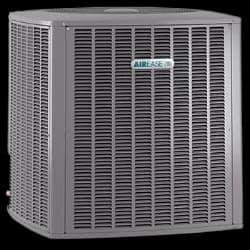
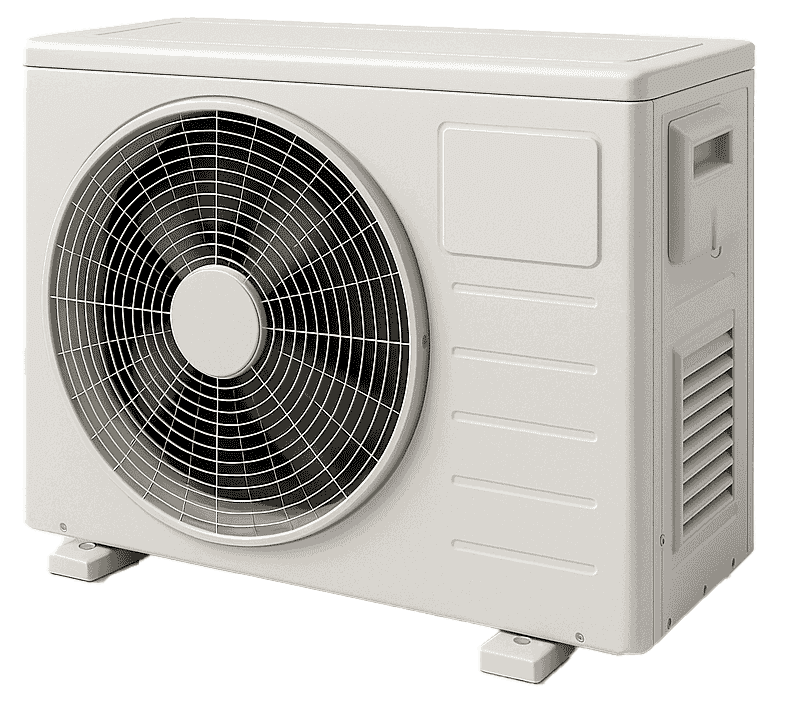
With cooling called for, go out to the condenser. That's where the heat from your house is supposed to end up.
Is the fan turning?
You should hear the unit running and see the fan on top spinning. If air is moving indoors but the outdoor unit is silent, nothing is removing heat. Lennox describes the same thing: outdoor unit without power, warm air indoors.
Breaker and outdoor switch
Check the AC breaker at your panel. A tripped breaker gets one reset. If it trips a second time, don't keep flipping it; that's Lennox's rule too, and it's the point to get a technician. Repeated trips mean there's a fault somewhere, and another reset won't clear it. Carrier also suggests confirming the outdoor unit's power switch is on. Don't open the switch box or the unit's panels.
Is the coil choked?
The condenser has to pull air through its coil to shed heat, and Carrier and Lennox both say to clear plants and debris from around it. In Calgary that often means cottonwood seed matted onto the coil in early summer, clippings thrown at it by the mower, and shrubs that have grown in since the unit went in. Clear what's loose and cut plants back.
Hail can also fold the thin fins flat over part of the coil, blocking air just as debris does. If the coil is badly plugged, NRCan suggests a professional cleaning, and straightening hail-flattened fins is a technician job too.
Ice on the lines
Ice or frost on the copper refrigerant lines or the outdoor unit means the system is running wrong. It often shows up as weak, barely cool air before the airflow stops altogether, and Lennox lists it as a reason to call.
Turn cooling off and let it thaw; the thaw steps are in our no-air guide. Swap the filter during the thaw. If the ice comes back with a fresh filter, the filter wasn't the cause. The next suspects are a refrigerant leak or an airflow fault at the blower or indoor coil, and those are technician checks.
When it's refrigerant or electrical
If the thermostat, filter and outdoor unit all check out and the air is still warm, you're past what a homeowner should check.
Refrigerant
The refrigerant charge is sealed inside the lines and coils when the system is installed, and it isn't burned off or worn out by running. If the charge is low, it has escaped somewhere. Carrier and Lennox both say the leak has to be found and repaired before the system is recharged, and NRCan notes that too much or too little refrigerant makes the system less efficient. Adding refrigerant without finding where it went fixes nothing.
Electrical parts
Carrier points out that faulty contactors or capacitors can stop the compressor from starting. Typical signs are a hum from the outdoor unit with the fan not turning, or a breaker that keeps tripping. This is high-voltage equipment, and capacitors can stay charged after the power is cut, so leave it to a technician. If your system cools for a while and then quits, see why an AC compressor shuts off after 30 minutes.
Until someone has looked, keep the cooling off. Carrier recommends turning the AC off if it's blowing warm air, because running a faulty system can overheat the compressor and cause permanent damage. NRCan's line is that if filter and coil care haven't fixed it, you need a competent service contractor for the refrigerant and electrical checks.
A quick checklist before you call
- Air is reaching the registers, so it's a cooling problem, not a blower one
- Thermostat in Cool mode, setting a few degrees under the room, fan on Auto, batteries fresh
- Dirty filter swapped out
- Outdoor fan spinning when cooling is on
- AC breaker reset no more than once, outdoor power switch on
- Fluff, clippings, leaves and plants cleared from around the condenser
- Copper lines and outdoor unit free of frost and ice
When to call
If you've been through that list and the air is still warm, call 587-834-3668. We'll track down whether it's refrigerant, electrical or something else, and price the repair before any work starts; our air conditioning repair page covers what we work on. We dispatch from both Calgary and Airdrie, so Airdrie homeowners can go to AC repair in Airdrie. Call and we'll tell you honestly when we can get there.
For other warning signs and which ones can't wait, see the signs of air conditioner problems.