
Pressure Reducing Valve Replacement in Calgary: A Homeowner's Guide
Pressure reducing valve replacement in Calgary is a question for homeowners whose house has a pressure-reducing valve (PRV) on the incoming water line, a part that also goes by the name water pressure regulator. This guide explains what the valve does, how it shows wear, how it affects your water heater, and which parts of the supply belong to the City and which belong to you.
The PRV takes the pressure coming in from the City's main and lowers it before the water reaches your taps, toilets and water heater. It isn't the temperature and pressure relief valve on the water heater or the relief valve on a boiler. Those are safety valves that open and discharge water when something goes wrong, while the PRV regulates the supply pressure all the time.
If you'd like the water supply in your house looked at, our plumbing repairs page covers the general repair work our Red Seal journeyman plumbers take on. We're licensed and insured, quotes are free, and the price of any repair is agreed before work starts.
Pressure in the house running high, low or all over the place, and it isn't the City's side? Describe what it's doing on the form, or call 587-834-3668.
Call 587-834-3668“Absolutely fantastic service! They are always on time, incredibly helpful, and went above and beyond to solve any issues that came up. The quality of the work was excellent, and everything was done with care and attention to detail. I really appreciated how smooth and stress-free they made the whole process. Highly recommend!”

Dalia Gr
Calgary · 7 months ago
What a pressure-reducing valve does
Calgary's water system has to deliver water across a city with a big spread of elevations, so the pressure arriving at a house depends partly on where the house sits. A PRV evens that out for the plumbing inside.
It lowers street pressure to house pressure
The valve sits on the incoming main line, just inside the house, and drops the incoming pressure to a lower, steadier setting for everything downstream. The City of Calgary's water pressure page sums up its purpose: "The PRV keeps the house plumbing from becoming over-pressured." You'll see it sold as a water pressure regulator as well, and Watts' installation drawing for one of its valves labels it simply a pressure regulator.
Why pressure varies across Calgary
The City says Calgary has an elevation range of almost 300 metres, so it runs the water system as a series of pressure zones. Where pressure "begins to exceed 70 metres (100 Psi)", the City has installed valves to stop the system over-pressuring itself, because that "can lead to water loss (leaks) and other issues." Those valves look after the City's network. The PRV in your house looks after your own pipes and fixtures. If your worry is weak pressure, our low water pressure page is the place to start.
Not the water heater's relief valve, or the boiler's
A water heater has a temperature and pressure (T&P) relief valve, and a hot-water heating boiler has a relief valve on its heating loop. Both are safety devices that open and discharge water when something is wrong. A.O. Smith's Bulletin 41 describes T&P valves as "mechanical devices that relieve overheated water or excessive pressure" and says "they cannot maintain a consistent pressure." Keeping the supply near a set pressure is the PRV's job. Some boiler literature, our own boiler pages included, shortens pressure relief valve to PRV as well, so check which valve is meant.
Where it sits and whether your house has one
Finding the valve takes a look, not tools. Once you've found it, leave it as it is.
On the main line, after the meter
Start where the water service enters the basement and follow it past the main shut-off and the water meter. Watts' LF25AUB-Z3, as one example, has a domed spring housing with an adjusting bolt and lock nut on top, and its installation instructions show a typical layout: a shut-off valve on each side of the meter, then a backflow preventer, then the regulator, with a pressure gauge on the incoming line and another downstream. Your house may be laid out differently.
Which Calgary homes have one
The City's guidance is specific: "Homes built after 1990 in areas of over 80 PSI are equipped with a pressure reducing valve (PRV)." That covers newer homes in the higher-pressure parts of the city. It says nothing either way about older houses, so the only sure answer is to go and look at the pipe.
Read the label
Look for the make and model on the valve; Watts, for one, shows the model on a nameplate. With those you can find the manufacturer's manual, which sets out that valve's factory setting, its maintenance and whether it can be rebuilt. Keep a copy with your water heater paperwork.
Signs a pressure-reducing valve is failing
Watts' instructions name three conditions that mean its valve may need maintenance: "excessive water pressure, insufficient water pressure or flow, or inconsistent water pressure." None of them proves the PRV is at fault, because other parts of the plumbing can cause each one.
Pressure on the high side
When a PRV stops reducing properly, the house gets something closer to street pressure. The City notes that "High water pressure may be caused by a PRV that is over five years old and requires service." Read that as the City's general guidance, not a lifespan for your particular valve. A gauge reading is the only reliable way to know the pressure; how hard a tap sprays doesn't tell you much.
Pressure that climbs while nothing is running
Watts says that if the pressure downstream is higher than the set pressure with no water flowing, "the cause could be thermal expansion, pressure creep or dirt/debris on the seat." Two of those are the valve. The first is the water heater, which is why the next section matters before anyone swaps a valve.
Weak or uneven pressure
A PRV that's sticking or set too low can choke the flow, or let pressure swing as fixtures open and close. So can a partly closed shut-off, a fouled softener, scaled galvanized pipe or a hidden leak. Our low water pressure page walks through the City's checks and which side of the property line a problem is on.
PRVs, thermal expansion and your water heater
Water takes up more room hot than cold. A.O. Smith explains that with nothing obstructing the cold line, some of that extra volume backs up into the supply pipe. A PRV changes that.
A PRV makes the system closed
In Bulletin 41, A.O. Smith says: "The presence of a check valve or a water pressure reducing valve, or the closing of a shut-off valve in the cold water line makes the system a closed system." Once the system is closed, the expanded water can't back up toward the street, and pressure inside the tank and the pipes rises each time the heater runs.
The relief valve isn't the answer
"The temperature and pressure relief valve is not intended to protect against thermal expansion," according to the same bulletin. Among the signs of excess pressure it lists a tank whose bottom head is "bulged or reversed".
What the manufacturers call for
A.O. Smith's instructions say a water heater installed on a closed system needs a correctly sized thermal expansion tank. Watts' PRV instructions say provision must be made for pressure relief protection of the plumbing, and that an expansion tank or a relief valve may be required. A house with a PRV but no expansion tank beside the water heater is worth raising with whoever works on either one.
When the water heater is replaced
Expansion belongs in the conversation at any hot water tank replacement, and our hot water tank replacement cost breakdown lists the expansion tank among the common additions. For popping, ticking or banging from the tank, see why a water heater makes noise. If water is already showing up around the tank, see leaking water heater.
What PRV repair or replacement involves
Most of the points below come from Watts' instructions for its LF25AUB-Z3 and from the City of Calgary; the first follows from the thermal expansion section above. Other makes have their own manuals, but these points are worth raising with the plumber before work starts.
Find the cause before the part
If high pressure at rest comes from thermal expansion, a new PRV won't cure it, because the new valve closes off the cold line just as the old one did. The expansion question needs settling at the same time as the valve.
A licensed contractor, to local code
Watts says the valve "should be installed by a licensed contractor in accordance with local codes and ordinances." It also wants it placed where it's "accessible with sufficient clearance for cleaning, service, or adjustment", which matters in a finished basement where the main line disappears behind drywall.
Water off and pressure off
The manual's warning is short: "Depressurize valve before servicing." That depends on the main shut-off closing fully. If it won't, the shut-off becomes part of the job, and the City's service valves page says: "To have the internal valve repaired by a certified plumber, the water will need to be shut off by The City of Calgary at the outdoor service valve." That shut-off is booked through the City's Water Interruptions and Disconnections page, which sets out its instructions and applicable fees.
Rebuild or replace
Some valves are made to be serviced in place. Watts lists repair kits for the LF25AUB-Z3 in each size, and its product page describes a "replaceable seat module". Where a valve can't be rebuilt, the whole valve is changed. The manual for the valve in your house tells you which options exist.
Setting the pressure
Watts' valve is "factory preset to 50psi (344 kPa) in a static condition," and the manual adds: "Any time a reducing valve is adjusted, use a pressure gauge to verify correct pressure setting." Adjusting or opening up a PRV is a job for a plumber, not something to try with a wrench on a free afternoon.
Periodic testing
For that model, Watts says the valve "must be tested periodically in compliance with local codes, but at least once per year or more as service conditions warrant." That's Watts' requirement for its own valve. Check the manual for yours.
The City's side and yours
Who deals with a problem depends on which side of the service valve it's on.
The service valve is the City's
"Service valves are owned and operated by The City of Calgary," according to the City's service valves page. They're usually outside, at the front, back or side of the property, and occasionally just outside the fence line in the back alley. For a damaged or leaking service valve, call 311 or complete an online service request, and the City says its crews will "investigate and complete repairs at no cost."
The line into the house is yours
The same page says "any water lines which go from the service valve to the home or building are the citizen's responsibility," and that property owners are responsible for repairs and upkeep on their side. The PRV sits on that line inside the house, so it follows that looking after it falls to the owner too.
Questions about pressure in your area
The City asks residents with further questions about their water pressure to call 311 or complete an online 311 request.
Getting the plumbing looked at
When the pressure in the house isn't right and the trouble is on your side of the service valve, it's plumbing work.
Repairs on your side of the valve
Our plumbing repairs page covers the leaks, valves, supply lines and pressure problems our Red Seal journeyman plumbers deal with in Calgary homes. We're licensed and insured, and we dispatch from both Calgary and Airdrie.
Free quotes, price first
Quotes are free, and the price of any repair is agreed before work starts. Send us the details of what the pressure is doing, or call 587-834-3668 and we'll tell you honestly when we can get there.
Pressure Reducing Valves in Calgary — FAQs
Is a pressure reducing valve the same as the relief valve on my water heater?
No. The PRV is on the main water line and lowers the incoming pressure for the whole house. The temperature and pressure relief valve on the water heater is a safety valve that opens to release water if the tank gets too hot or the pressure too high. A.O. Smith's Bulletin 41 says the T&P valve isn't meant to protect against thermal expansion and recommends a thermal expansion tank for that.
Does every Calgary home have a PRV?
No. The City of Calgary says homes built after 1990 in areas over 80 PSI are equipped with one. It doesn't say anything either way about older homes, so look at the main line where it comes in, past the meter. If there's a valve there besides the shut-off, note the make and model on it.
Who is responsible for the PRV, the City or me?
The service valve outside belongs to the City, and the City says the water lines from that valve to the house are the owner's responsibility. The PRV sits on that line inside, so it follows that it's yours to maintain. A damaged or leaking service valve is a 311 call, and the City says its crews repair those at no cost.
Can I adjust my PRV myself?
Leave it to a plumber. Watts says any adjustment should be checked with a pressure gauge and that the valve should be depressurized before it's serviced. A valve that seems to need adjusting may also have a different problem, such as debris on the seat or thermal expansion from the water heater, and turning the bolt won't fix either of those.
Simple, honest, on your schedule.
Find the valve
Follow the main water line from where it enters the house, past the main shut-off and the meter. Look at what's there, and leave the bolt on top of any valve alone.
Note what the pressure does
Is it high, low or uneven? Does it change after the water heater has been running, or overnight when nobody is using water? Those details help narrow down the cause.
Find the label and the manual
The make and model on the valve lead to its manual, which covers the setting, the testing it needs and whether it can be rebuilt.
Know who to ask
A problem with the service valve outside goes to the City through 311. The PRV and the pipe into the house are on the owner's side, which makes them plumbing work.
Also under Plumbing
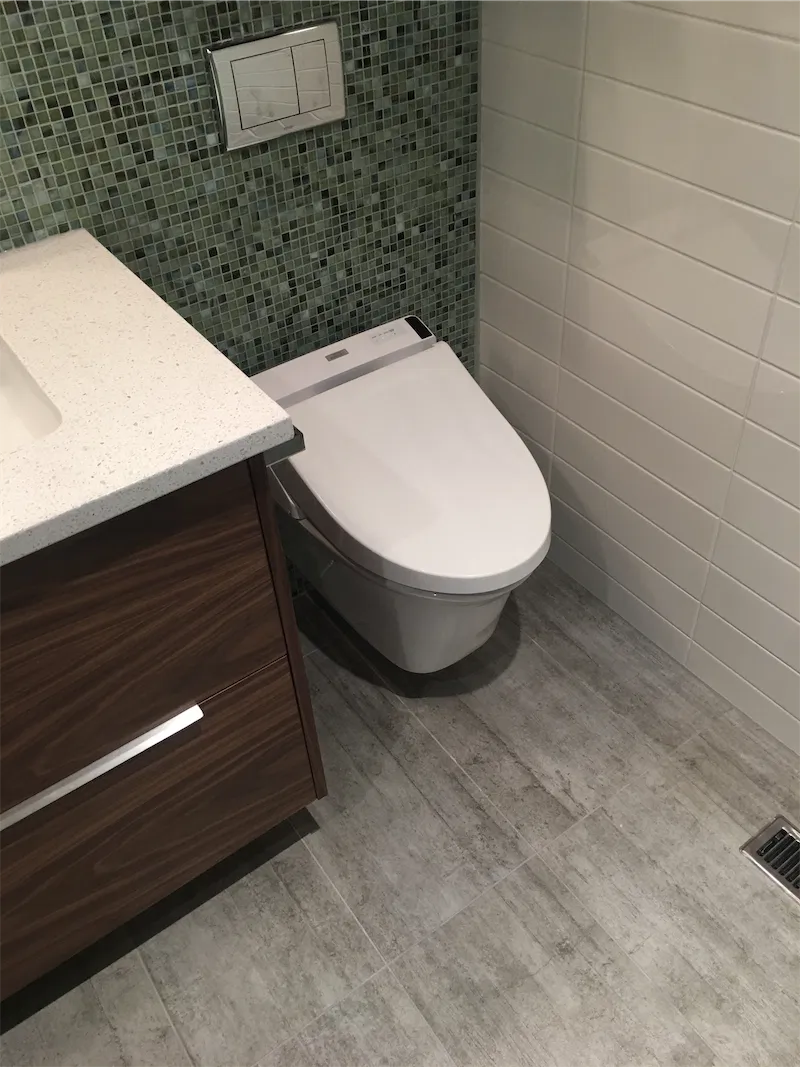
Bathroom Plumbing Calgary | Professional Bathroom Services
Calgary's hard water and extreme temperature swings wreak havoc on bathroom plumbing — we see it every day. FlameTech's bathroom plumbing specialists handle everything from emergency burst pipes in older Mount Royal homes to complete bathroom renovations in new Evergreen developments.
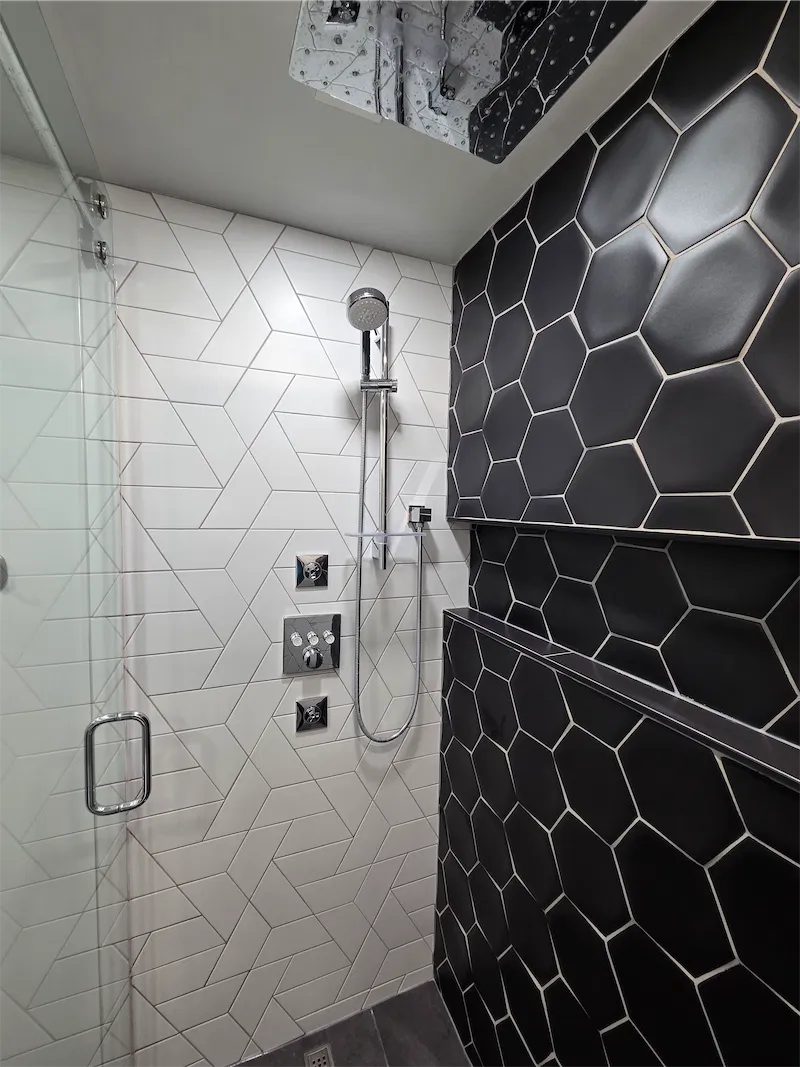
Shower Plumbing Calgary | Expert Shower Installation & Repair Services
Calgary's unpredictable weather puts stress on every part of your plumbing system, but nothing's more frustrating than stepping into a cold shower on a -30 morning. FlameTech's shower plumbing specialists fix pressure problems, temperature swings, and complete shower failures across Calgary.
Toilet Installation in Calgary — Standard, Comfort-Height & Wall-Hung
Most toilet installs are 1-2 hours and look the same on the surface — but how the flange, supply line, and wax ring are handled is the difference between a 15-year toilet and a leak in 18 months. FlameTech installs Toto, Kohler, American Standard, and any owner-supplied unit with a fresh wax ring, supply line, and shutoff every time.
Where we cover Calgary.
We dispatch from Calgary and Airdrie. Find your neighbourhood for area-specific notes on common builds, hard-water patterns, and the systems we see most.
Get a free water pressure quote.
Tell us what's going on and our dispatch team will call you back with pricing and availability.
Book a Red Seal plumber in Calgary.
Free estimates and upfront pricing, from local technicians who treat your home like their own.
Free estimate · No service charge for quotes · BBB Accredited