Introduction
You've repressurised your boiler for the third time this month. The gauge keeps dropping, and you're tired of the temporary fix. Understanding why does my boiler keep losing pressure is the first step toward actually solving the problem for good.
In this guide, we're going beyond the quick fix. We'll explain every possible cause of pressure loss in a hot water heating system, show you how to diagnose which one is affecting your system, and — most importantly — how to prevent it from happening again.
Common Causes of Boiler Pressure Loss
Cause 1: Water Leaks in the Heating System
This is by far the most common reason your boiler keeps losing pressure. Water is physically leaving your sealed heating system through a leak somewhere — at a pipe joint, radiator valve, or damaged section of pipework.
The tricky part is that many leaks are small enough that the water evaporates before you see a puddle. A slow drip at a joint under the floorboards can cause consistent pressure loss without any visible sign in the room above.
Common leak locations include: radiator bleed valves that aren't fully closed, compression fittings on copper pipe, towel rail connections, and solder joints on older pipework that have weakened over time.
Cause 2: Faulty Pressure Relief Valve (PRV)
The PRV is your boiler's safety valve. It's designed to open and release water if pressure climbs too high, preventing damage. The discharge pipe usually exits through an outside wall.
When the PRV develops a fault, it can start releasing water at normal operating pressures. This means water constantly leaves the system through the overflow pipe, directly causing pressure to drop.
Check outside your home for the PRV discharge pipe. If you see water dripping — even slowly — the valve is either faulty or being triggered by excessive pressure from a failing expansion vessel.
Cause 3: Failed Expansion Vessel
The expansion vessel is perhaps the most commonly overlooked cause of pressure loss. It's a chamber inside (or attached to) your boiler that contains a rubber diaphragm separating air from water.
When your heating runs, water expands. The expansion vessel absorbs this extra volume by compressing the air on the other side of the diaphragm. When this diaphragm perishes or the air charge is lost, the vessel stops working.
Without a functioning expansion vessel, expanding water has nowhere to go. Pressure spikes when the heating is on, triggering the PRV to dump water. Once the system cools, the lost water means lower overall pressure. This creates a frustrating cycle that many homeowners mistake for a simple leak. If your boiler also keeps turning off, the expansion vessel could be causing both issues.
Cause 4: Internal Corrosion
Over time, untreated heating water corrodes metal pipes and radiators from the inside. This corrosion (commonly called sludge or magnetite) weakens pipe walls and creates pinhole leaks.
Corrosion-related leaks are especially hard to find because they often occur in hidden pipework. The black sludge also damages valves, pump seals, and the heat exchanger, compounding the problem.
If your heating water looks dark or black when you bleed a radiator, your system likely has significant corrosion that needs addressing with a powerflush and inhibitor treatment.
Cause 5: Recently Bled Radiators
This one catches many homeowners off guard. When you bleed air from your radiators, a small amount of water escapes too. If you've bled several radiators, the combined water loss can noticeably drop system pressure.
This is actually normal and easily fixed by topping up the pressure via the filling loop. If your pressure was stable before bleeding radiators, this is almost certainly the cause.
How to Diagnose the Problem
Step 1: Repressurise and time it. Top up to 1.5 bar and write down the date. Check the gauge every morning before the heating comes on. How fast it drops tells you how severe the problem is.
Step 2: Check the PRV pipe outside. Look for the copper pipe exiting your wall near the boiler. Any dripping — even occasional — means water is leaving through the safety valve.
Step 3: Inspect all visible connections. Use tissue paper around every radiator valve, pipe joint, and fitting you can access. Even the smallest dampness shows up clearly on tissue.
Step 4: Monitor pressure with heating on vs off. If pressure spikes above 2.5 bar when heating runs then drops significantly when off, the expansion vessel is the likely culprit.
Step 5: Professional pressure test. If you can't find the cause, a heating engineer can isolate sections of the system and perform a drop test to pinpoint exactly where water is escaping. This is the definitive diagnostic for hidden leaks. You may also want to read about boiler popping noises which can be related to pressure issues.
Prevention Tips: Stop Pressure Loss Before It Starts
Annual boiler service: A Gas Safe registered engineer checks the expansion vessel charge, PRV function, and overall system health. This single appointment catches 90% of potential pressure problems before they develop. It's the single most effective prevention measure.
Corrosion inhibitor: Having a quality inhibitor added to your heating water prevents internal rust and sludge formation. This protects pipe walls from developing the pinhole leaks that cause most pressure loss cases. Ask your engineer to check inhibitor levels during annual service.
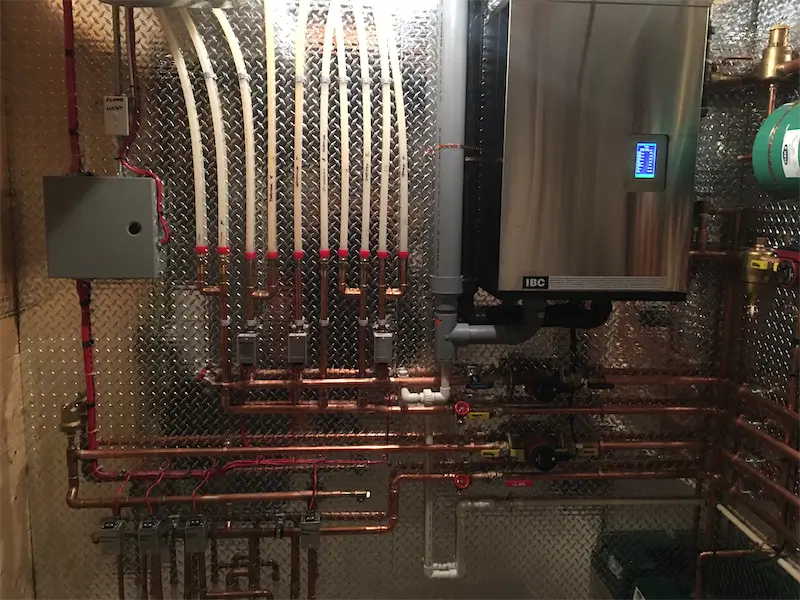
Magnetic filter: Installing a magnetic filter (like a MagnaClean) on the return pipe captures metallic debris before it can damage boiler internals. This extends the life of your expansion vessel, pump, and valves significantly.
Bleed radiators seasonally: Bleeding your radiators at the start of each heating season removes trapped air that reduces efficiency. Just remember to top up the pressure afterward via the filling loop.
Keep filling loop accessible: Don't box in or hide your filling loop. Quick access means quick repressurising when needed, and your engineer can check it during service visits.
When to Call a Professional
Call a Gas Safe registered engineer if: pressure drops more than 0.5 bar per week after repressurising, the PRV discharge pipe is continuously dripping, pressure spikes above 2.5 bar when the heating is on, you can see or smell water anywhere near the boiler, or your boiler displays error codes related to pressure.
Don't delay professional help for persistent pressure loss. Running a boiler with consistently low pressure damages the heat exchanger and pump, turning a routine repair into a full boiler replacement. Our guide to furnace gas smells covers other important safety issues to watch for.
Frequently Asked Questions
Can a boiler lose pressure without a leak?
Yes. The expansion vessel losing its air charge, a faulty PRV releasing water through the overflow, or recently bleeding radiators can all cause pressure loss without a traditional pipe leak.
Why does my boiler lose pressure overnight?
Overnight pressure drop is usually caused by the heating system cooling down (normal — pressure drops slightly as water contracts) combined with a small leak or PRV issue that slowly releases water while you sleep.
Does boiler age affect pressure loss?
Absolutely. Older boilers (10+ years) have worn seals, degraded expansion vessels, and more corroded pipework. They're significantly more prone to pressure issues, which is why annual servicing becomes even more important as your boiler ages.
Can central heating sludge cause pressure loss?
Yes. Sludge (magnetite) corrodes pipe walls from the inside, eventually creating pinhole leaks. It also damages valve seals and the expansion vessel diaphragm. A powerflush combined with inhibitor treatment addresses this.
How long should a boiler hold pressure?
A healthy system should hold stable pressure for months between top-ups. Needing to repressurise more than twice a year suggests a developing problem that's worth investigating early.
Is it worth fixing an old boiler with pressure problems?
If your boiler is under 12 years old, repairs are usually worthwhile. Over 15 years old with multiple issues, boiler replacement may be more cost-effective — our Calgary boiler specialists will give you an honest repair-or-replace assessment based on your specific system and its condition.
Quick Summary
- Water leaks are the most common cause (70% of cases)
- Faulty PRV releases water through the overflow pipe outside
- Failed expansion vessel causes pressure spikes then drops
- Internal corrosion creates hidden pinhole leaks over time
- Annual servicing prevents most pressure-related problems
- Corrosion inhibitor and magnetic filters protect the whole system
- Call a professional if pressure drops more than 0.5 bar per week