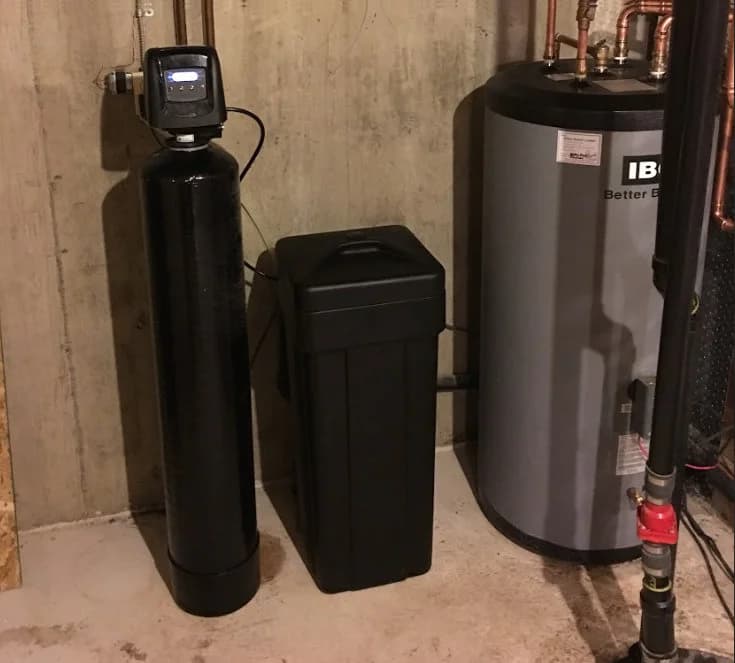
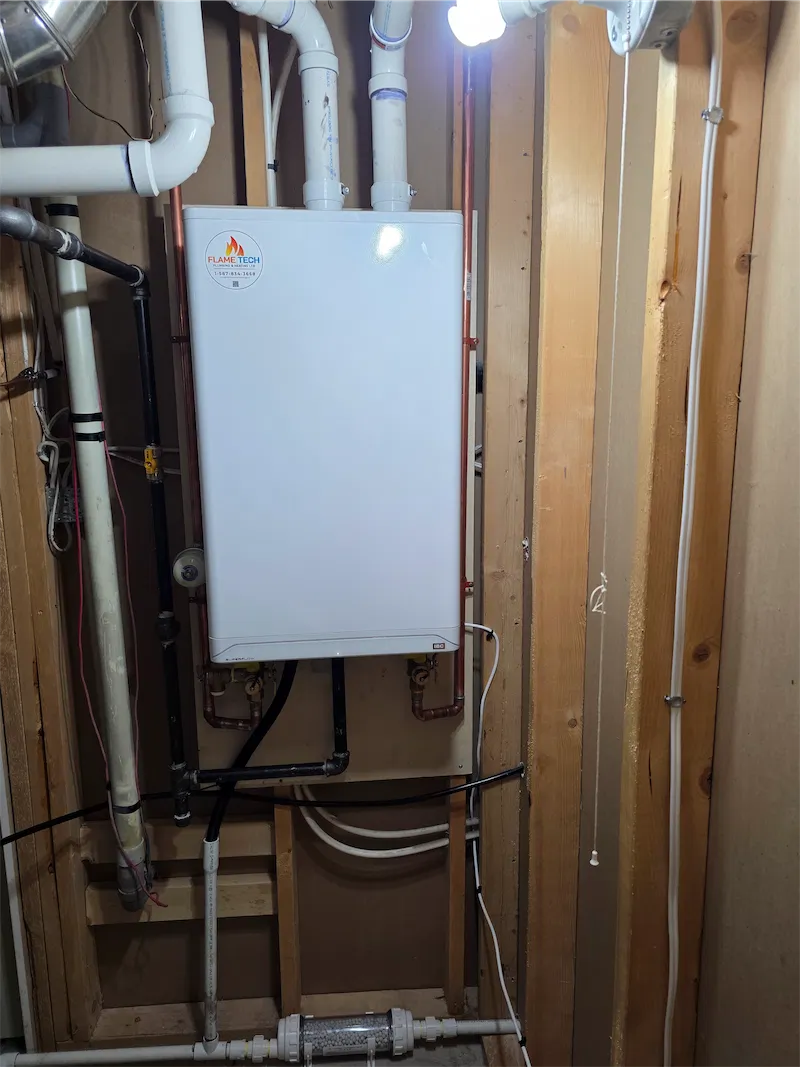
These are the two brands we put in Calgary homes, and we get asked to pick between them most weeks. The short answer: both are trade-grade tanks that will do the job, the warranties are close enough to be a tie, and we default to Bradford White — but for reasons that are narrower than the internet suggests.
Here's the honest breakdown.
The warranties are basically the same
This is where most comparisons start and it's the least useful place to look, because there's almost nothing between them.
| Bradford White | John Wood | |
|---|---|---|
| Standard residential gas | 6-year tank, 6-year parts | 6-year tank, 6-year parts |
| Longer option | Available on higher lines | 8/8 on specific models |
| Extension available after purchase | No | Yes — 2 and 4-year tank extension kits for 6-year models |
That last row is the one real difference, and it's in John Wood's favour. If you're planning to stay in the house fifteen years, being able to buy 2 or 4 extra years of tank coverage on a 6-year model is worth asking about at the time of install, not in year seven when you've remembered it.
One thing that applies to both, and to every other brand: the tank warranty covers the tank and its parts, not the labour to swap it, and it runs to the original purchaser in the original home. It is not transferable when you sell. Nobody mentions this at the till.
Where you can buy them is the actual difference
Bradford White sells only through wholesale distributors to licensed installers. No big-box shelf, no Amazon listing, no marketplace. It is not possible to buy one and have a handyman fit it.
That sounds like a restriction and it's closer to a feature. Every Bradford White tank in Calgary went in through the trade, which means the installs are more consistent and the parts channel is stocked for professionals rather than for weekend shoppers. When a tank needs a replacement gas valve, the trade supply has it.
John Wood also positions itself to the trade, and has a genuine advantage of its own: A.O. Smith runs a regional distribution centre in Fergus, Ontario for the Canadian market. Parts availability across Canada is good.
The "made in Canada" thing is out of date
You will read, on a lot of Canadian plumbing sites, that John Wood is the Canadian-made choice, built in Fergus, Ontario.
It was. It hasn't been since June 2013.
A.O. Smith bought the GSW brands — GSW and John Wood — in 2006, and in April 2013 announced it was ending manufacturing in Fergus, consolidating production into other North American plants. Around 350 manufacturing jobs went. Fergus remains A.O. Smith's Canadian head office and a regional distribution centre, which is a real and useful thing, but the tanks are not built there.
Bradford White builds its residential tanks in Middleville, Michigan.
So if you're choosing between these two on country of manufacture, there isn't a choice to make any more. If a salesperson tells you you're buying Canadian-built, they're working from a brochure a decade out of date.
What makes us reach for Bradford White
Not the warranty, as above. Two things:
The Hydrojet inlet. Bradford White's standard gas tanks use a sediment-reducing cold water inlet. In a soft-water city that's a marketing bullet. In Calgary — 126 to 198 mg/L hardness in the north, 181 to 262 in the south and southeast — sediment at the bottom of the tank is the thing that kills tanks early, and anything that keeps it moving rather than settling is doing real work.
What we see coming back. We replace tanks all over this city, which means we see a lot of ten-year-old steel. Bradford White holds up well in our water relative to the rest. That's a pattern from our own service calls rather than a lab result, and we'd rather be straight about what kind of claim it is.
We also install AO Smith and Rheem, and both are fine tanks. If a customer has a preference, we'll fit it.
What actually decides how long your tank lasts
Here's the part that matters more than this entire comparison.
A tank rated for 12 to 15 years commonly fails at 8 to 10 in unsoftened Calgary water. The sacrificial anode rod that should last 5 to 7 years is often gone in 3 to 4. That's true of Bradford White, John Wood, AO Smith and Rheem alike.
So the brand decision is worth maybe a year or two at the margins. A water softener upstream, and having the anode rod checked every three or four years, is worth considerably more than that. If you're going to spend energy on one decision here, spend it on the water, not the badge.
So which one
Either, honestly. We'll fit a Bradford White unless you ask otherwise, and if you want the John Wood with the extension kit because you're staying put for fifteen years, that's a sound call and we'll tell you so.
Both cost the same to install, which is the other thing worth knowing — the price of the job is driven by size and venting, not by which of these two badges is on the front.
If your tank is on its way out and you'd like a straight recommendation for your house rather than a brand argument, call 587-834-3668, or see hot water tank replacement in Calgary.