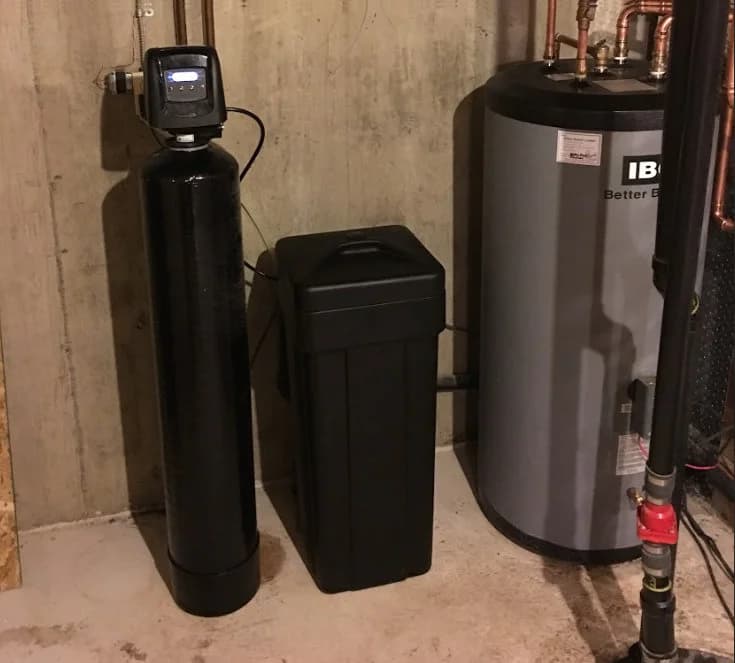

Water Softener Repair Airdrie — In-Town and Acreage Wells
Airdrie has two completely different water situations, and they break softeners in different ways. In town you are on treated municipal supply and the faults are mechanical — control valve, injector, salt bridge. On an acreage well, the usual culprit is iron, and no amount of salt or servicing fixes that until the iron is dealt with first.
Working out which of the two you are on is the first thing we do, because it changes the diagnosis entirely. A softener that has quietly stopped softening on a well property has usually been poisoned by iron fouling, and cleaning it only buys time unless something upstream is removing the iron.
In-town softeners fail the ordinary way: the control valve stops initiating a regeneration, the injector that draws brine clogs, a salt bridge forms so the tank looks full while nothing is dissolving, or the resin has simply reached the end of its life.
We service Fleck, Autotrol, Clack and the other common valve platforms regardless of who installed the unit, dispatched locally from Coopers Crossing. If a repair is the right answer that is what we will quote — see water softener installation in Airdrie if it turns out the unit is finished. Call 587-834-3668.
Softener stopped working, or orange staining on a well property? Call 587-834-3668 — we test before we quote anything.
Call 587-834-3668“Great experience working with Jason and Shaun on the installation of my water softener and RO system. Professional, knowledgeable, and took the time to explain the setup and answer all my questions. The installation was completed neatly and efficiently, and the quality of workmanship was excellent. Highly recommend Flame Tech for any plumbing or water treatment needs.”
Aditya Prashar
Calgary · 3 months ago
First question: municipal or well?
It sounds like a formality and it is the single most useful thing we establish. The two situations produce different faults and different fixes.
In-town Airdrie — treated municipal supply
Airdrie draws treated water, so hardness is in the same range as Calgary and it is consistent year-round. No iron to speak of, no seasonal swings. When a softener fails here it is almost always mechanical: the control valve, the injector, the brine valve, a salt bridge, or resin that has reached the end of its life.
Acreage on a private well — a different problem set
Properties outside town limits run on their own wells, and wells around here can carry significant iron and manganese alongside genuinely hard water. That changes the diagnosis completely, because iron is the thing most likely to have killed the softener rather than any mechanical fault.
Why it matters before anyone quotes
Replacing a fouled softener on a well without addressing the iron simply starts the same clock again. We would rather test the water and tell you that than sell you a unit that will fail the same way. See well water treatment for the full treatment sequence.
Iron fouling — the acreage diagnosis
If you are on a well and the softener has gradually stopped softening, start here. It is the most common cause we find and the most commonly missed.
- 01Softener resin exchanges calcium and magnesium for sodium. Iron binds to that resin and does not release cleanly during regeneration, so the bed slowly loses capacity.
- 02The tell is gradual rather than sudden — softness fades over months, and adding more salt makes no difference because salt was never the problem.
- 03Orange or reddish staining on fixtures and laundry alongside failing softness is close to conclusive.
- 04Reddish slime in a toilet tank is iron bacteria, which is a different problem again — that needs the well shocked rather than filtered.
- 05A resin cleaner can recover a lightly fouled bed. A heavily fouled one needs replacing, and on an older unit that is where replacement of the whole softener starts to make sense.
- 06The permanent answer is an iron-removal stage ahead of the softener, sized against a real water test rather than a guess. Sediment first, then iron and manganese, then softening — in that order.
In-town symptoms and what they mean
On municipal supply the fault is usually mechanical, and the symptom narrows it quickly.
The water has gone hard again
Check the simple things first: is there salt in the tank, is there a hard crust bridging across it so the salt looks full but is not dissolving, and has anyone left the bypass valve open after other plumbing work? Past that it is a control valve not initiating regeneration, a clogged injector, or exhausted resin.
The brine tank is full of water
Usually a clogged injector or venturi — the part that draws brine out during regeneration. It can also be a restricted drain line, a stuck safety float, or a failed brine valve. Almost always repairable. We have written it up in why your water softener has water in it.
It regenerates constantly or will not stop running
Water running to drain continuously points at worn control valve piston seals letting water bypass internally, or a timer stuck mid-cycle. Left alone this runs up the water bill quietly.
The water tastes salty
Too much brine is reaching the house — typically a restricted drain line preventing a proper rinse, a brine valve not sealing, or settings drawing far more brine than the unit needs.
Water pressure has dropped through the house
A fouled resin bed restricts flow. Check your tap aerators — tiny amber or brown beads mean resin is escaping into the plumbing, which points at a cracked distributor tube inside the tank.
It is leaking
Usually bypass valve o-rings or control valve seals, both routine parts. A leak from the tank body itself is not repairable, and that is one of the few clear replace cases.
What a service call covers
Diagnosis before parts, on either water source. We would rather spend twenty minutes establishing the cause than replace something that was not the problem.
- 01Test the water at the tap to confirm the softener is actually failing rather than something else being wrong.
- 02On a well property, test for iron and manganese specifically — that determines whether this is a repair or a treatment-design conversation.
- 03Check salt level, break up any bridge, and look for mushing at the bottom of the brine tank.
- 04Confirm the bypass valve is in service position and not left over from other work.
- 05Run a manual regeneration and watch each stage — the fastest way to find where the cycle is failing.
- 06Clean or replace the injector and venturi screen, the most common single repair on any softener.
- 07Inspect control valve seals, spacers and piston for wear, and check the drain line for restriction.
- 08Verify the programming against measured hardness and household size rather than whatever default it shipped with.
Repair or replace
Most softeners are worth fixing. A few genuinely are not, and we will tell you which one you have.
- 01Under about eight years — repair, and how long softeners last covers why. Valve internals, injectors, brine valves, floats and timers are all serviceable and the tank has years left.
- 02Eight to twelve — depends what failed. A minor part is worth fixing; a failed control valve at that age is closer, because the resin is heading toward the end of its life anyway.
- 03Resin exhausted or fouled — replaceable on its own, and on a newer unit with a sound valve that is often the right call.
- 04A cracked tank — not repairable at any age.
- 05Heavily iron-fouled on a well with no iron removal upstream — replacing the softener alone repeats the failure. The honest answer is to fix the treatment sequence, not just the unit.
- 06Undersized from the start — occasionally the softener is not faulty at all, it was sized for softer water or a smaller household than it actually serves. No repair fixes that.
Airdrie Water Softener Repair FAQs
My softener stopped working and we're on a well. What's most likely?
Iron fouling, by a distance.
Softener resin is built to exchange calcium and magnesium. Iron binds to it and does not release properly during regeneration, so the bed gradually loses capacity. Adding more salt changes nothing, because salt was never the limiting factor.
The pattern is gradual — softness fading over months rather than stopping suddenly — and it usually comes with orange or reddish staining on fixtures and laundry.
The fix is not just servicing the softener. It needs an iron-removal stage ahead of it, sized against a real water test. See well water treatment.
Is Airdrie's town water hard?
Yes. Airdrie is on treated municipal supply with hardness in the same range as Calgary — hard enough to scale water heaters, shorten fixture cartridge life, and cost efficiency on anything that heats water.
What it does not have is the iron and manganese load that acreage wells around town can carry. That is why an in-town softener failure is usually a mechanical fault, while a well-property failure is usually a water chemistry one.
If you are in town and the softener has stopped keeping up, we start with the control valve, injector and resin age.
Why is my brine tank full of water?
Most commonly a clogged injector — the venturi that draws brine out of the tank during regeneration. If it cannot pull, the water that went in does not come back out.
Other causes: a restricted or kinked drain line, a safety float stuck up, or a brine valve that has failed to seal.
All repairable, and none of them mean you need a new softener. There is more detail in why your water softener has water in it.
Do you service softeners you didn't install?
Yes — most of the ones we service we did not install.
We work on Fleck, Autotrol, Clack and the other common control valve platforms, which are used across a wide range of brands. The badge on the front matters much less than the valve inside it.
If we cannot get parts for something unusual we will tell you upfront rather than after the visit.
Should I repair it or replace it?
Under about eight years, repair — the valve internals are serviceable and the tank has years left. See how long water softeners last for the full age-by-age view.
Between eight and twelve it depends what failed. A cheap part is worth fixing; a failed control valve at that age is closer to a replacement decision because the resin is ageing at the same time.
One case is different: a heavily iron-fouled softener on a well with no iron removal upstream. Replacing the unit alone just restarts the same failure. The honest answer there is to fix the treatment sequence rather than the softener.
There are little brown beads in my tap aerators.
That is resin escaping from the softener into your plumbing, and it means something inside the tank has failed — usually a cracked distributor tube or a broken screen at its base.
It needs dealing with rather than ignoring. Loose resin travels through the house, clogs aerators and finds its way into appliance valves.
The repair means opening the tank, replacing the failed component and flushing the affected fixtures. On an older unit we would weigh that against replacement and give you both numbers.
Do you cover acreages outside town?
Yes. Acreage properties around Airdrie are typically well-and-septic rather than municipal, and that is where most of the interesting softener work is.
In scope: softeners, iron and manganese filtration, pressure tanks, pressure switches, check valves, and the plumbing from the wellhead inward.
Not our work: drilling wells, deepening them, or pulling down-hole submersible pumps — that is licensed well contractor work and we will point you to someone. See well water treatment.
How often should a softener be serviced?
Every two to three years on municipal supply for most households, with a monthly salt check and a look for bridging in between.
On a well it is worth more attention than that, because water chemistry can shift over the working life of the well. If iron is present at all, the softener needs checking more often and the iron-removal stage needs its own service interval.
Either way, our water here is hard enough that units run more regeneration cycles than the generic advice in the manual assumes.

Monthly Financing Available
Spread the cost into manageable monthly payments.
Spread the cost of a replacement softener or an iron-removal stage into monthly payments via our Financeit partner.
Simple, honest, on your schedule.
Call or request a quote
Tell us what's going on. We listen first and ask the right questions before we schedule anything.
Free written estimate
We assess the job and give you an all-in price in writing. No pressure, no surprise add-ons.
Schedule at your convenience
Pick a day and window that works for your home — we'll confirm dispatch and arrival time.
Clean, code-compliant service
Licensed technicians complete the work to Alberta code, clean up, and walk you through what we did.
Also under Water
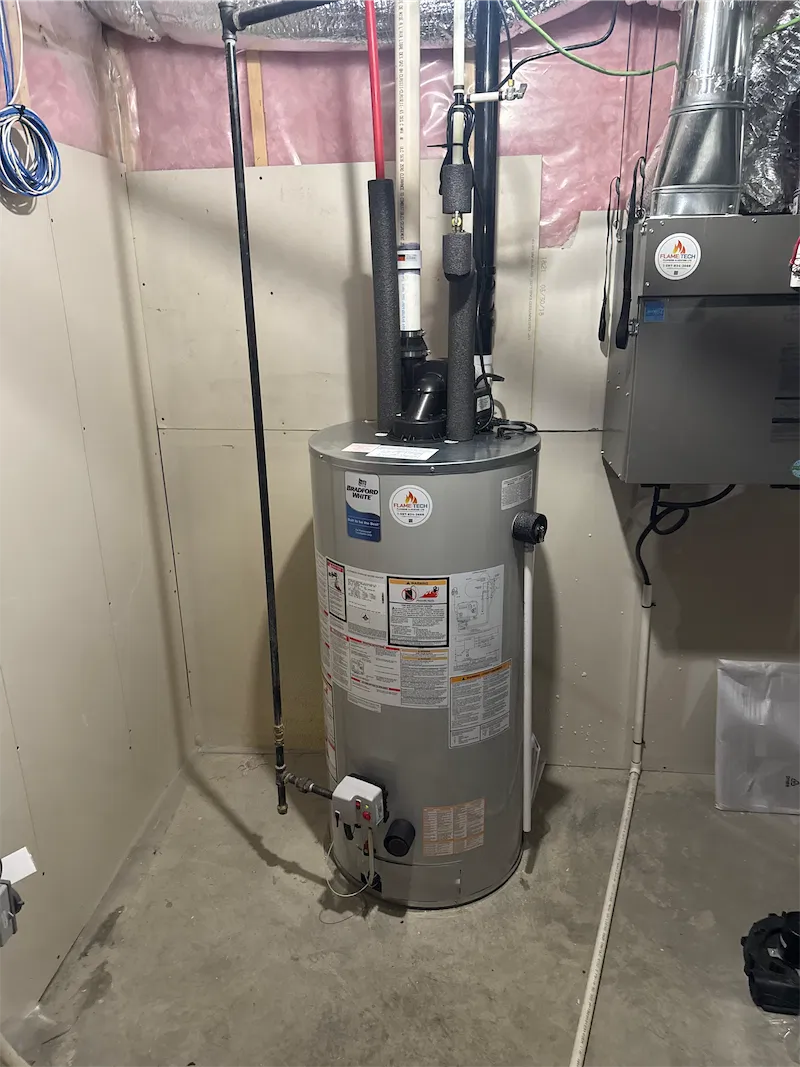
Hot Water Tanks Airdrie | Professional Installation & Repair Services
Airdrie's hard water and temperature swings are brutal on hot water tanks. FlameTech's technicians have replaced hundreds of tanks in Airdrie neighborhoods, from Coopers Crossing' newer builds to established areas where original tanks are hitting the 12-year mark. When your tank starts leaking or you're running out of hot water, our Airdrie plumbers know exactly what's wrong and how to fix it.
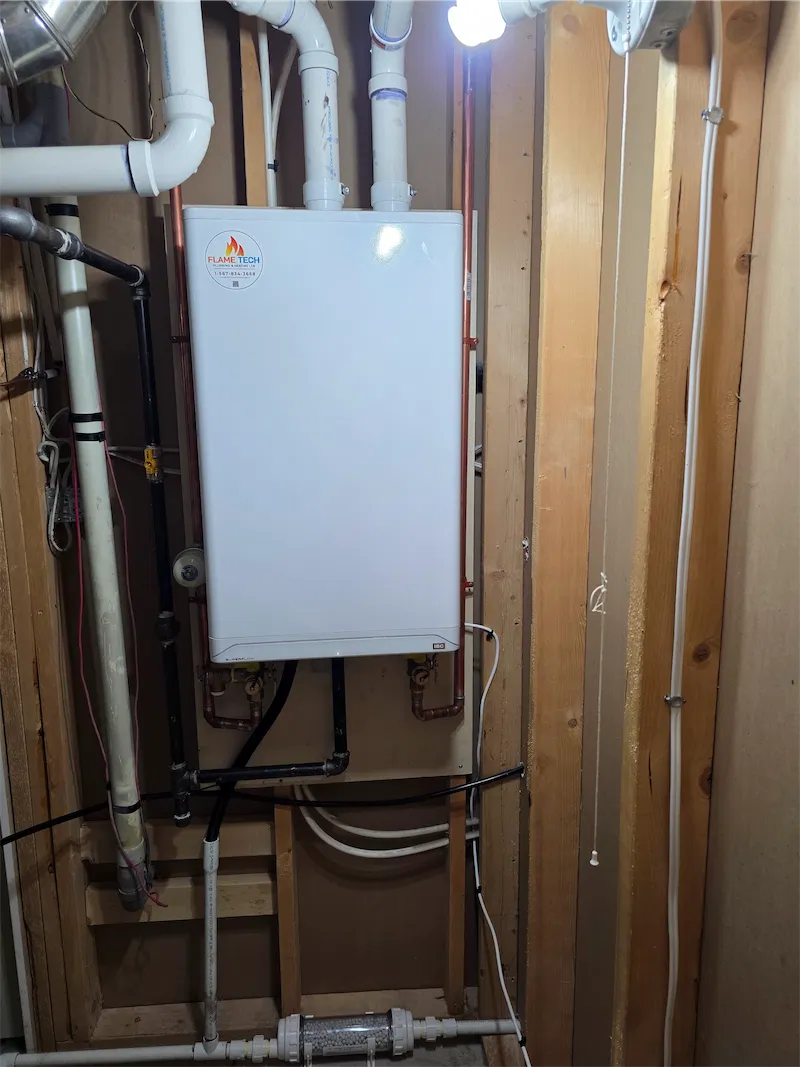
Tankless Water Heaters Airdrie — Navien, Rinnai, IBC Install + Service
Endless hot water, 20-year lifespan, and a wall-mounted footprint sound great — but tankless is the right call for some Airdrie homes and the wrong call for others. We install Navien, Rinnai, and IBC, walk through the tank-vs-tankless trade-off honestly before quoting, and dispatch locally from Coopers Crossing so service times are short.

Water Heater Repair in Airdrie
Water heater repair across Airdrie on gas, electric, and tankless units — with a genuinely local advantage. Most Airdrie water heater calls get dispatched in from Calgary, adding drive time and sometimes an out-of-town surcharge. Jason is based right here in Coopers Crossing, so when your hot water's out, you're not waiting on a truck crossing the city.
Where we cover Airdrie.
Local dispatch from Coopers Crossing across every Airdrie neighbourhood. Find your area for build-era notes, hard-water patterns, and the systems we see most.
Also covering nearby Chestermere, Cochrane, and Carstairs.
Get a free water softener repair quote.
Tell us what's going on and our dispatch team will call you back with pricing and availability.
Book a Red Seal plumber in Airdrie.
Free estimates, upfront pricing, and a satisfaction guarantee — local technicians who treat your home like their own.
Free estimate · No service charge for quotes · BBB Accredited