
Quick Answer
If your boiler keeps turning off, the most common causes are low water pressure, a faulty thermostat, a blocked condensate pipe, or overheating due to poor circulation in the hot water heating system. Start by checking your pressure gauge — if it reads below 1 bar, repressurize the system. For persistent shutdowns, a licensed technician should inspect the heat exchanger and safety controls.
Key Takeaways
- Low boiler pressure (below 1 bar) is the number one reason boilers shut off unexpectedly — repressurizing is a simple DIY fix.
- Thermostat issues can send incorrect signals, causing the boiler to cycle on and off repeatedly (known as "short cycling").
- Frozen or blocked condensate pipes are especially common in winter and will trigger a safety lockout.
- Faulty motorized valves or pump failures restrict water flow, causing the boiler to overheat and shut down as a safety measure.
- Call a Gas Safe / licensed technician if the boiler locks out with an error code, you smell gas, or it shuts off within seconds of firing up.
- Annual servicing prevents most boiler shutdown issues before they happen.
Introduction: Why Does My Boiler Keep Turning Off?
If you're wondering why does my boiler keep turning off, you're dealing with one of the most frustrating heating problems a homeowner can face. Especially during cold Canadian winters, a boiler that refuses to stay running can leave your home uncomfortably cold.
Boilers are designed with multiple safety mechanisms that shut the system down when something isn't right. While this protects your home from dangerous situations, it also means there are several potential causes for the problem.
The good news is that some of these issues are easy to diagnose and fix yourself. Others require a licensed heating technician. This guide walks you through each common cause, step by step, so you know exactly what to check and when to call a professional like FlameTech Plumbing.
Why Is a Boiler That Keeps Shutting Off So Difficult to Fix?
Modern boilers contain dozens of sensors, valves, and electronic components that all need to work together. When one fails, the boiler's safety system triggers a shutdown — but the root cause isn't always obvious.
Many homeowners make the mistake of simply resetting the boiler over and over again. While this might get it running temporarily, repeated resets without addressing the underlying issue can cause further damage to the heat exchanger or ignition system.
Another common mistake is ignoring early warning signs. A boiler that occasionally turns off might seem like a minor annoyance, but it often indicates a developing problem that will get worse over time.
Safety is also a major concern. Boilers deal with gas, high temperatures, and pressurized water. Attempting complex internal repairs without proper training can be dangerous. If you're experiencing issues related to gas smells from your heating system, always call a professional immediately.
Tools and Materials You'll Need
Before you start troubleshooting, gather these items so you're prepared for the most common fixes:
- Filling loop key — to repressurize the boiler (often built-in on modern units)
- Pressure gauge — most boilers have one on the front panel
- Warm water and towels — for thawing frozen condensate pipes
- Screwdriver set — for accessing the boiler casing if needed
- Multimeter (optional) — for checking thermostat wiring continuity
- Boiler manual — for error code reference (also available online for most models)
- Flashlight — for inspecting pipes and connections in tight spaces
Professional-grade equipment (used by licensed technicians): flue gas analyzer, combustion testing kit, system pressure test rig, and manufacturer-specific diagnostic software.
Step-by-Step Guide: Diagnosing Why Your Boiler Keeps Turning Off
Step 1: Check the Boiler Pressure Gauge
The very first thing to check is your boiler's water pressure. Look at the pressure gauge on the front panel of your boiler. The needle should sit between 1 and 1.5 bar when the system is cold.
If the pressure has dropped below 1 bar, your boiler will likely shut off as a safety precaution. Low pressure is often caused by a small leak somewhere in the system, or it can happen naturally over time.
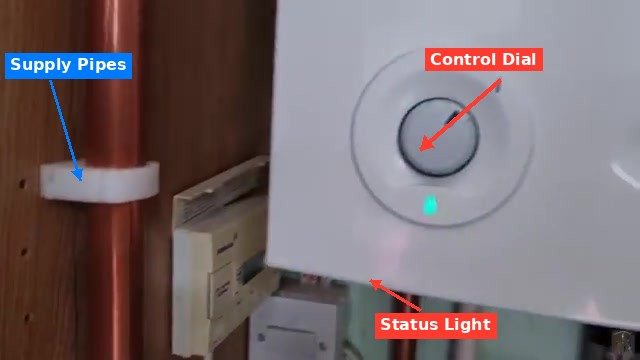
Check your boiler's control dial and status light — the green indicator means the unit has power.
To repressurize, locate your filling loop (usually a small valve or braided hose underneath the boiler). Open it slowly until the gauge reads 1.2–1.5 bar, then close it completely. If pressure drops again within a few days, you may have a leak that needs professional attention.
Step 2: Inspect the Thermostat Settings
A faulty or incorrectly set thermostat is another leading cause of boiler shutdowns. The thermostat tells the boiler when to fire and when to stop. If it's reading the wrong temperature, the boiler may turn off prematurely.
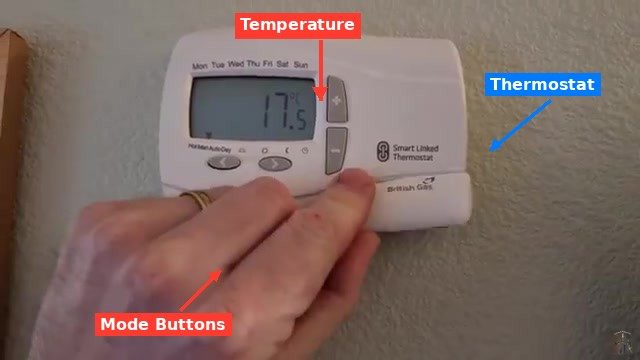
Verify your thermostat is reading the correct temperature and set to the right mode.
Check that the thermostat is set to "heat" or "auto" mode, not "off" or "cool." Also make sure the target temperature is set higher than the current room temperature. Replace the batteries if it's a wireless model — dead batteries are a surprisingly common culprit.
If your thermostat is outdated, consider upgrading to a smart thermostat. This can improve boiler efficiency and help prevent cycling issues. For related heating system tips, check out our guide on why boilers make popping noises.
Step 3: Examine the Motorized Valves
Motorized valves (also called zone valves or diverter valves) control the flow of hot water between your radiators and hot water cylinder. When these valves stick or fail, the boiler can overheat due to restricted water flow.
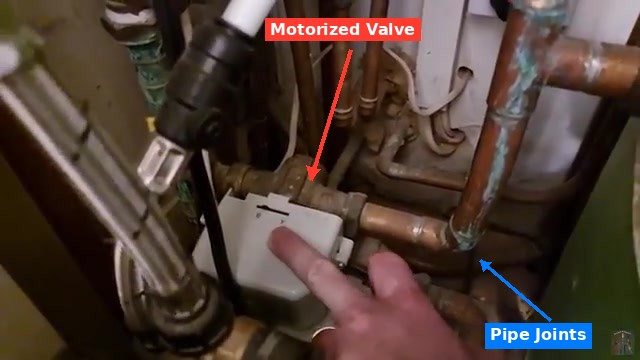
The motorized valve controls water flow — a stuck valve can cause the boiler to overheat and shut down.
You can sometimes hear a motorized valve clicking or humming when it's trying to open. If it's completely stuck, the boiler will fire up but quickly shut down because the hot water has nowhere to go. This is a repair that typically requires a licensed technician.
Step 4: Check for a Frozen or Blocked Condensate Pipe
Condensing boilers produce acidic water as a byproduct of combustion. This water drains away through a plastic condensate pipe, which often runs outside. In freezing temperatures, this pipe can freeze solid.
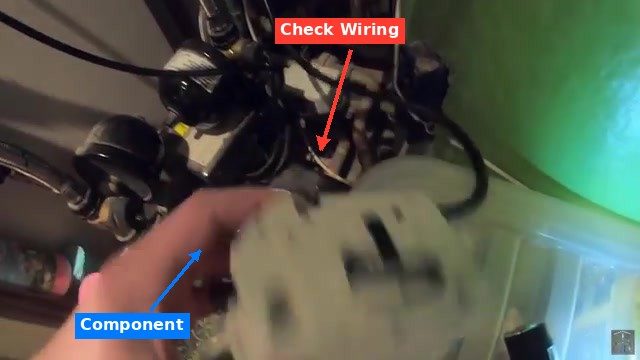
Check the wiring connections and internal components — loose connections can trigger safety shutdowns.
When the condensate pipe is blocked, the boiler will lock out and display an error code. To thaw it, pour warm (not boiling) water over the frozen section of the outdoor pipe. Once cleared, reset the boiler. To prevent future freezes, ask your technician about insulating the pipe or rerouting it internally.
Step 5: Inspect the Pump and Circulation System
The central heating pump circulates hot water through your radiators. If it fails or becomes sluggish, water doesn't move fast enough and the boiler overheats, triggering a safety shutdown.
Listen near the pump — you should hear a gentle humming when the heating is on. If it's silent, the pump may have seized. Sometimes tapping it gently can free a stuck impeller, but a replacement is usually needed.
Step 6: Verify the Boiler Is Running Correctly After Fixes
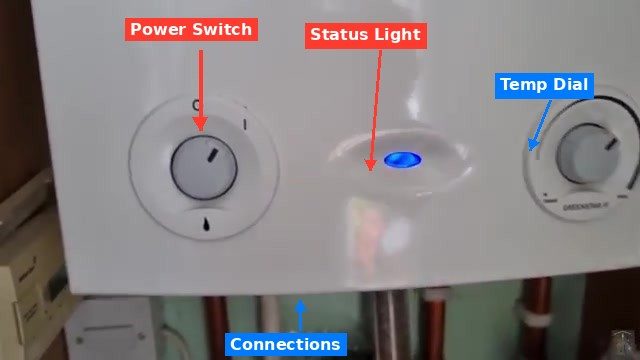
After troubleshooting, verify the blue status light stays on steady — this confirms the boiler is running normally.
After addressing any issues, reset your boiler and monitor it for at least 30 minutes. The status light should remain steady (not flashing). Check that radiators are warming evenly throughout the house.
If the boiler continues to shut off after your troubleshooting, it's time to call a licensed heating technician. The issue may involve the heat exchanger, gas valve, or printed circuit board (PCB) — all of which require professional diagnosis and repair.
Alternative Solutions to Consider
1. Power Flush the System
Over time, sludge and debris build up inside radiators and pipes. This restricts water flow and can cause the boiler to overheat. A professional power flush clears out the system and restores proper circulation. This is especially helpful if your radiators have cold spots at the bottom.
2. Install a Magnetic Filter
A magnetic filter (like a MagnaClean) captures metallic debris before it reaches your boiler. This protects the heat exchanger and can prevent many shutdown issues. Most technicians will recommend one during a service visit.
3. Upgrade Your Boiler
If your boiler is over 10–15 years old and requires frequent repairs, replacing it with a modern high-efficiency condensing boiler may be more cost-effective in the long run. Newer models are more reliable and can save up to 30% on energy bills.
4. Check Your Flue
A partially blocked or incorrectly installed flue can cause combustion gases to back up into the boiler. The safety sensor detects this and shuts the boiler down. Flue issues are always a job for a qualified technician.
Boiler Maintenance Tips to Prevent Shutdowns
- Schedule annual servicing — a yearly boiler service catches small problems before they become expensive breakdowns.
- Bleed your radiators regularly — trapped air reduces efficiency and can affect boiler pressure.
- Keep the condensate pipe insulated — especially if it runs outside. Pipe lagging is inexpensive and easy to install.
- Run your heating briefly in summer — running the boiler for 15 minutes once a month during warm months keeps the pump and valves from seizing.
- Monitor pressure monthly — get into the habit of glancing at the pressure gauge. Top up if it drops below 1 bar.
- Don't ignore strange noises — banging, gurgling, or popping sounds often indicate a developing issue.
Still Not Working? Troubleshooting Persistent Boiler Shutdowns
Boiler fires up then shuts off within 5 seconds: This usually points to a flame detection issue. The ignition electrode or flame sensor may need cleaning or replacement. Do not attempt this yourself — it involves gas components.
Boiler runs for 10–15 minutes then shuts off: This pattern suggests overheating, often caused by poor circulation. Check that all radiator valves are open and the pump is running. A power flush may be needed. This is similar to issues seen when furnaces overheat and produce burning smells.
Boiler shows an error code and locks out: Every boiler brand uses different error codes. Check your manual or search online for your specific model's code. Common lockout codes relate to ignition failure, low pressure, or sensor faults.
Boiler only turns off at night: This could be a thermostat programming issue, or the condensate pipe may be freezing overnight when temperatures drop. Check both.
Hot water works but heating doesn't: This points specifically to the motorized diverter valve or the central heating zone valve. The boiler itself is likely fine, but the valve directing water to the radiators has failed.
Frequently Asked Questions
How often should I service my boiler to prevent shutdowns?
You should have your boiler serviced once per year by a licensed technician. Annual servicing keeps your warranty valid, ensures safe operation, and catches worn parts before they cause a breakdown. The best time to schedule is late summer or early fall, before the heating season begins.
Is it safe to keep resetting my boiler when it turns off?
Resetting once or twice is fine to see if the issue clears. However, repeatedly resetting a boiler that keeps locking out can be dangerous and may damage internal components. If the boiler needs more than two resets in a day, stop using it and call a heating engineer.
What does it mean when my boiler "short cycles"?
Short cycling is when the boiler fires up, runs for a very short time (usually under 5 minutes), then shuts off before the home reaches the desired temperature. Common causes include an oversized boiler, thermostat issues, or a faulty heat exchanger. It wastes energy and accelerates wear on components.
Can low water pressure damage my boiler?
Running a boiler with consistently low pressure can cause damage over time. The heat exchanger relies on proper water flow for cooling. Without it, hotspots develop that can crack the exchanger — one of the most expensive boiler repairs. Always maintain pressure between 1 and 1.5 bar.
Why does my boiler turn off when I run hot water?
In combi boilers, switching to hot water mode diverts flow away from the heating circuit. If the diverter valve is faulty, it can cause the boiler to shut down during the switchover. A technician can test and replace the diverter valve if needed.
Quick Summary
- Check your boiler pressure gauge — repressurize if below 1 bar.
- Verify thermostat settings, batteries, and mode selection.
- Inspect motorized valves for clicking sounds or stuck positions.
- Thaw any frozen condensate pipes with warm water.
- Listen for the central heating pump — silence means it may have seized.
- Monitor the boiler after fixes for at least 30 minutes.
- Call a licensed technician if the problem persists or you see error codes.
- Schedule annual boiler servicing to prevent future shutdowns.


