If you've ever scraped white, crusty buildup off your faucet or noticed your skin feeling tight and dry after a shower, you've already met the minerals that a water softener is designed to remove.
Here in Calgary, we deal with some of the hardest water in the province, and at FlameTech Plumbing & Heating, we get asked this question all the time — especially from homeowners considering a water softener installation in Calgary: what do water softeners remove, exactly?
The short answer is that water softeners primarily remove calcium and magnesium — the two minerals responsible for making your water "hard." But there's more to the story than that, especially when you factor in Calgary's unique water supply, the impact hard water has on your plumbing and appliances, and the limits of what a softener can and can't do.
Let me break it all down for you. (If you're wondering how long one lasts once it's in, we've covered that separately in how long water softeners last in Calgary.)
Understanding Hard Water in Calgary
Before we talk about what a water softener removes, it helps to understand what's actually in your water in the first place.
Calgary's municipal water comes from two main sources. If you live in the northern half of the city, your water flows from the Bow River through the Bearspaw Water Treatment Plant. If you're in the south, your supply comes from the Elbow River through the Glenmore Water Treatment Plant.
Both rivers pick up dissolved minerals — primarily calcium and magnesium — as they flow through the Rocky Mountain foothills and across limestone-rich geology. By the time that water reaches your tap, it carries a significant mineral load.
According to the City of Calgary's own water quality data, hardness levels in the north typically range from about 126 to 198 mg/L (roughly 7.4 to 11.6 grains per gallon). In the south and southeast, hardness is even higher, ranging from approximately 181 to 262 mg/L (10.6 to 15.3 grains per gallon). For reference, water above 120 mg/L is generally considered "hard," which means most Calgary homes are dealing with moderately hard to very hard water year-round.
Hardness also fluctuates with the seasons. It tends to be at its lowest during spring snowmelt and peaks during the winter months from December through February — which, not coincidentally, is also when your furnace and hot water tank are working their hardest.
The Primary Minerals Water Softeners Remove
Calcium
Calcium is the biggest contributor to water hardness in Calgary. It's the mineral responsible for that stubborn white scale you see building up on your showerhead, kettle, dishwasher, and inside your hot water tank. Over time, calcium deposits restrict water flow through pipes, reduce the efficiency of your water heater, and shorten the lifespan of virtually every appliance that uses water.
A water softener removes calcium through a process called ion exchange. Inside the softener's resin tank, thousands of tiny resin beads carry a negative charge loaded with sodium (or potassium) ions. As hard water passes through the tank, the calcium ions — which carry a stronger positive charge — are attracted to the resin beads and swap places with the sodium ions. The calcium gets trapped, and softer water flows into your home.
Magnesium
Magnesium is the second major hardness mineral, and it behaves very similarly to calcium in your water supply. While it's usually present in lower concentrations than calcium, magnesium still contributes significantly to scale buildup, soap scum, and that filmy residue on your glass shower doors.
The ion exchange process removes magnesium in the same way it handles calcium. The magnesium ions bind to the resin beads and are replaced with sodium ions, effectively softening the water before it reaches your fixtures and appliances.
Iron (In Small Amounts)
While water softeners are not specifically designed as iron filters, they can remove small amounts of dissolved (ferrous) iron from your water supply. This is particularly relevant for Calgary homes that draw from well water or older municipal infrastructure where trace iron can enter the system.
If your water has a slight reddish-brown tint or leaves orange stains on your fixtures, dissolved iron may be the culprit. A standard water softener can typically handle iron concentrations up to about 1 ppm (part per million) through the same ion exchange process. However, if iron levels are higher than that, a dedicated iron filtration system is usually needed — either alongside or before the softener.
Manganese (In Small Amounts)
Similar to iron, manganese can be removed by a water softener in small concentrations, generally below 2 mg/L. Manganese in water often shows up as black specks or dark staining on fixtures and laundry. When conditions are right — dissolved manganese, low oxygen levels, and a pH between about 6.7 and 8.0 — a water softener can capture manganese ions during the standard ion exchange cycle.
That said, higher concentrations of manganese typically require a specialized filtration system such as a greensand filter or an oxidation-based treatment.
What Water Softeners Do NOT Remove
This is just as important to understand. A water softener is not a water filter, and it's not designed to address every water quality concern. Here's what stays in your water even after it passes through a softener:
Chlorine — Calgary's water is treated with chlorine at the municipal level to eliminate bacteria. A water softener won't remove it. If chlorine taste or odour bothers you, a carbon filtration system is the right solution.
Lead and Copper — These heavy metals can enter your water through aging pipes and plumbing connections. Removing them requires a dedicated filtration system such as reverse osmosis.
Bacteria and Viruses — Water softeners have no ability to disinfect water. If microbial contamination is a concern (especially for rural properties or well water), UV disinfection or other treatment methods are necessary.
Fluoride — Fluoride ions carry a negative charge, so they pass right through the positively charged resin in a water softener without being affected.
Nitrates, Pesticides, and Pharmaceutical Residues — None of these contaminants are addressed by standard water softening technology.
If you're concerned about any of these issues, we can help you explore whole-home filtration options that work alongside a water softener to give you comprehensive water treatment.
How Does the Ion Exchange Process Actually Work?
I touched on this earlier, but let me walk you through the full cycle because it helps explain why maintenance matters.
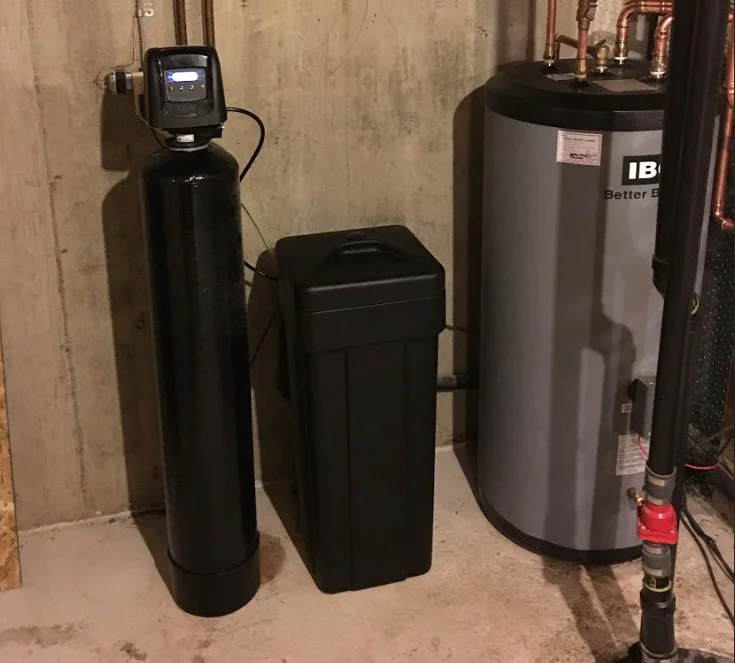
A water softener has two main components: a resin tank and a brine tank. The resin tank is filled with small polystyrene beads that are saturated with sodium ions. When hard water enters the tank, calcium and magnesium ions are drawn to the resin beads because they carry a stronger positive charge than sodium. The hard minerals stick to the beads, and sodium is released into the water in their place.
Over time, the resin beads become fully loaded with calcium and magnesium and can no longer soften incoming water. That's when the regeneration cycle kicks in. A concentrated salt (sodium chloride) or potassium chloride solution is flushed from the brine tank through the resin, stripping away the captured minerals and recharging the beads with fresh sodium ions. The mineral-laden brine is then flushed down the drain, and the system is ready to soften water again.
Most modern water softeners handle this regeneration automatically based on your household's water usage. It's a reliable, proven process — but it does require you to keep the brine tank filled with salt and schedule periodic maintenance to ensure everything is functioning properly.
Why Calgary Homeowners Should Care About Hard Water
You might be wondering whether hard water is really that big of a deal. After all, the City of Calgary confirms that hard water is perfectly safe to drink. And that's true — calcium and magnesium in drinking water pose no known health risks.
But safe to drink and good for your home are two very different things. Here's what hard water does over time if left untreated:
Scale buildup in your hot water tank — Mineral deposits accumulate on the heating elements and inside the tank, forcing it to work harder and use more energy. This drives up your utility bills and can significantly shorten the lifespan of your water heater.
Clogged plumbing — Scale gradually narrows the interior diameter of your pipes, reducing water pressure and eventually leading to blockages that require professional drain cleaning.
Damaged appliances — Your dishwasher, washing machine, and any other water-using appliance will accumulate mineral deposits that reduce efficiency and cause premature failure.
Dry skin and dull hair — The minerals in hard water make it difficult for soap and shampoo to lather properly and can leave a residue on your skin and hair. Many Calgary homeowners notice a dramatic improvement in how their skin and hair feel after installing a water softener.
Soap scum and spotty dishes — Hard water reacts with soap to form an insoluble residue (soap scum) that clings to shower doors, bathtubs, sinks, and dishes. Softened water eliminates this problem almost entirely.
Higher cleaning product costs — You end up using significantly more soap, detergent, and cleaning products to achieve the same results with hard water compared to soft water.
Is Softened Water Safe to Drink?
This is one of the most common follow-up questions we hear. The answer for most people is yes — softened water is safe to drink.
The amount of sodium added during the ion exchange process is relatively small. For context, a glass of softened water typically contains far less sodium than a single slice of bread. Health Canada does not set a maximum allowable concentration for sodium in drinking water, and the added sodium from a water softener is generally considered negligible for healthy adults.
That said, if you or someone in your household is on a strict sodium-restricted diet, there are a couple of options. You can use potassium chloride instead of sodium chloride in your brine tank, which replaces the sodium with potassium during regeneration. Alternatively, many homeowners choose to install the softener on the hot water line only or keep one unsoftened tap (usually the kitchen cold water) for drinking and cooking.
It's also worth noting that the calcium and magnesium removed by the softener are not significant dietary sources of these minerals. The vast majority of your calcium and magnesium intake comes from food — dairy products, leafy greens, nuts, seeds, and legumes — not from your tap water.
How to Know If You Need a Water Softener in Calgary
Given Calgary's water hardness levels, the honest answer is that most homes in the city would benefit from a water softener. But here are some specific signs that hard water is actively affecting your home:
You notice white, chalky deposits on faucets, showerheads, and around drains. Your glass shower doors are constantly cloudy no matter how much you clean them. Your hot water tank is making rumbling or popping noises (a sign of heavy scale buildup). Your skin feels dry or itchy after showering, even with moisturizing products. Your laundry comes out feeling stiff or looking dingy. You're going through soap, shampoo, and detergent faster than seems reasonable. Your water pressure has gradually decreased over time.
If any of that sounds familiar, a water softener is likely worth the investment — not just for comfort, but to protect your plumbing system and extend the life of your appliances. Left unchecked, hard water damage can escalate into situations that need an emergency plumber.
Choosing the Right Water Softener for Your Calgary Home
Not all water softeners are created equal, and the right system for your home depends on several factors: the hardness level of your specific water supply, your household's daily water usage, the number of bathrooms and water-using appliances you have, and whether you also need to address iron or other secondary concerns.
At FlameTech Plumbing & Heating, we start with a water quality assessment so we know exactly what we're dealing with. From there, we can recommend the right size and type of softener system to match your household's needs, ensuring efficient operation and proper regeneration cycles.
We also handle the full installation, connecting the system to your main water line and ensuring everything is set up for reliable, long-term performance. And because we're a full-service plumbing and heating company, we can address any related concerns at the same time — whether that's flushing your hot water tank, upgrading to a tankless water heater, servicing your boiler, or setting up a maintenance schedule to keep everything running smoothly.
Let's Talk About Your Water
If you're dealing with the effects of Calgary's hard water and you're ready to do something about it, we're here to help. Whether you have questions about what a water softener can do for your specific situation or you're ready to schedule an installation, give us a call at 587-834-3668 or take a look at our water softener installation page to get started. We also offer water softener installation in Airdrie and softener repair and service in Airdrie for homeowners just north of the city dealing with similar hardness levels.
At FlameTech Plumbing & Heating, we serve homeowners across Calgary and the surrounding communities including Airdrie, Cochrane, Okotoks, and Chestermere. We'd be happy to assess your water quality and recommend the right solution for your home.
FlameTech Plumbing & Heating is a Calgary-based residential plumbing and heating company specializing in water softener installation and repair, plumbing repairs, furnace service, and water heater maintenance. Serving Calgary, Airdrie, Cochrane, Okotoks, and Chestermere.